Ultra Mirror Polishing on Sanitary Moulds – Precision You Can See

Discover the precision of ultra mirror polishing on sanitary moulds. Learn how MDC Mould enhances tooling performance, surface finish, and demolding efficiency for SMC bathroom moulds.

In the sanitary ware manufacturing industry, surface finish is not just about appearance — it’s an integral part of performance and precision engineering. At MDC Mould, our ultra mirror polishing technique on sanitary moulds sets a new benchmark in quality and durability.

Why Mirror Polishing is Critical for Sanitary Moulds

Mirror polishing offers more than just a shiny appearance. It plays a vital role in the entire production cycle of SMC bathroom components, ensuring a smooth demolding process, minimizing surface flaws, and improving the aesthetic and structural quality of the final product.

When you demand precision tooling and unmatched finish in your sanitary applications, the mirror polishing process is essential. Here are the core benefits:

  • Smooth Demolding: Highly polished surfaces reduce friction and sticking, resulting in cleaner and faster part ejection.
  • Fewer Surface Defects: A flawless cavity surface means a flawless finished part — free from sink marks, drag lines, or surface distortion.
  • Extended Tool Life: Mirror polishing strengthens surface integrity, making your compression moulds more resistant to corrosion, micro-cracks, and wear.
  • Premium Finish: Consumers expect sanitary ware with high gloss and smooth touch — mirror-polished moulds deliver exactly that.
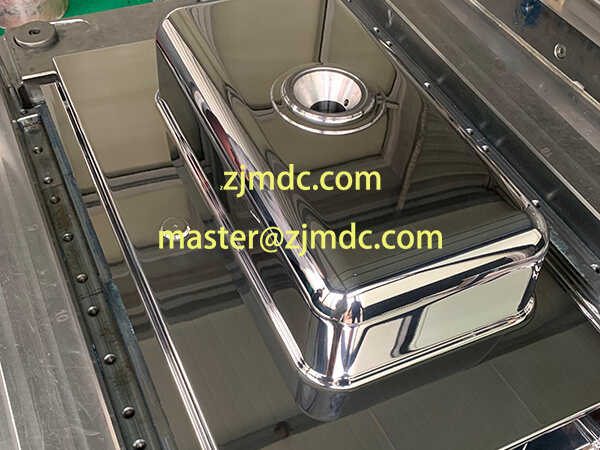
Washing basin mould

Our Ultra Mirror Polishing Process

Delivering an ultra-clear, mirror-like finish on every sanitary mould requires a tightly controlled process and experienced hands. Here’s how MDC ensures industry-leading polishing results:

1. Base Surface Preparation

Our polishing process begins with a rigorous inspection and treatment of the cavity base. Whether finished via precision CNC or EDM, our technicians ensure the surface is flat, defect-free, and ready for refinement. This foundational step is critical for avoiding imperfections later in the polishing sequence.

2. Multi-Stage Manual Polishing

The polishing sequence is conducted by skilled craftsmen using a step-by-step progression of abrasives — from coarse grit to ultra-fine diamond pastes. This multi-stage method includes:

  • Coarse grinding (typically 400–600 grit)
  • Medium-fine smoothing (800–1200 grit)
  • Pre-polish (1500–2000 grit)
  • Mirror finish with diamond paste (down to 1µm or finer)

Each stage eliminates the scratches from the previous step. The end result is a glass-smooth tool surface with reflectivity approaching 100% under optical inspection. We often say — you can literally see your reflection in our moulds.

3. Controlled Heat and Pressure

Overheating can compromise the steel’s molecular structure. At MDC, we strictly control polishing pressure, tool speed, and ambient temperature to avoid microcracks, temper loss, or distortion. This ensures the tooling integrity of each SMC mould remains intact during polishing.
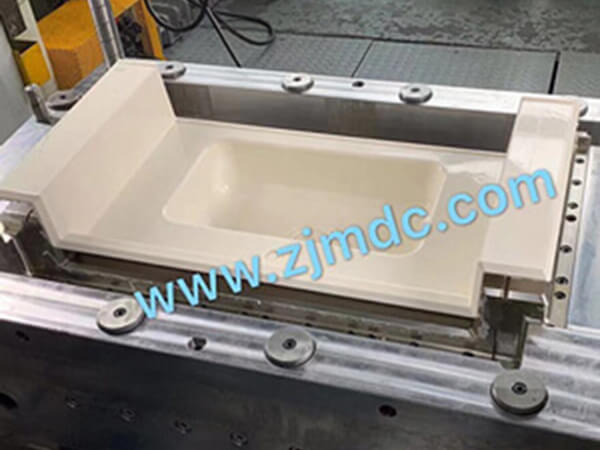
bathtub mold

Where Mirror Polishing is Applied

We implement ultra mirror polishing on various mould types used in the sanitary and composite industries, including:

  • SMC bathroom moulds (bathtubs, shower trays, wall panels)
  • Toilet and basin composite moulds
  • High-gloss decorative panels
  • SMC/BMC sanitary enclosures

Whether for compression moulding or other thermoset composite processes, mirror polishing helps maximize product yield and finish quality.

Precision Testing and Quality Standards

At MDC Mould, our quality assurance team uses advanced instruments such as surface roughness testersoptical microscopes, and gloss meters to verify every mould. We consistently achieve roughness values of Ra ≤ 0.01 μm — a true reflection of our polishing mastery.

Conclusion: Where Performance Meets Perfection

Ultra mirror polishing is more than a finishing touch — it’s a critical step in ensuring the **performance, reliability, and durability** of every **sanitary mould** we produce. When combined with our precision engineering and expert process control, the result is tooling that delivers maximum value, longevity, and visual brilliance.

If you’re looking for a reliable partner in compression mouldsSMC moulds, or high-performance mirror polished tooling, MDC Mould is ready to deliver.
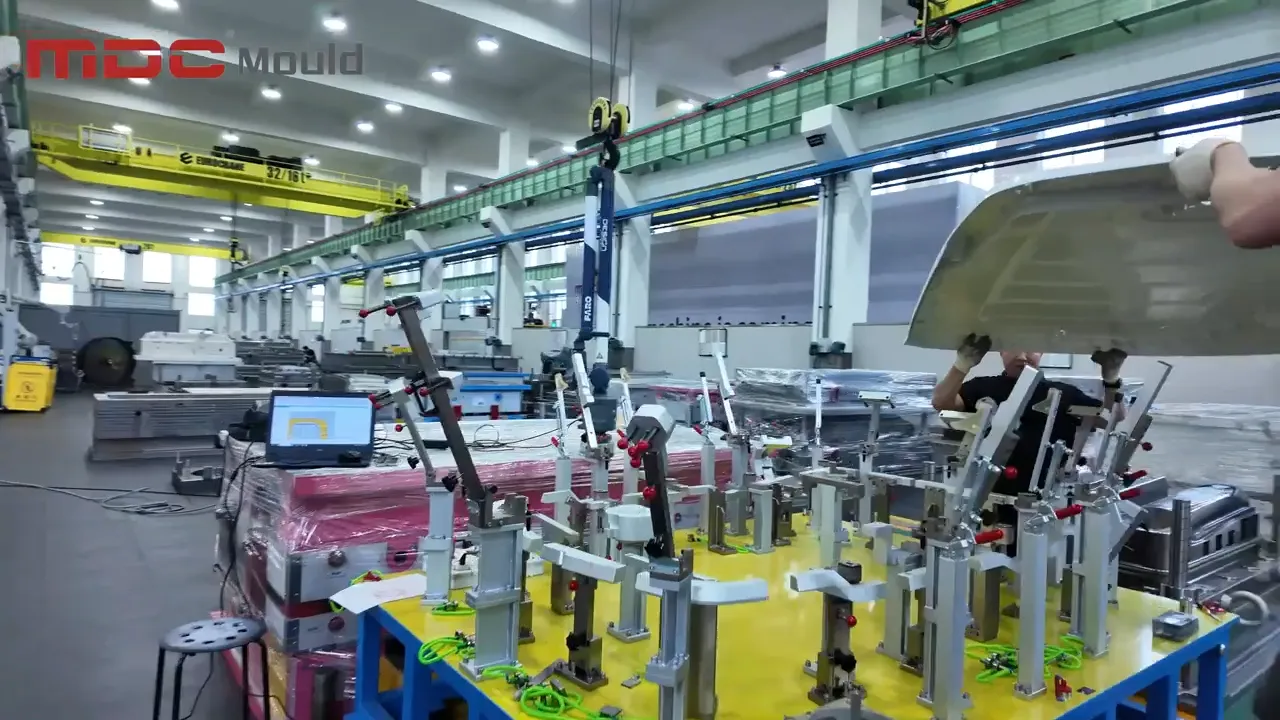
Precision Cooling Fixtures and 3D Scanning Inspection

Explore how MDC Mould combines custom-designed cooling fixtures and high-precision 3D scanning inspection to ensure dimensional stability in molded SMC parts.

In modern composite molding—particularly in SMC (Sheet Molding Compound) and BMC (Bulk Molding Compound) processes—dimensional accuracy, repeatability, and post-molding stability are fundamental. As a leading mold manufacturer, MDC Mould is continuously optimizing not just the tooling, but the entire downstream validation process. This article introduces our latest innovation: a custom cooling fixture engineered in-house and integrated with advanced 3D scanning inspection to guarantee consistent and reliable dimensional control.

Why Dimensional Stability Matters in Composite Molding

Composite materials like SMC and BMC are known for their excellent strength-to-weight ratio, corrosion resistance, and design flexibility. However, they are also prone to thermal shrinkage and post-molding deformation due to temperature differentials, uneven pressure, or uncontrolled cooling. Without a strategy to simulate real-use cooling conditions, even a precisely molded part may fall outside tolerance during the cooling phase.

To mitigate this, MDC Mould has developed a process that combines custom part-specific cooling fixtures with non-contact 3D metrology, bridging the gap between mold fabrication and functional performance verification.

Our Custom Cooling Fixture: Designed for Functionality and Accuracy

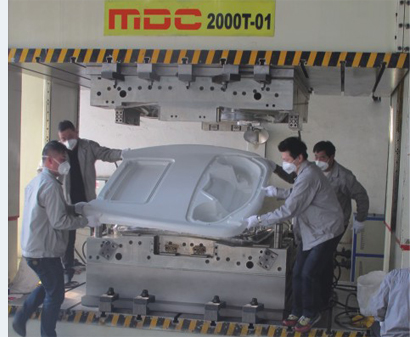
The cooling fixture is more than just a supporting frame—it is a precision-engineered device tailored to the exact geometry of the molded part. Here’s how it works:

  • Shape Conformance: The fixture mirrors the molded part’s final geometry, ensuring uniform cooling without stress points or sagging.
  • Post-Molding Simulation: By simulating how the part would cool in real use, we prevent unrealistic deformation during measurement.
  • Stabilization During Scanning: The fixture holds the part in position to enable reliable and repeatable 3D inspection.
  • Material-Specific Tuning: Each fixture is designed with the thermal behavior of the composite material in mind.

Fixtures are custom-built in our tool shop using CAD/CAM systems, ensuring high fitting accuracy and repeatability. This integration of engineering design with quality inspection reflects our deep understanding of mold-formed component behavior.

Precision Fixtures

Advanced 3D Scanning Inspection for High-Resolution Feedback

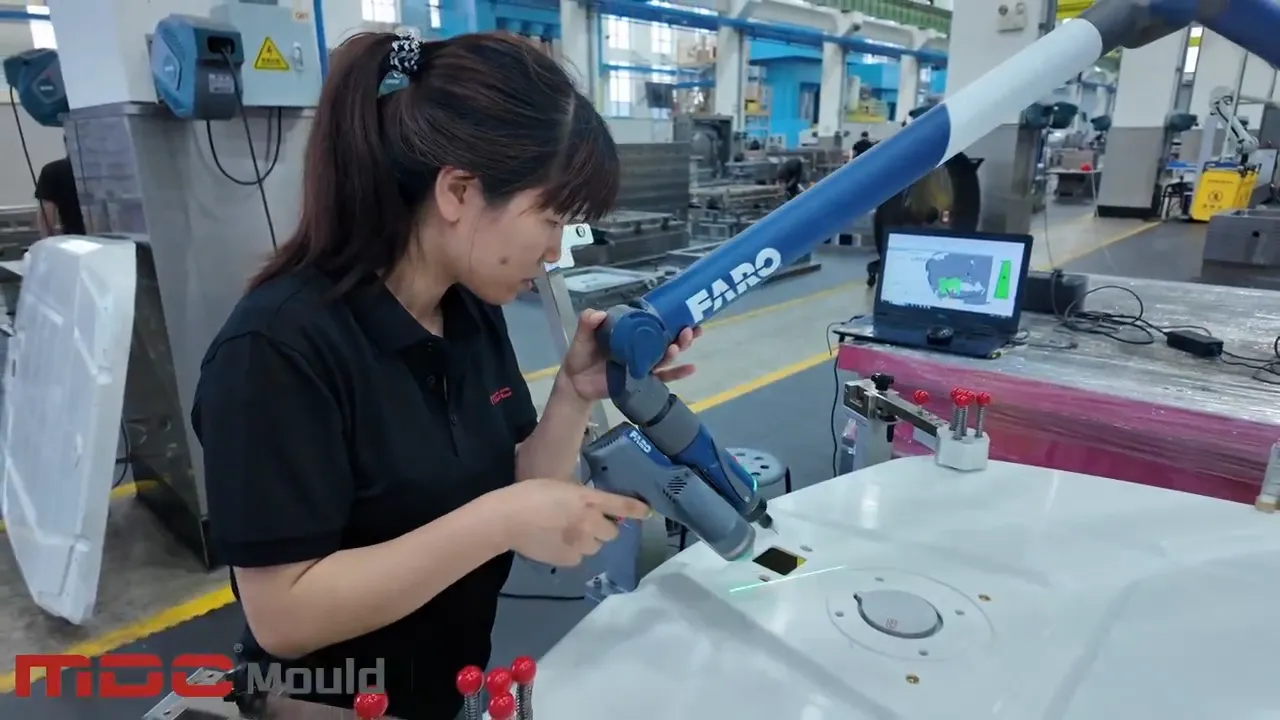
Once the part is fully cooled and stabilized, it is scanned using state-of-the-art 3D scanning equipment that generates detailed point cloud data. We then:

  • Align the scan data with the original CAD model
  • Run full 3D dimensional analysis with deviation mapping
  • Generate a complete 3D inspection report with color-coded tolerances
  • Deliver this report to the customer for transparent feedback and sign-off

This non-contact inspection process is faster, more accurate, and more comprehensive than traditional CMM-based techniques, especially for freeform or large-area parts.

Integrated Quality Assurance: Closing the Loop

Our combined use of cooling fixtures and 3D scanning inspection offers an end-to-end solution for dimensional control. This method ensures that the molded part conforms not only to its designed geometry, but also to its functional form after cooling—the true test of manufacturing success.

Benefits at a Glance:

  • Reduced rejection rates through early detection of dimensional drift
  • Repeatable QA procedures that can be benchmarked and scaled
  • Enhanced customer trust through full transparency of inspection data
  • Faster iterations for pilot runs and new product development
3D Scanning Inspection

Applications Across Industries

This solution is particularly suited to industries where geometric precision and thermal stability are critical, including:

  • Automotive: Battery covers, inner roof panels, trunk boards, engine splash shields
  • Electrical: Enclosures and insulators made from BMC/SMC
  • Infrastructure: GRP water tank components with large surface areas
  • Aerospace: Lightweight structural panels requiring strict tolerance control

Why Choose MDC Mould?

We’re more than a mold supplier—we are a comprehensive partner in precision manufacturing. From mold design and tool fabrication to post-molding inspection and process optimization, MDC Mould provides a complete solution rooted in engineering excellence.

With a focus on composite mold development—including SMC moldsBMC moldscarbon fiber tooling, and compression molds—we understand the challenges and requirements of your applications.

Let’s Engineer Success Together

If your project demands tight tolerances, high repeatability, and confidence in quality assurance, MDC Mould is your trusted partner. Contact us today to learn how our cooling fixtures and 3D inspection workflows can add value to your production line.

SMC Tool: Precision Molds for High-Performance Composite Manufacturing

Explore the design, materials, applications, and advantages of SMC tools in composite molding. Learn how precision SMC molds drive efficiency and quality in thermoset part production.

The SMC tool plays a critical role in the manufacturing of advanced thermoset composite components. Specifically designed for use in the Sheet Molding Compound (SMC) process, these high-precision tools—also known as SMC molds or SMC tooling—enable mass production of lightweight, durable, and complex-shaped parts used across automotive, electrical, and industrial sectors.

What Is an SMC Tool?

An SMC tool is a custom-designed mold used in the compression molding process of fiber-reinforced thermoset materials, primarily SMC. These tools are engineered to form and cure a pre-cut charge of SMC material into a finished component under high pressure and temperature. The precision of the tooling directly affects the surface finish, dimensional accuracy, and mechanical performance of the final part.

Materials and Construction of SMC Molds

SMC tools are typically constructed from high-grade tool steel or aluminum, depending on the application and production volume. Common features of an SMC mold include:

  • Core and Cavity: Precisely machined surfaces that define the shape of the part.
  • Heated Platens: Used to maintain molding temperatures typically between 130°C and 160°C.
  • Ejection System: Ejector pins or air ejectors facilitate smooth part removal after curing.
  • Vacuum System: Removes trapped air to prevent voids and improve surface finish.
  • Cooling Channels: Allow for cycle time optimization and dimensional stability.

Advanced SMC tooling may also integrate surface textures, inserts, or multi-cavity configurations for high-volume production.

SMC moulding

Applications of SMC Tooling

SMC tools are widely used across several industries that demand high-performance composite parts:

  • Automotive: Battery enclosures, inner roofs, trunk boards, spoilers, and structural reinforcements.
  • Electrical: Cable trays, switchgear panels, insulation covers, junction boxes.
  • Sanitary: Bathtubs, shower trays, SMC bathrooms, and ceiling panels.
  • Water Storage: SMC water tanks and sectional panel molds.
  • Infrastructure: Manhole covers, gratings, and architectural components.

Advantages of Using SMC Tools

High-quality SMC tooling offers a variety of benefits for manufacturers:

  • High Repeatability: Allows for consistent part production with tight tolerances.
  • Fast Cycle Times: Optimized mold design ensures shorter curing durations and increased output.
  • Surface Finish Control: Tools can be polished or textured to meet Class A surface requirements.
  • Complex Geometry: Supports undercuts, ribs, and inserts for functional part integration.
  • Durability: Steel tooling can sustain hundreds of thousands of molding cycles with minimal wear.

SMC Molding Process Using SMC Tool

The compression molding process using an SMC tool generally follows these steps:

  1. Material Loading: A pre-weighed SMC charge is placed in the open mold cavity.
  2. Mold Closing: The mold closes under high pressure (500–2000 tons depending on part size).
  3. Compression & Curing: Heat and pressure cause the material to flow and cure in the mold (typically 2–5 minutes).
  4. Part Ejection: The mold opens and the cured part is removed by ejector pins or vacuum assistance.

This method ensures minimal material waste and excellent mechanical properties, particularly in load-bearing applications.

SMC Tool Design Considerations

Precision mold design is essential to achieving optimal part quality. Important considerations include:

  • Flow Simulation: Helps predict how the SMC material will fill the mold to avoid short shots or weld lines.
  • Parting Line Optimization: Reduces flash and simplifies mold maintenance.
  • Draft Angles: Ensures easy demolding of parts without surface damage.
  • Ventilation: Proper venting prevents trapped air that can cause burn marks or voids.
  • Thermal Control: Uniform temperature distribution minimizes warpage and shrinkage.

Choosing a Reliable SMC Tool Manufacturer

Investing in a high-quality SMC mold begins with selecting the right tooling partner. Look for:

  • Experience: Proven track record in SMC mold design and manufacturing.
  • In-House Engineering: CAD/CAM expertise, flow analysis, and rapid prototyping capabilities.
  • Material Knowledge: Ability to match resins, fillers, and fibers with the appropriate tooling materials.
  • Global Support: Technical service and after-sales support in your region.
  • Certifications: Compliance with ISO, automotive (IATF 16949), or other relevant standards.

Companies like MDC Mould in China are recognized for delivering advanced compression molds and SMC tooling for global composite manufacturers.

Conclusion: The Role of SMC Tools in Modern Composites

As the demand for lightweight, durable, and cost-effective composite components increases, the importance of precision SMC tools continues to grow. Whether you’re producing automotive body panels, structural parts, or electrical enclosures, a well-designed and expertly built SMC mold is essential for efficient production and superior part quality. Investing in reliable SMC tooling means investing in long-term performance, product consistency, and innovation in thermoset composite manufacturing.