High-Performance Thermoforming Tools: Composite & Thermoplastic Mold Solutions

Discover how thermoforming tools and thermoforming molds are designed and manufactured for thermoplastic and composite production.

In modern industrial manufacturing, thermoforming tools play a crucial role in shaping thermoplastic sheets and composite materials into lightweight, high-precision components. As industries continue to pursue lightweight engineering, efficient production, and advanced material performance, thermoforming technology has become one of the most widely adopted forming processes worldwide.

thermoforming tool is a precision mold used to form heated thermoplastic sheets or composite laminates into specific geometries through vacuum, pressure, or mechanical force. The quality of the thermoforming tool directly determines the dimensional accuracy, surface quality, structural integrity, and production efficiency of the final molded parts.

Industries such as automotive manufacturing, aerospace engineering, industrial equipment production, and packaging technology increasingly rely on advanced thermoforming molds to manufacture complex plastic and composite components with consistent performance and high production efficiency.

What Is a Thermoforming Tool?
thermoforming

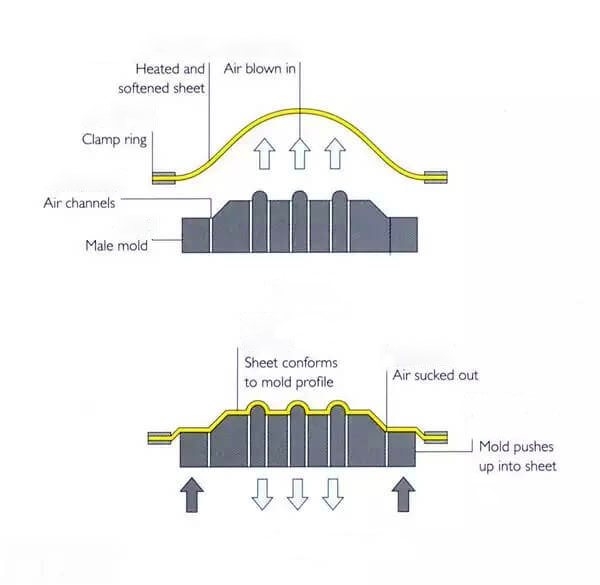
thermoforming tool is a specialized mold used in the thermoforming process, where thermoplastic sheets are heated until they reach a soft, formable state and are then shaped over a mold surface. Once the material conforms to the mold geometry, it is cooled to retain the final component structure.

Thermoforming tooling is widely used because it enables manufacturers to produce large, lightweight parts with relatively low tooling costs compared with injection molding. The technology is particularly suitable for medium-to-large components that require precise geometry and smooth surface finishes.

Typical Thermoforming Process

  • Heating thermoplastic sheets to forming temperature
  • Positioning the heated material over the thermoforming mold
  • Applying vacuum or pressure to shape the material
  • Cooling the formed component while maintaining mold geometry
  • Trimming and finishing the final product

Because thermoforming relies heavily on mold accuracy and temperature control, high-precision thermoforming tooling is essential for stable and repeatable production.

Main Types of Thermoforming Tools

Vacuum Thermoforming Tool

Vacuum thermoforming tools use negative air pressure to draw heated plastic sheets onto the mold surface. Small vent holes within the mold allow air to escape, ensuring that the plastic material conforms precisely to the mold cavity.

Vacuum forming tools are commonly used for manufacturing:

  • automotive interior panels
  • plastic packaging trays
  • equipment housings
  • protective covers and enclosures

Pressure Thermoforming Tool

Pressure thermoforming combines vacuum with positive air pressure to force the heated plastic sheet against the mold surface. This method allows for greater detail reproduction and sharper features.

Pressure forming molds are widely used for:

  • automotive exterior panels
  • consumer appliance housings
  • electronic equipment panels
  • industrial machine covers

Twin Sheet Thermoforming Tool

Twin sheet thermoforming tools form two heated plastic sheets simultaneously and bond them together inside the mold. This process allows the creation of hollow structural components with improved rigidity.

Typical applications include:

  • automotive air ducts
  • industrial equipment structures
  • large structural plastic panels

Materials Used in Thermoforming Mold Manufacturing

Aluminum Thermoforming Tools

Aluminum is one of the most commonly used materials for thermoforming molds because it provides excellent thermal conductivity, lightweight structure, and efficient machinability. Aluminum tooling is ideal for prototype production and medium-volume manufacturing.

Steel Thermoforming Tools

Steel molds are typically used for high-volume production environments where durability and wear resistance are essential. Steel thermoforming tools provide long service life and excellent dimensional stability during repeated heating cycles.

Composite Thermoforming Tools

Composite tooling materials such as fiberglass or carbon fiber structures may be used in specialized thermoforming applications. These materials are particularly suitable for lightweight prototype tooling and aerospace component manufacturing.

Key Design Factors for Thermoforming Tooling

Mold Surface Engineering

The mold surface must ensure smooth material flow to prevent defects such as thinning, wrinkles, or uneven wall thickness. Precision polishing and surface treatment improve the final appearance of thermoformed components.

Temperature Management

Uniform temperature distribution across the thermoforming mold ensures consistent forming conditions. Advanced tooling designs often incorporate cooling channels or thermal management systems to stabilize the molding process.

Venting System

Small vent holes within vacuum thermoforming molds allow trapped air to escape, enabling the heated sheet to conform completely to the mold surface.

Structural Strength

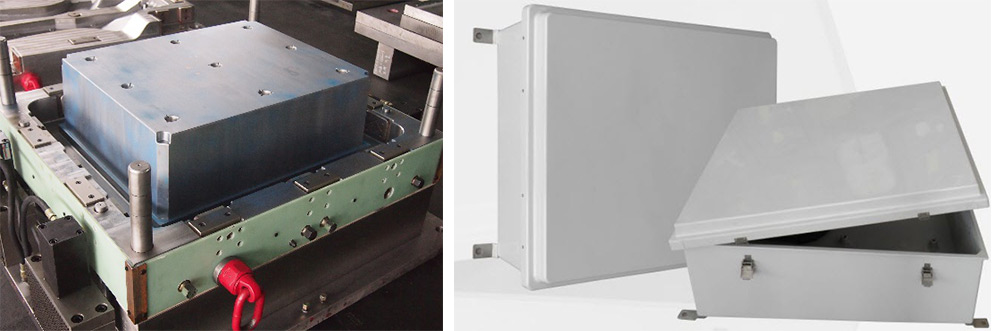
Thermoforming tools must withstand repeated heating cycles and forming pressure without deformation. High-strength mold materials ensure long-term production reliability.
thermoforming mould

Industrial Applications of Thermoforming Tools

Automotive Manufacturing

Thermoforming tools are widely used to produce lightweight automotive components, including interior panels, trunk liners, battery covers, and protective underbody panels.

Aerospace Components

In aerospace manufacturing, thermoforming tooling is used for aircraft interior panels, cabin structures, and lightweight composite components where weight reduction is critical.

Industrial Equipment

Industrial thermoforming molds produce durable equipment housings, machine covers, and protective enclosures used in manufacturing facilities and industrial environments.

Packaging Industry

Thermoforming tooling is extensively used in packaging production, enabling high-volume manufacturing of food packaging trays, medical packaging, and protective product packaging.

Advantages of Thermoforming Tooling

  • High production efficiency
  • Lower tooling cost compared with injection molding
  • Ability to produce large components
  • Excellent design flexibility
  • Consistent product quality

These advantages make thermoforming an important technology for producing thermoplastic and composite components across multiple industries.

Frequently Asked Questions About Thermoforming Tools

What is a thermoforming tool?

A thermoforming tool is a mold used to shape heated thermoplastic sheets into specific geometries using vacuum or pressure forming technology.

What materials are used to manufacture thermoforming molds?

Thermoforming molds are commonly manufactured from aluminum, steel, or composite materials depending on production volume and application requirements.

What industries use thermoforming tooling?

Thermoforming tooling is widely used in automotive manufacturing, aerospace production, industrial equipment manufacturing, and packaging industries.

Conclusion

thermoforming tool is a critical component in thermoplastic and composite manufacturing processes. High-precision thermoforming molds enable manufacturers to produce lightweight components with excellent surface quality and consistent dimensional accuracy.

As global industries continue to focus on lightweight materials, sustainable production, and efficient manufacturing technologies, advanced thermoforming tooling will remain an essential solution for producing high-performance plastic and composite components.
In-Depth Guide to Thermosetting Plastic Compression Molding Process

Explore the comprehensive process of thermosetting plastic compression molding, including equipment, techniques, and performance characteristics.

Introduction to Plastic Molding Technology

Plastic molding processing is an engineering technology involving various processes to transform plastic into products. This transformation often includes phenomena such as polymer rheology and changes in physical and chemical properties.

What is Compression Molding?

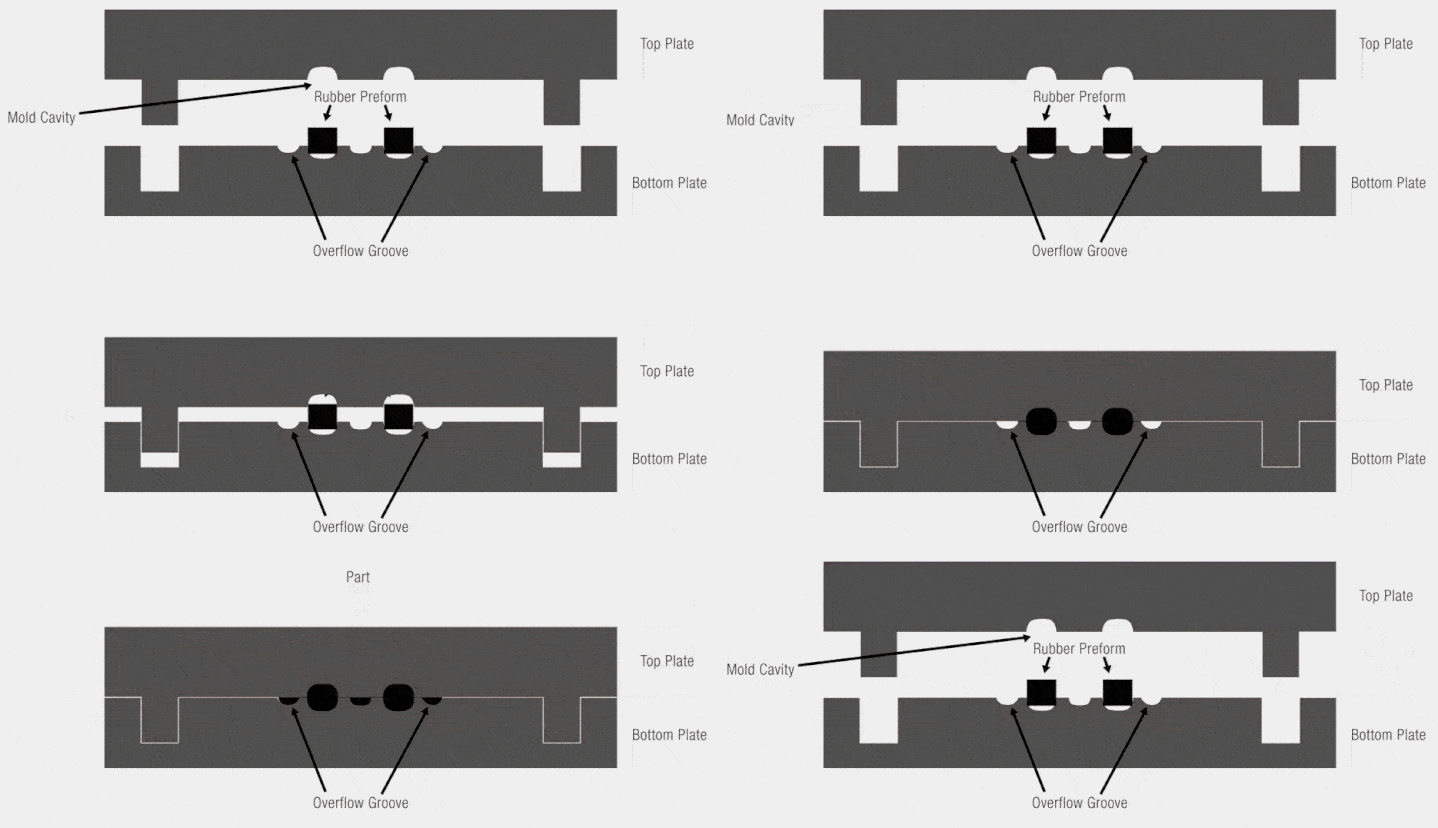
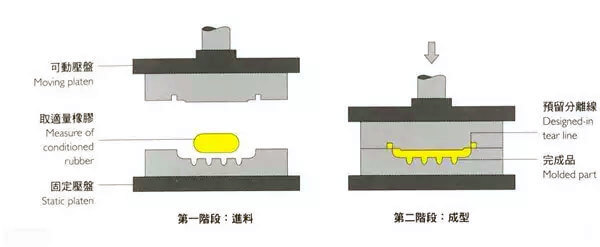
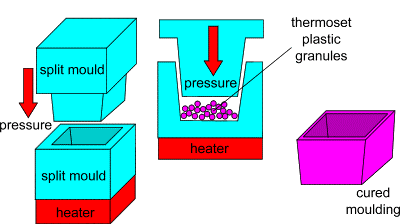
Compression molding, also known as press molding, is a primary method for forming thermosetting plastics and reinforced plastics. This process involves placing raw materials in heated molds under pressure, allowing the materials to flow and fill the cavity, and forming products through heat and pressure over time.

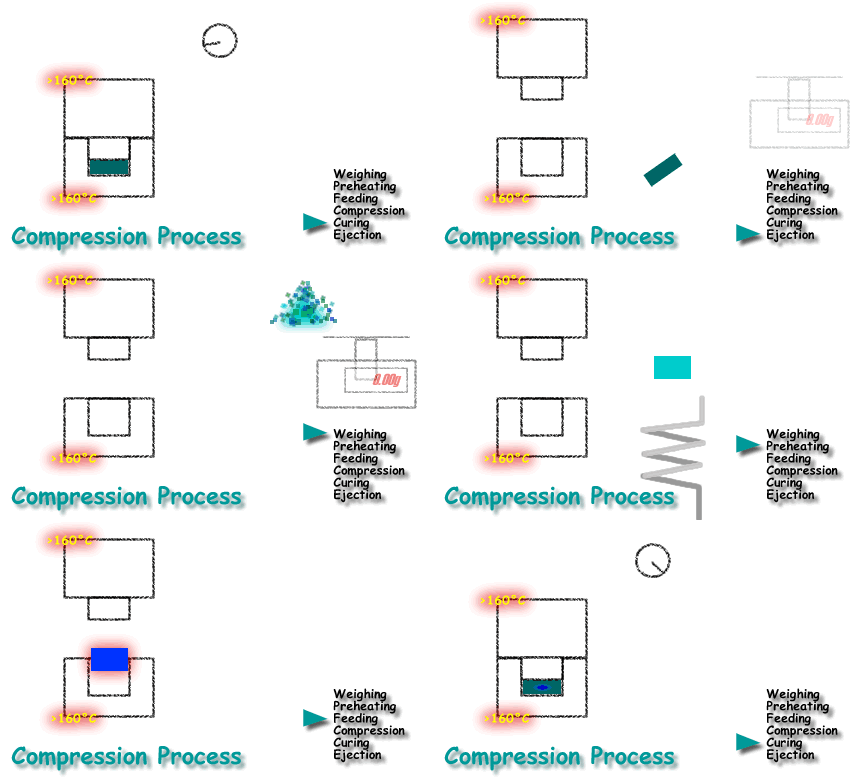
compression Molding Principle

Characteristics and Performance of Thermosetting Plastic Compression Molding

Process Characteristics

  • Mature technology with simple equipment and molds compared to injection molding.
  • Intermittent molding with longer production cycles and lower efficiency.
  • Produces high-quality products without internal stress or molecular orientation.
  • Can mold large-area products but not complex shapes or thick items.
  • Allows for hot demolding of products.

Performance Factors

Key performance factors include:

  1. Fluidity: The flowability impacts the molding process and product quality.
  2. Curing Rate: Influences the chemical reaction speed during molding.
  3. Shrinkage Rate: Affects dimensions and product integrity post-molding.
  4. Compression Ratio: Relates to volume change during molding.
  5. Moisture and Volatiles Content: Excessive content can affect product quality.
  6. Fineness and Uniformity: Particle size and distribution play a role in performance.
compression molding

Equipment and Molds Used in Compression Molding

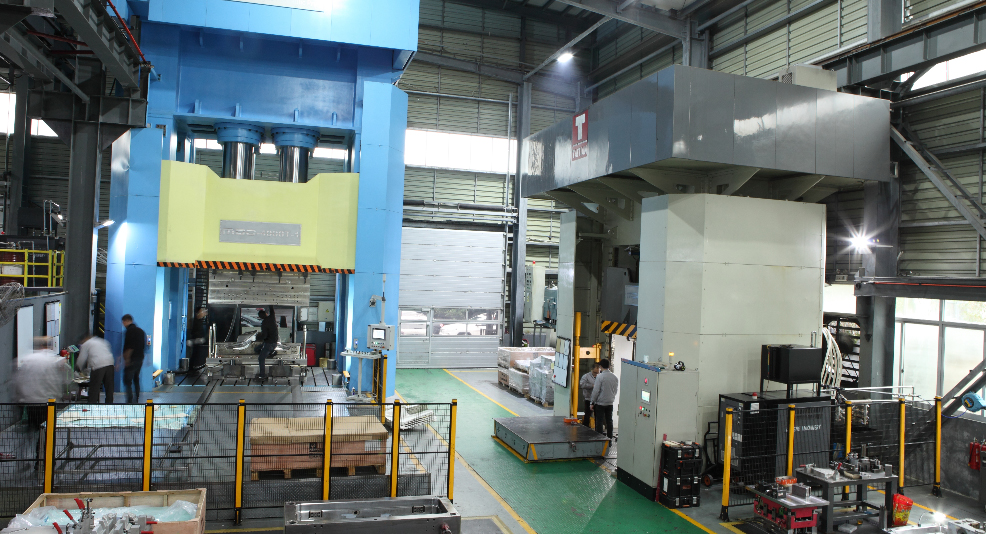
The main equipment used is the press machine, which applies heat and pressure to the plastic through molds. There are two main types of hydraulic presses:

  • Top-pressing hydraulic machines.
  • Bottom-pressing hydraulic machines.
compression-mould-machine

Common mold types include:

  1. Overflow molds
  2. Non-overflow molds
  3. Semi-overflow molds

The Process Flow of Compression Molding

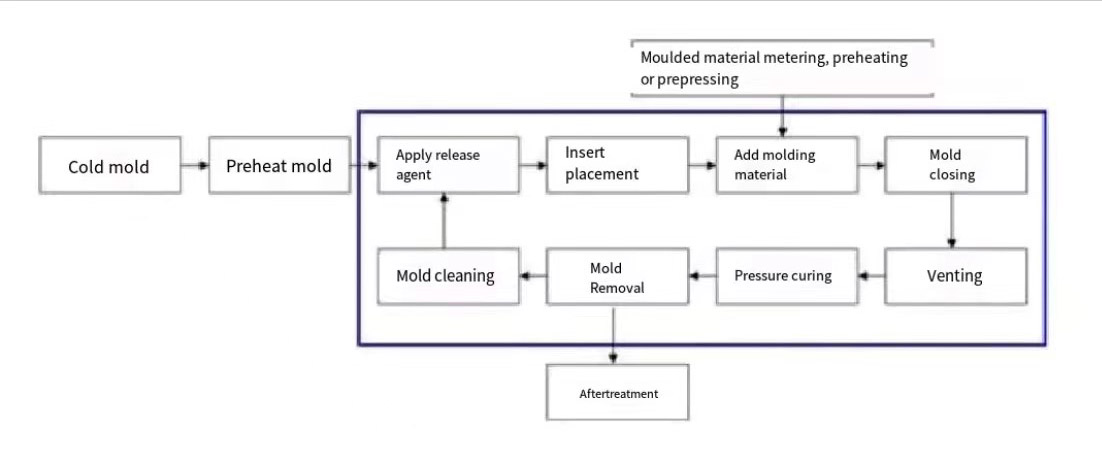
The typical process includes the following steps:

  1. Measuring: Accurate measurement is critical, using weight, volume, or counting methods.
  2. Pre-pressing: Reduces compression ratios and improves thermal transfer.
  3. Preheating: Increases curing speed and improves material flow.
  4. Insert Placement: Ensures correct positioning for components like conductive parts.
  5. Feeding: Accurate feeding is crucial for achieving desired product specifications.
  6. Closing Molds: Rapid initial closing followed by a slower approach to prevent damage.
  7. Ventilation: Essential for expelling gases and moisture during the process.
  8. Curing: Achieved through controlled pressure and temperature.
  9. Demolding: Typically occurs while the material is still warm, utilizing ejector rods.
  10. Post-processing: Involves additional treatments to ensure product quality.
compression molding process

Process Conditions and Control

The three critical factors in compression molding are pressure, temperature, and time. Balancing these factors optimizes product quality while minimizing production costs.

For more insights on thermosetting plastic compression molding, stay connected!

Effects of Thermoforming Parameters on Carbon Fiber Thermoplastic Composites

Discover the effects of thermoforming parameters on woven carbon fiber fabric/polycarbonate thermoplastic composites, including optimal values for spring-back angle, mold shape fitness, and key parameters for composite molds.

The quality of woven carbon fiber fabric/polycarbonate thermoplastic composites after thermoforming and demolding has been a subject of considerable research, especially for applications in industries that require SMC molds and composite molding. These composites are critical in sectors utilizing compression molds and carbon fiber molds.

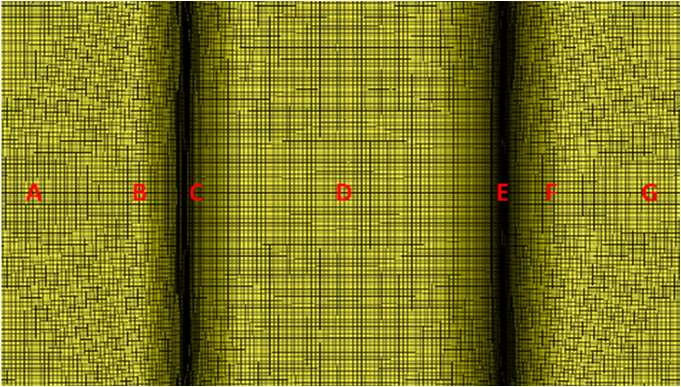
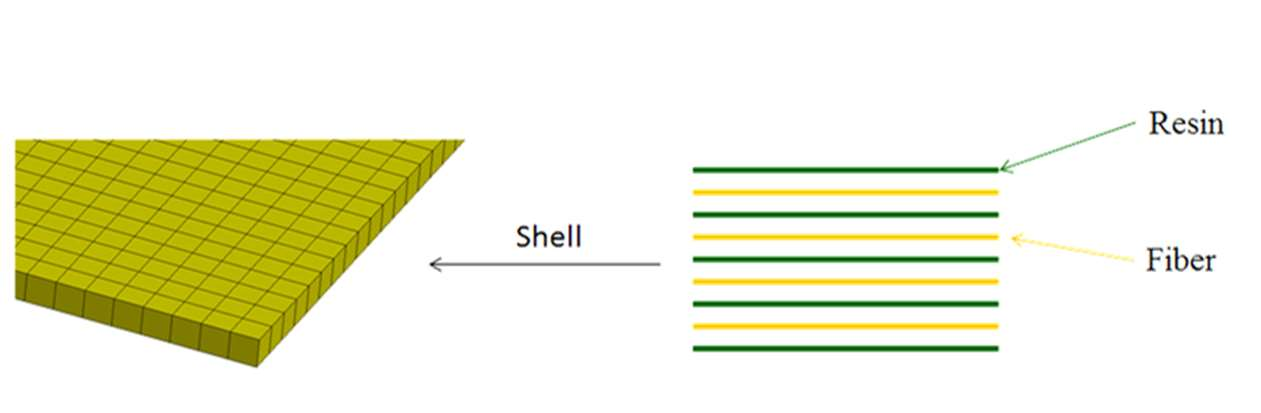
This study investigates the effects of thermoforming parameters using a combination of finite element simulation and the Taguchi orthogonal array. The simulation model employed a discrete approach with a micro-mechanical model to describe the deformation behavior of the woven carbon fiber fabric, similar to what is seen in thermoforming molds and compression tooling. In parallel, a resin model was incorporated to ensure accurate simulations. This approach was validated through bias extension tests conducted at five different temperatures, providing essential data on material behavior during the thermoforming process, much like processes involving BMC molds and press molds.

composite

Key Thermoforming Parameters

The study focused on three key thermoforming parameters, each having three levels, similar to those considered in compression molding:

  • Blank Temperature: Influences the material’s flexibility and ability to conform to mold shapes, crucial in SMC tooling and BMC molding.
  • Mold Temperature: Affects the final shape fitness and surface finish of the composite, often impacting thermoforming molds and SymaLITE molds.
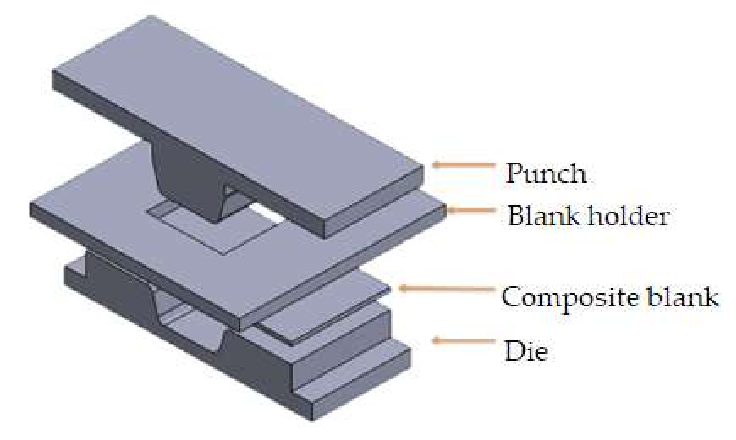
  • Blank Holding Pressure: Plays a crucial role in keeping the material in place and ensuring consistent molding, essential for composite molds like SMC moulds and carbon fiber molds.

The objective was to optimize four important quality factors: fiber-enclosed anglespring-back anglemold shape fitness, and the strain of the U-shaped workpiece, similar to those in thermoset molds and LFT molding. By adjusting the thermoforming parameters, the study aimed to achieve the best combination of these factors across various composite tooling methods.

mold

Results and Analysis

The finite element simulation revealed that the stress-displacement curve obtained from bias extension tests closely matched the simulated results. This verified the reliability of the discrete finite element method used in this study, which has parallels with the validation processes for SMC molding and press tooling.

Moreover, the Taguchi orthogonal array analysis identified blank holding pressure as the dominant process parameter, much like in compression molds and BMC tooling. The optimal value for blank holding pressure was found to be 1.18 kPa, making it the most critical factor in the thermoforming process. Blank temperature was the second most influential factor, with an optimal range of 160°C to 230°C. Interestingly, mold temperature had a relatively minor effect on the final composite quality, similar to the behavior observed in GMT molds and D-LFT molds.

Optimal Thermoforming Settings

The study recommended the following optimal settings for the thermoforming of woven carbon fiber fabric/polycarbonate thermoplastic composites:

  • Blank Holding Pressure: 1.18 kPa (critical for compression molds and SMC moulds)
  • Blank Temperature: 230°C (relevant for thermoforming tools and hot compression molds)
  • Mold Temperature: 190°C (beneficial for composite molding and carbon fiber molds)

These settings resulted in the most favorable outcomes for all four quality factors, indicating that careful control of blank holding pressure and temperature is crucial for achieving high-quality composite molds and thermoforming molds.

The-model-of-the-thermoforming-process

Conclusion

In summary, the results of this study provide valuable insights into the effects of thermoforming parameters on woven carbon fiber fabric/polycarbonate thermoplastic composites. The study concluded that blank holding pressure and blank temperature are the two most important factors, with mold temperature playing a secondary role. These findings are essential for those working with composite toolingthermoforming tools, and compression molds, providing a clear pathway for producing high-quality composites with desirable spring-back angle, fiber-enclosed angle, and mold shape fitness.

What is the Difference Between a Positive Mold and a Negative Mold in Thermoforming?

Discover the differences between positive and negative molds in thermoforming, and explore how they impact composite mold, compression mold, SMC mold, BMC mold, carbon fiber mold, and thermoforming mold applications.

Thermoforming is a widely used process in the manufacturing industry, especially when producing plastic components. The process involves heating a plastic sheet until it becomes pliable and then shaping it against a mold. In thermoforming, the mold type plays a crucial role in determining the final product’s quality, accuracy, and surface finish. Two primary types of molds are used in this process: the positive mold (also known as the male mold) and the negative mold (also known as the female mold). Understanding the differences between these molds is essential for anyone involved in thermoforming or related fields such as composite mold and compression mold manufacturing.

compression-molding

Positive Mold (Male Mold)

A positive mold, or male mold, is a type of mold where the material is formed over the exterior surface. The mold itself represents the shape that will be transferred to the inner surface of the final product. This means that the material is stretched over the mold, with the exterior of the material taking the shape of the mold’s exterior.

Key Characteristics of Positive Molds:

  • Surface Finish: The outer surface of the product directly contacts the mold, providing a high-quality finish on the internal surface. This is ideal for applications where the inner surface’s texture or appearance is critical.
  • Material Stretching: The plastic sheet is stretched over the mold, which can lead to thinning in areas, especially around corners and edges.
  • Application: Positive molds are often used when the internal dimensions are more important than external ones. For example, in applications involving thermoforming molds for containers or trays, where the inside must be smooth and accurate.
thermoforming

Negative Mold (Female Mold)

A negative mold, or female mold, is the inverse of a positive mold. In this case, the material is drawn into the mold, allowing the outer surface of the material to match the mold’s interior. The external surface of the final product mirrors the internal surface of the negative mold.

Key Characteristics of Negative Molds:

  • Surface Finish: The outer surface of the product takes the finish of the mold’s interior. This results in a high-quality surface on the exterior of the final product.
  • Material Thickness: Since the material is drawn into the mold, it tends to maintain a more consistent thickness, which is beneficial for applications requiring uniform strength.
  • Application: Negative molds are used when the external appearance and dimensions of the product are critical. This is common in composite molds and compression molds, where external aesthetics are important.

Comparing Positive and Negative Molds

Both positive and negative molds have their advantages and limitations, and the choice between them depends on the specific requirements of the application.

  • Surface Quality: Positive molds offer a superior finish on the internal surface, whereas negative molds provide a better finish on the external surface.
  • Material Distribution: Negative molds tend to produce parts with more uniform wall thickness, making them ideal for applications requiring consistent material strength.
  • Design Flexibility: Positive molds may lead to thinning in the material at sharp corners, which could be a limitation in certain designs.
thermoforming moulding

Applications in Composite Molding

The principles of positive and negative molds extend beyond traditional thermoforming into the realm of composite molding. In composite molds used for producing high-performance parts, such as carbon fiber molds, the choice between positive and negative molds can impact the final part’s structural integrity and surface quality.

  • SMC Mold and BMC Mold: Both Sheet Molding Compound (SMC) and Bulk Molding Compound (BMC) processes utilize molds that must withstand high pressures and temperatures. Here, the choice of a positive or negative mold can affect the part’s surface texture and material flow.
  • Carbon Fiber Mold: In carbon fiber mold manufacturing, the mold type influences the fiber alignment and resin distribution, crucial for achieving the desired strength-to-weight ratio.

Conclusion

Understanding the difference between positive and negative molds in thermoforming is essential for optimizing the manufacturing process. Positive molds provide high-quality internal surfaces but can lead to material thinning, while negative molds offer uniform material distribution and superior external finishes. Whether in traditional thermoforming or advanced composite molding applications, choosing the right mold type is crucial for achieving the desired product characteristics. As technologies evolve, the principles behind positive and negative molds continue to shape industries ranging from packaging to aerospace, highlighting their ongoing importance in manufacturing.