As global industries move toward lightweight engineering, structural integration, and high-efficiency production, the importance of composite mold construction continues to grow. From automotive lightweight components to FRP water tanks and electrical enclosures, high-performance composite molds are the foundation of consistent product quality and scalable manufacturing.
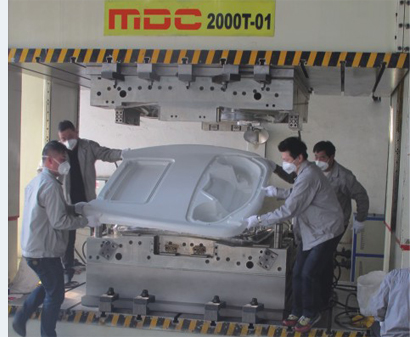
At MDC, advanced expertise in SMC mold, BMC mold, compression mold, and carbon fiber mold manufacturing ensures precision, durability, and optimized production performance. This guide provides a comprehensive overview of composite mold design, material selection, construction processes, and industry applications.
1. What is a Composite Mold?
A composite mold is a specialized tooling system designed to shape composite materials such as SMC (Sheet Molding Compound), BMC (Bulk Molding Compound), GMT, LFT, and carbon fiber composites under controlled heat, pressure, and curing conditions.
Unlike traditional metal forming tools, composite tooling must consider resin flow behavior, fiber orientation, curing kinetics, and thermal expansion, making its engineering process more complex and highly specialized.
2. Types of Composite Molds

2.1 Compression Mold
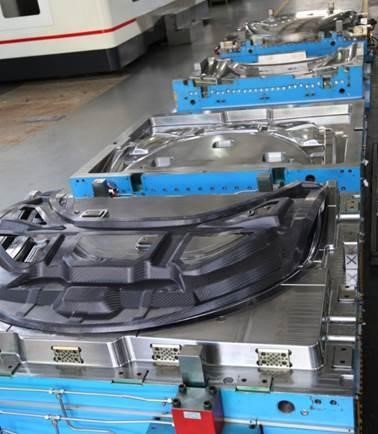
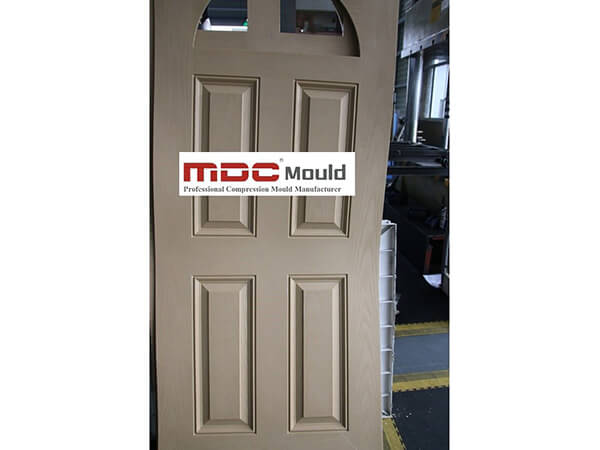
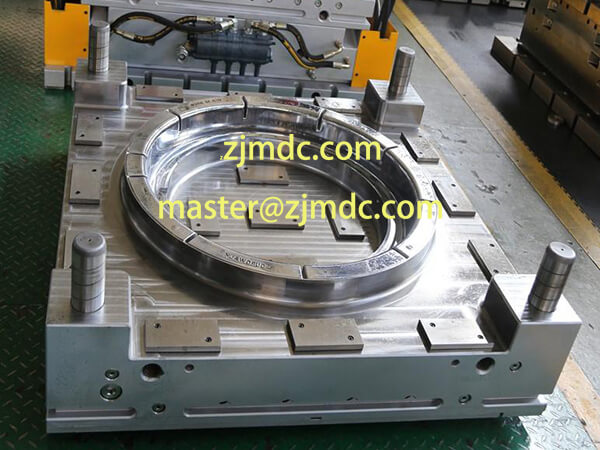
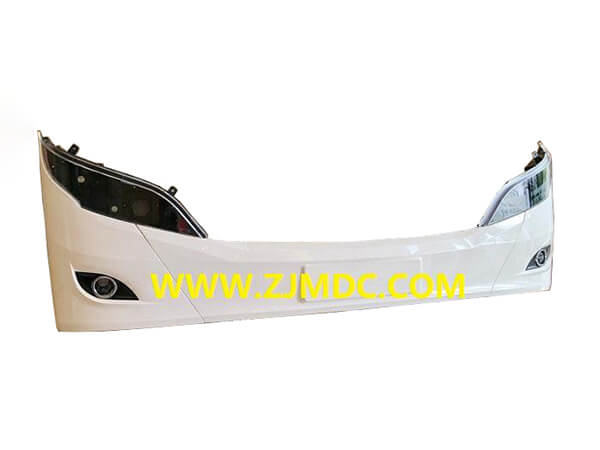
The compression mold is widely used for SMC and BMC molding. It delivers high strength, excellent surface finish, and repeatability, making it ideal for automotive exterior panels and structural components.
2.2 RTM Mold (Resin Transfer Molding)
RTM molds are closed systems where resin is injected into dry fiber preforms, ensuring high dimensional accuracy and smooth surface quality.
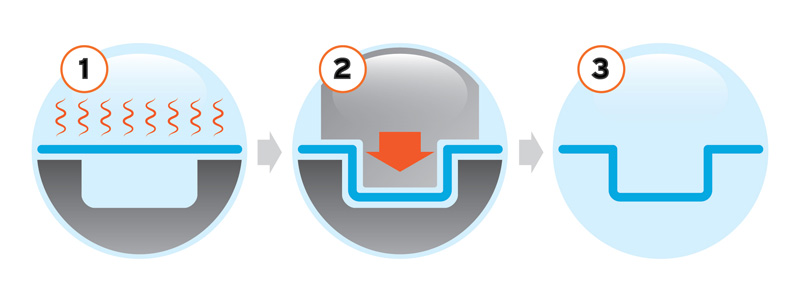
2.3 Thermoforming Mold
Thermoforming molds are designed for thermoplastic composites such as GMT and LFT, offering fast production cycles and cost efficiency.
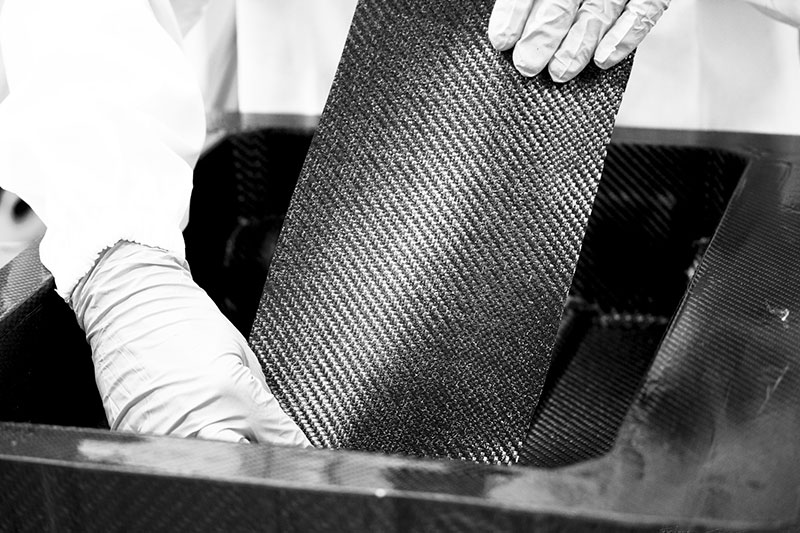
2.4 Carbon Fiber / Autoclave Mold
These molds are used in high-performance applications requiring high temperature and pressure resistance, particularly in aerospace and premium automotive components.
3. Key Materials for Composite Mold Construction
- Tool Steel: High durability and wear resistance for mass production
- Aluminum Alloy: Lightweight with excellent thermal conductivity
- Composite Tooling: Cost-effective for large or low-volume molds
- Invar: Low thermal expansion for precision aerospace tooling
Material selection directly affects tool life, surface quality, cycle time, and overall production cost.
4. Composite Mold Construction Process
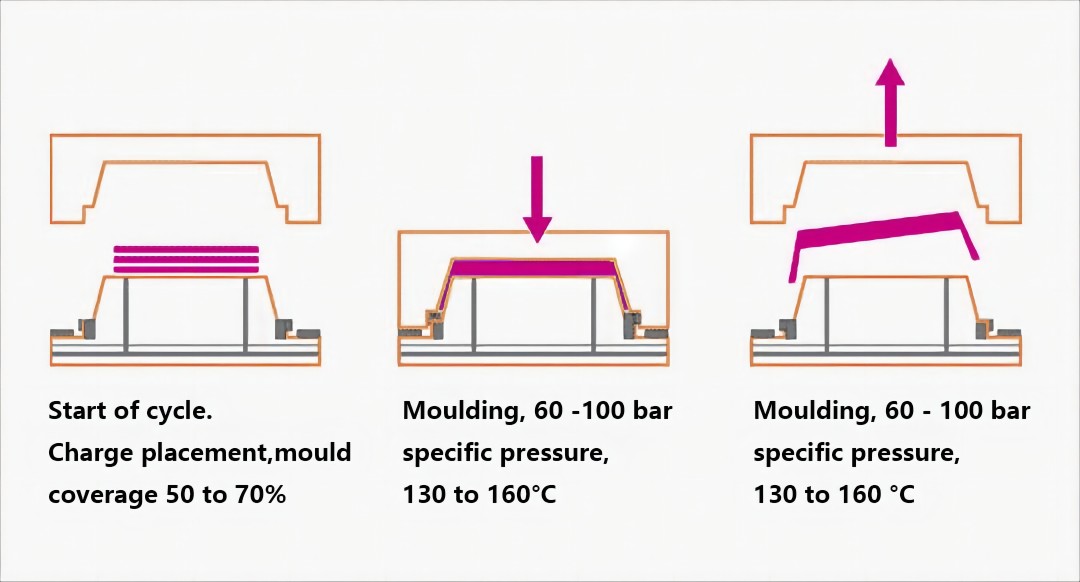
4.1 CAD/CAE Design
Advanced engineering includes:
- 3D modeling and surface optimization
- Mold flow simulation and filling analysis
- Thermal distribution and curing simulation
4.2 CNC Machining
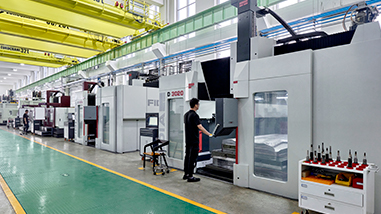
High-precision 5-axis CNC machining ensures accurate reproduction of complex geometries and tight tolerances.
4.3 Heat Treatment
Improves hardness, wear resistance, and dimensional stability of the mold.
4.4 Surface Finishing
Includes polishing, coating, and texturing to achieve Class-A surface quality.
4.5 Assembly and Testing
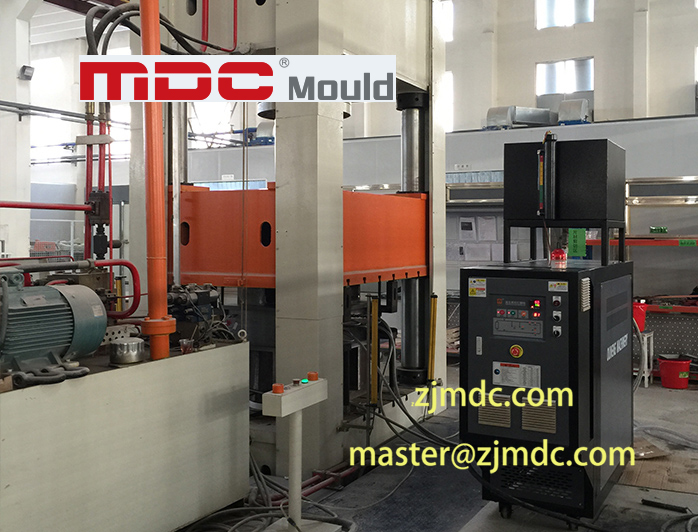
Final assembly integrates heating systems, cooling channels, and ejector mechanisms, followed by mold trials and validation.
5. Critical Design Considerations
- Thermal Management: Ensures uniform curing and reduced cycle time
- Resin Flow Control: Prevents defects such as voids and dry spots
- Ventilation Design: Eliminates trapped air
- Structural Rigidity: Maintains dimensional accuracy under pressure
- Ease of Maintenance: Modular design for quick servicing
6. Applications of Composite Molds
- Automotive: Body panels, EV battery enclosures, structural parts
- Construction: FRP panels, GRP water tanks, building components
- Electrical: Insulation housings and switchgear parts
- Aerospace: Lightweight structural components
- Energy: Wind turbine and industrial composite structures
7. Advantages of Advanced Composite Mold Construction
- High dimensional accuracy and consistency
- Reduced cycle time and improved efficiency
- Superior surface finish
- Long service life
- Support for complex integrated designs
8. Challenges and Optimization Solutions
- Complex Mold Design: Solved through CAE simulation
- Thermal Control Issues: Optimized heating systems
- High Initial Cost: Offset by long-term productivity
- Material Handling: Requires strict process control
9. Future Trends in Composite Tooling
- AI-driven mold design and process optimization
- Industry 4.0 smart manufacturing integration
- Rapid tooling and additive manufacturing
- Recyclable and sustainable composite tooling materials
Conclusion
Composite mold construction is a core technology enabling modern composite manufacturing. From SMC mold and BMC tooling to advanced carbon fiber mold systems, high-quality tooling determines product performance, efficiency, and long-term competitiveness.
At MDC, continuous innovation in composite mold design, precision machining, and advanced tooling engineering ensures reliable solutions for global customers in automotive, construction, and industrial sectors.