Everything About 3D Printed Forged Carbon Fiber Mold

Explore process steps, material benefits, design considerations, cost advantages, and when to choose 3D printing for composite tooling.

Table of Contents

Introduction to 3D Printed Forged Carbon Fiber Molds

Forged carbon fiber combines short carbon fibers with resin in a random orientation, resulting in high strength, lightweight properties, and superior impact resistance. Traditionally, molds for forged carbon fiber components required CNC machining from aluminum or steel, which is expensive and time-consuming.

Today, 3D printing technology (additive manufacturing) is transforming composite tooling by enabling rapid prototyping, cost-efficient short runs, and complex geometries that were previously challenging to produce.

Why Choose 3D Printing for Forged Carbon Fiber Molds?

  • Faster Tooling: Reduce lead time from weeks to days.
  • Cost Efficiency: Lower upfront investment compared to CNC-machined metal molds.
  • Complex Designs: Create internal cooling channels, lattice structures, or integrated features.
  • Customization: Perfect for low-volume or custom composite parts.

Manufacturing Process Overview

  1. CAD Design: Design mold geometry with allowances for shrinkage and draft angles.
  2. 3D Printing: Print the mold using high-temperature resin or metal powder.
  3. Post-Processing: Surface finishing, heat treatment, or coating for durability.
  4. Forged Carbon Fiber Layup: Place pre-mixed carbon fiber and resin inside the mold cavity.
  5. Compression Molding: Apply heat and pressure for curing.

Design & Technical Considerations

  • Heat Resistance: Ensure mold material withstands curing temperature (150–180°C typical for thermoset composites).
  • Surface Finish: Apply a smooth coating to avoid fiber imprint and improve release.
  • Structural Strength: Analyze pressure tolerance for compression molding (30–100 bar).
  • Integration: Add channels for heating/cooling where necessary.

Materials & Printing Technologies

Common solutions for 3D printed composite molds include:

  • High-Temp Resin (SLA/DLP): For short-run molds and prototyping.
  • Metal Additive Manufacturing: Steel or Inconel for long-term durability.
  • PEEK/PEKK: High-performance thermoplastics for moderate production runs.
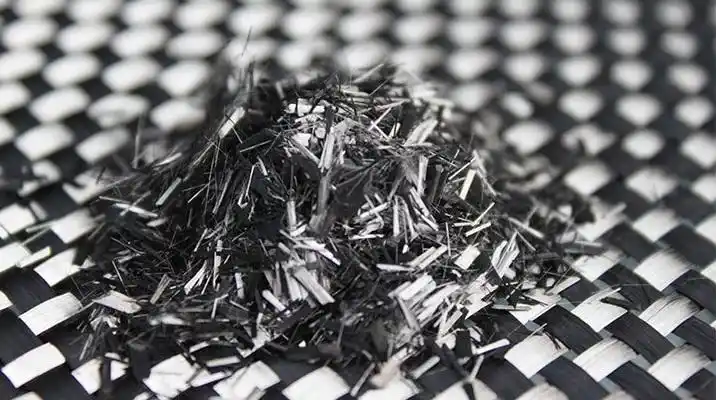
carbon fiber

Cost & Time Comparison

MethodLead TimeApprox. CostBest For
3D Printed Mold3–7 days$1,000–$5,000Prototypes, low-volume
CNC Aluminum Mold3–4 weeks$5,000–$15,000Medium-volume
Steel Mold6–8 weeks$20,000+High-volume production

Applications & Use Cases

  • Automotive interior and structural components
  • Lightweight aerospace parts
  • Sporting goods and high-end consumer products
  • Custom tooling for composite prototyping

Looking for 3D printed forged carbon fiber mold solutions? Contact us today for a free consultation.

FAQ

What is forged carbon fiber?

Forged carbon fiber uses short chopped fibers mixed with resin, offering high strength and lightweight properties without the complex layup of continuous fiber composites.

Can 3D printed molds handle high temperatures?

Yes, when using high-temperature resins or metal additive manufacturing, molds can withstand up to 180°C or more for thermoset composites.

When should I choose 3D printing over CNC machining?

Choose 3D printing for rapid prototypes, complex geometries, and low-volume production where time and cost savings matter.
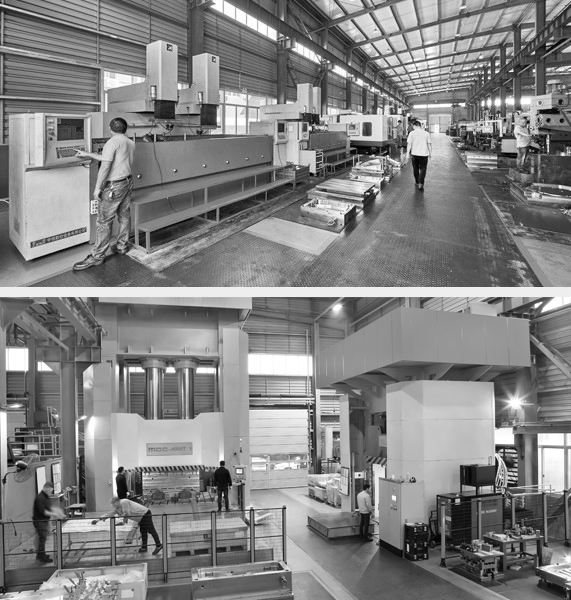
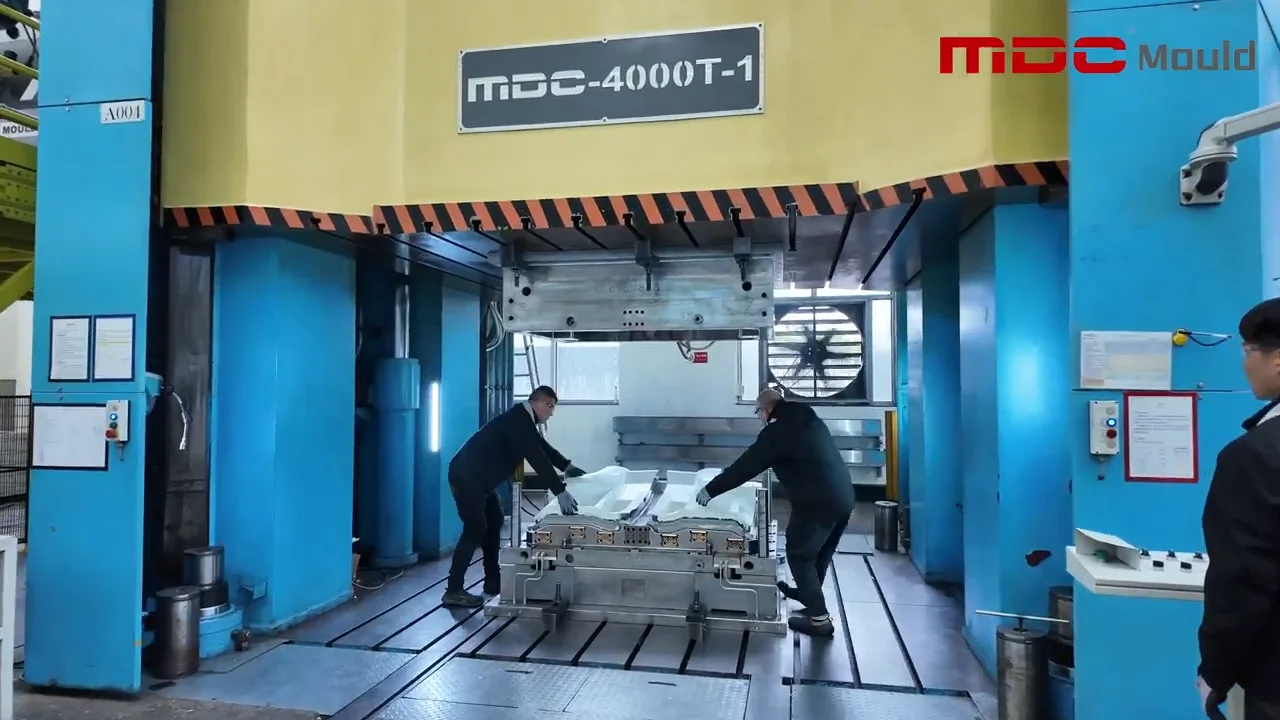
Compression Tooling for High-Performance Composite Molding

Explore MDC Mould’s full-service compression tooling solutions for SMC, BMC, GMT, and carbon fiber composites. From design to sampling, we deliver precision molds for high-performance applications.

At Zhejiang MDC Mould Co., Ltd., we specialize in the design and manufacturing of advanced compression tooling for a wide range of composite materials, including SMCBMCGMT, and carbon fiber. With decades of experience in composite mold development, MDC provides turnkey tooling solutions that meet the most stringent demands of the automotive, electrical, sanitaryware, and construction industries.

What Is Compression Tooling?

Compression tooling refers to precision-engineered molds used in the compression molding process to form thermoset composite materials under high temperature and pressure. These molds are typically made of hardened tool steel and comprise an upper and lower cavity. During production, the composite material—such as Sheet Molding Compound (SMC) or Bulk Molding Compound (BMC)—is placed into the mold cavity and pressed into shape.

The efficiency, accuracy, and durability of the tooling directly impact the final product’s quality, mechanical performance, and production cost. That’s why selecting the right compression tooling partner is critical.

Our Expertise in Compression Tooling

MDC Mould is a trusted name in the global composite molding industry, delivering high-precision compression tools for:

  • Automotive parts (EV battery enclosures, trunk boards, splash shields)
  • Electrical enclosures and battery covers
  • SMC water tanks and bathroom components
  • High-strength GMT structural panels
  • Carbon fiber performance parts

With in-house capabilities covering tool design, 3D modeling, mold flow analysis, CNC machining, mold assembly, and mold tryout, we control every stage of the tooling lifecycle.

Compression Tooling Process at MDC

Our standard compression tooling process includes:

  1. Product Analysis: We begin by analyzing customer part geometry, material flow, and expected tolerances.
  2. Tool Design: Using advanced CAD/CAM software, our engineers design the mold to meet performance and durability goals.
  3. Tool Steel Selection: We use high-grade P20, H13, 718H, or other steels based on required hardness, thermal conductivity, and wear resistance.
  4. CNC Machining: Precision machining is performed in-house using 3-axis, 4-axis, and 5-axis CNC systems for maximum accuracy.
  5. Polishing & Surface Treatment: Polished or textured surfaces are applied according to the product design—chrome plating, Teflon coating, or mirror finishes available.
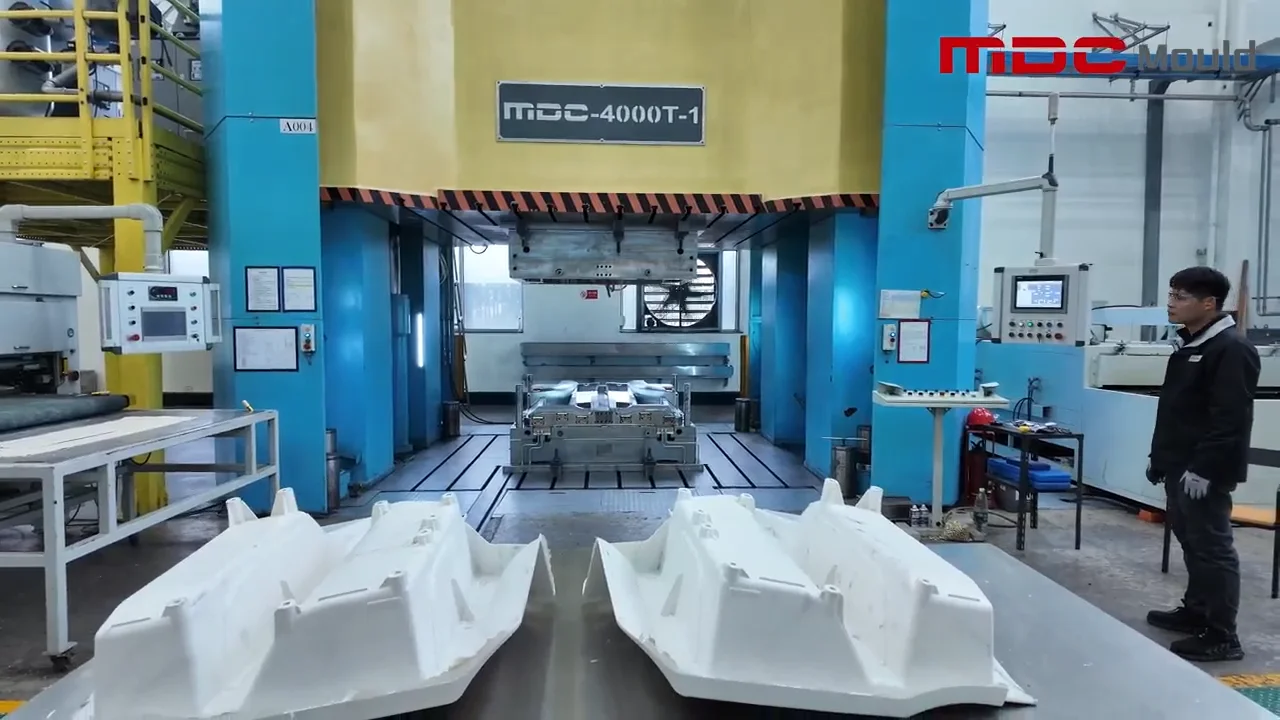
  6. Tryout & Sampling: We conduct complete mold tryouts with hydraulic press machines and provide test samples before delivery.
compression mould machine

Advantages of MDC Compression Tooling

  • High Precision: Tolerances controlled within ±0.05 mm ensure consistent product dimensions and fit.
  • Durability: Hardened tooling with optimized cooling systems increases mold life and production efficiency.
  • Versatility: Compatible with thermoset materials such as SMC, BMC, GMT, and carbon fiber preforms.
  • Customization: Fully customized mold cavities, lifters, ejector systems, and surface textures to suit each client’s product requirements.
  • Complete In-House Manufacturing: All stages—from design to polishing—are performed under one roof.

Applications of MDC Compression Molds

Our compression molds are used in a wide range of industries:

  • Automotive: SMC trunk lids, EV battery trays, fenders, hoods
  • Construction: GRP panels, water tanks, utility covers
  • Electrical: Circuit breaker enclosures, junction boxes
  • Sanitaryware: SMC bathroom walls, bathtubs, ceilings
  • Rail & Aerospace: Lightweight GMT/carbon fiber interior panels

Why Choose MDC for Compression Tooling?

As a full-service composite mold manufacturer, MDC Mould stands out with:

  • Over 20 years of experience in composite tooling and thermoset compression molds
  • A complete production line for mold making, sampling, and small-batch trial runs
  • Expertise in demolding solutions and complex part geometry
  • Strict quality inspection (CMM, hardness, roughness, mold function test)
  • Timely global delivery and responsive after-sales support

Whether you’re launching a new composite part or optimizing an existing mold, MDC Mould offers reliable compression tooling to support your success.

Contact Us

Looking for high-quality compression tooling for your composite product line? Contact Zhejiang MDC Mould Co., Ltd. today to discuss your project. Our experienced team is ready to deliver precision tools that meet your performance, timeline, and budget requirements.

Visit www.zjmdc.com or email us to get a free consultation and quotation.

Composite Compression Molds with Pre-Shipment Chroming Plated Finish

In the modern landscape of composite material manufacturing, Composite Compression Molds play a vital role in producing lightweight, durable, and high-performance components. These molds are widely used in industries such as automotive, electrical, aerospace, and sanitaryware, particularly for processing thermoset materials like SMC (Sheet Molding Compound), BMC (Bulk Molding Compound), and carbon fiber prepregs.

One of the most critical enhancements to these molds is the application of a pre-shipment chroming plated surface treatment. This chrome plating not only protects the mold surface but also improves part quality and extends the mold’s operational lifespan. This article explores the structure, advantages, and surface treatment of composite compression molds, with a focus on chrome plating prior to delivery.

Understanding Composite Compression Molds

Composite compression molds are precision-engineered tools designed to shape composite materials under heat and pressure. They are typically used in hydraulic or mechanical press machines. These molds are commonly designed as two halves — a male and a female mold — that enclose the composite charge during molding.

Composite Compression Mold

Common Materials Processed

  • SMC (Sheet Molding Compound)
  • BMC (Bulk Molding Compound)
  • Carbon Fiber Reinforced Plastics (CFRP)
  • Glass Mat Thermoplastics (GMT)
  • Thermoset Laminates

Key Applications

  • Automotive panels and doors
  • Truck and EV battery enclosures
  • Electrical housings and switchboards
  • Shower trays, bathtubs, and wash basins
  • Carbon fiber structural parts

Design and Engineering Considerations

Composite compression molds require robust structural integrity and dimensional precision to withstand repetitive press cycles. Critical considerations include:

  • Thermal control: Integrated heating and cooling systems for optimal resin curing
  • Fiber orientation: Mold geometry should accommodate proper fiber flow and pressure distribution
  • Demolding structure: Draft angles, ejector systems, and surface coating must support easy release of parts
  • Durability: Use of premium mold steels like P20, H13, or hardened tool steel to resist wear and deformation

What is Pre-Shipment Chroming Plated Finish?

Chroming plated finish, or hard chrome plating, is a process in which a thin layer of chromium is electroplated onto the mold surface. For composite molds, this treatment is typically applied after final polishing and before shipment. It provides a high-hardness, corrosion-resistant surface that enhances the mold’s performance in a high-pressure, high-temperature molding environment.

Key Benefits of Chrome Plating for Composite Molds

  • Wear resistance: Extends mold life in abrasive composite molding processes
  • Corrosion protection: Prevents rust and chemical degradation from aggressive resin systems
  • Surface finish quality: Achieves smooth, high-gloss part surfaces with minimal post-processing
  • Release performance: Reduces sticking, improves demolding efficiency, and lowers the need for mold release agents
  • Dimensional stability: Maintains mold tolerances across thousands of cycles
truck step

Why Pre-Shipment Chrome Plating Matters

At MDC Mould, every mold undergoes a detailed surface treatment process before shipment. The pre-shipment chroming plated finish is one of our quality assurance commitments to ensure customers receive ready-to-use molds that deliver long-term value.

Our Chrome Plating Process Includes:

  1. Surface preparation: Polishing and degreasing
  2. Nickel undercoat (optional): For enhanced adhesion and durability
  3. Hard chrome electroplating: Thickness ranging from 0.02mm to 0.1mm depending on mold type
  4. Final inspection and measurement: To confirm surface hardness, gloss, and uniformity

Quality Control and Export Standards

Our chrome-plated molds are tested under simulated working conditions to ensure their resistance to thermal fatigue and chemical attack. MDC complies with international standards including ISO 9001, and all molds are shipped with:

  • 3D and 2D drawings
  • Material certificates
  • Chroming thickness reports
  • Trial mold video and photos
smc truck step

Industries That Benefit from Chrome-Plated Composite Molds

  • Automotive: EV battery covers, interior trims, trunk boards
  • Sanitaryware: Bathroom base panels, SMC bathtubs
  • Energy sector: Composite electrical boxes and wind blade components
  • Aerospace: Carbon fiber panel forming tools

Conclusion

Composite compression molds with pre-shipment chroming plated finish represent the optimal solution for manufacturers demanding high surface quality, longer tool life, and minimal maintenance. At MDC Mould, we integrate advanced tooling design with precision surface treatment to deliver turnkey molds that exceed global industry expectations.

If you’re seeking a long-term partner in compression molding technology, MDC Mould is ready to support your project from design to delivery.

Contact MDC Mould for Customized Composite Tooling Solutions

Learn more at www.zjmdc.com or contact us directly for consultation and quotation.

What is a Press Tool? Understanding Types, Applications, and Benefits

press tool is a mechanical device used in various manufacturing processes to shape or cut material using a die, typically through mechanical or hydraulic means. Press tools are primarily utilized for operations such as stamping, bending, punching, blanking, forming, and deep drawing. These tools are crucial for producing high-precision, repeatable parts in industries ranging from automotive and aerospace to electronics and consumer goods manufacturing.

In this article, we will explore what press tools are, their types, applications, and the key factors that make them essential in modern industrial production. Additionally, we will dive into the design and maintenance considerations that contribute to the tool’s effectiveness and longevity.

Understanding Press Tools: The Basics

press tool operates by applying force to a workpiece through a die. The die is designed to shape or cut the material in a specific manner based on the operation being performed. The force applied can be mechanical, hydraulic, or pneumatic, depending on the type of press used. This force is typically applied by a press machine, which can be powered either manually or via automated controls for higher volumes of production.

The press tool consists of several components:

  • Die (or Mold): The heart of the press tool, it contains the cavity or shape into which the material is formed. Dies are usually made of high-strength steel for durability.
  • Punch: The punch is used to exert pressure on the material to force it into the die.
  • Ejector: The ejector pushes the formed part out of the die cavity.
  • Guide Bushings: These help align the punch and die to ensure accurate forming of the material.
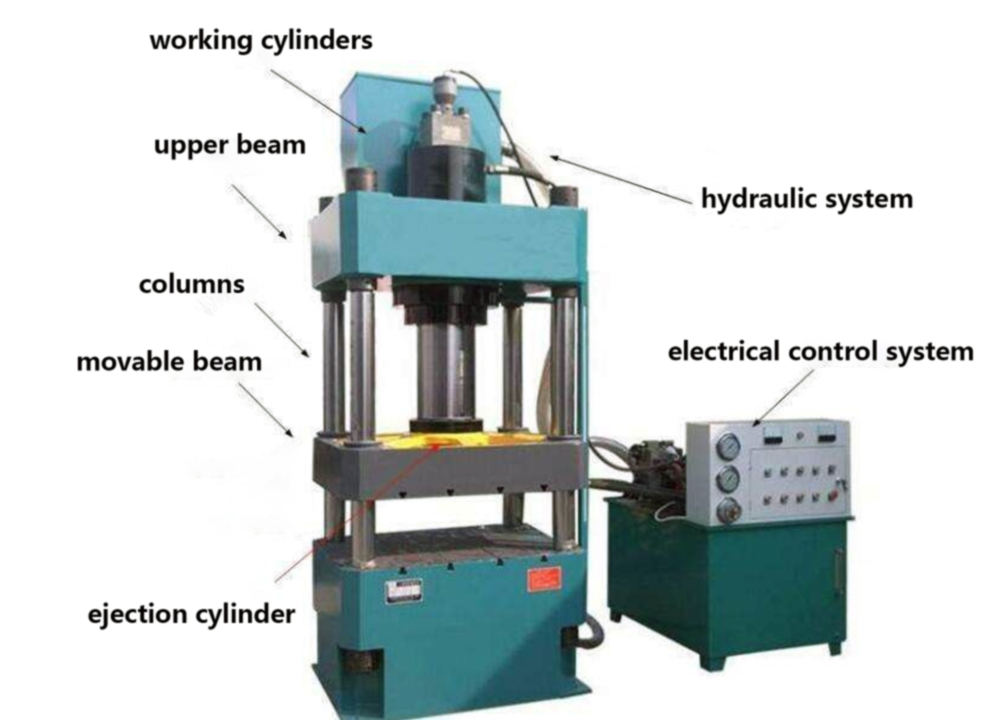
Hydraulic press structure

Types of Press Tools

Press tools can be classified based on their operation and the specific material processing required. Below are some of the most common types of press tools:

1. Cutting Press Tools

Cutting press tools are designed to cut or shear materials into shapes or parts. This is one of the most common applications of press tools. It includes operations like:

  • Punching: Creating holes in a workpiece.
  • Blanking: Cutting out a flat, desired shape from a sheet of material.
  • Slitting: Cutting long strips from a sheet or coil.
  • Notching: Removing small portions of material from a workpiece’s edge.

2. Forming Press Tools

Forming press tools shape materials without removing material, but rather by deforming the material to a desired shape. These tools include:

  • Bending: Forming a part by bending the material along a straight line.
  • Deep Drawing: Shaping a flat sheet into a three-dimensional shape like a cup or box.
  • Embossing: Creating raised or recessed designs on the surface of a material.

3. Blanking Press Tools

Blanking involves cutting out a piece from a larger sheet of material to form the initial part. These are essential in producing parts that need to be further processed in other stages of manufacturing.

4. Progressive Press Tools

Progressive press tools are used in continuous stamping processes, where the material is fed through a series of dies in a single pass. Each die performs a different operation, such as punching, bending, or blanking, and the part is progressively shaped until the final form is reached.

5. Transfer Press Tools

Transfer press tools involve the movement of material from one die to another, often used in more complex manufacturing processes where multiple shaping and cutting steps are required.

Applications of Press Tools

Press tools play a vital role in numerous industries and sectors, as they enable high-precision, high-volume manufacturing. Below are some of the most common applications:

1. Automotive Industry

In the automotive industry, press tools are used to produce body panels, brackets, engine components, and other high-strength parts. These parts often require high precision and durability, making the design and operation of press tools crucial to the success of the manufacturing process.

2. Aerospace

The aerospace industry also relies heavily on press tools for producing parts that need to meet strict strength, weight, and reliability requirements. Press tools are used to manufacture lightweight but high-strength components, such as airframe panels, wing skins, and brackets.

3. Electronics

In the electronics industry, press tools are used to manufacture housings, covers, and brackets for consumer electronics, computers, and communication devices. Precision press tooling ensures that these components meet the intricate requirements for electronic devices.

4. Consumer Goods Manufacturing

From appliances to toys, consumer goods manufacturing frequently utilizes press tools to produce parts that require high-volume production and precision, including metal or plastic parts.

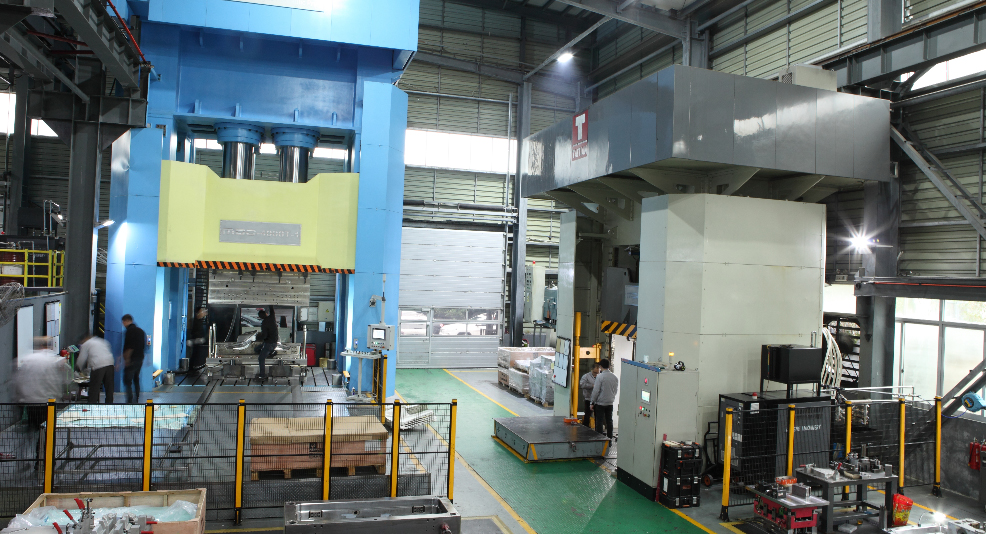
compression-mould-machine

Factors Affecting Press Tool Design and Performance

The effectiveness of a press tool relies heavily on its design and the material being processed. Several factors must be taken into account when designing a press tool:

  • Material Selection: The type of material being worked on significantly influences the design and performance of the press tool.
  • Tooling Material: The material used for the press tool, especially the die, must be strong enough to withstand repeated pressure and wear.
  • Precision: Accuracy in tool design is paramount, especially for parts that need to meet tight tolerances.
  • Production Volume: The required volume of parts will influence the choice of press tool.
  • Tool Maintenance: Routine maintenance is critical to extend the life of a press tool.

Conclusion

In summary, press tools are essential in various manufacturing processes due to their ability to create high-precision, repeatable parts. Whether for cutting, forming, or shaping, the correct press tool can significantly improve productivity, reduce material waste, and ensure the high-quality performance of the parts produced.

For manufacturers looking to invest in press tools, understanding the various types and applications, as well as the factors that affect tool design and performance, is essential to optimizing production and achieving long-term success.