Temperature Effects on Fatigue of Thermoset and Thermoplastic Composites

A professional analysis of how temperature influences the static and fatigue performance of thermoset and thermoplastic composites, and what it means for compression mold.

As industries push toward lightweight, high-efficiency, and long-duration structures, the mechanical performance of thermoset composites and thermoplastic composites under extreme environmental conditions has become a critical research topic. Applications in aerospaceautomotivenew energy, and industrial machinery demand composite materials that maintain high stiffness, strength, and fatigue resistance across large temperature variations.

In a recent study, researchers evaluated one commercial thermoset material and two high-performance thermoplastic composites in the temperature range of −30°C to +120°C. These conditions simulate real operating environments such as winter cold starts, under-hood temperatures in vehicles, and heating cycles found in industrial systems. The research provides new insights highly relevant to manufacturers of composite toolingcompression molds, and high-temperature composite components.

1. Static Mechanical Performance: Thermoset vs. Thermoplastic Composites

Tensile tests performed across the full temperature range reveal clear differences in the static behavior between thermoset and thermoplastic materials. The evaluated thermoset composite maintains a relatively stable modulus and tensile strength even as temperature approaches +120°C, confirming its suitability for high-temperature composite mold applications and structural components in automotive environments.

In contrast, the two thermoplastic composites exhibit more significant variations in stiffness and elongation. Their temperature-dependent viscoelastic behavior leads to reduced modulus at high temperatures but improved impact performance at low temperatures. This duality makes them ideal for parts manufactured through compression molding, especially components requiring energy absorption.
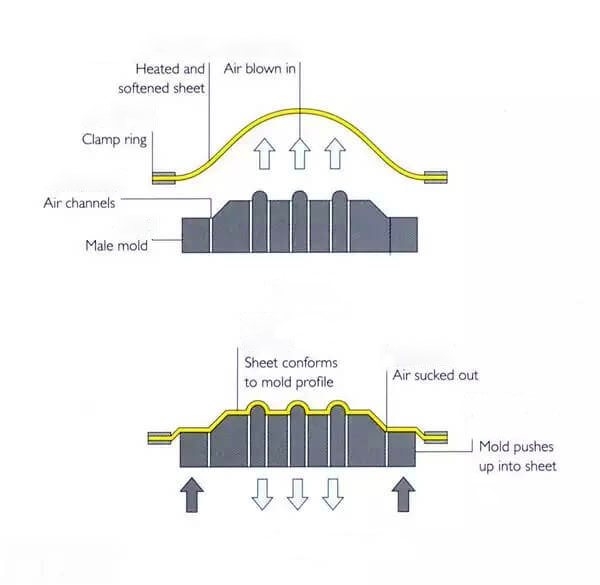
thermoforming

2. Fatigue Behavior Under Extreme Temperatures

The fatigue test results highlight temperature as a dominant factor in long-term structural reliability. At elevated temperatures, polymers undergo chain mobility changes and microstructural relaxation, accelerating fatigue damage. The thermoplastic materials show greater sensitivity to this effect, while the thermoset composite demonstrates superior high-temperature fatigue resistance due to its highly cross-linked network.

This is particularly important for manufacturers of compression-molded composite parts, including:

  • Automotive underbody protection systems
  • EV battery structural housings
  • Engine compartment covers
  • High-load brackets and cross-car beams
  • Industrial pump and motor components

MDC’s expertise in SMC moldBMC moldcarbon fiber mold, and thermoplastic composite mold development ensures reliable processing for these demanding applications.

3. Implications for Composite Mold and Compression Molding Production

Understanding the temperature-dependent fatigue behavior is essential not only for material selection but also for designing advanced composite moulds and compression tooling. Mold temperature control, heating uniformity, and optimized venting must all be aligned with the specific thermal response of the material.

For example:

  • Thermoset composites (e.g., SMC, BMC) require precise temperature control (135–160°C) to ensure full curing.
  • Thermoplastic composites (e.g., LFT, CF-reinforced PP) need rapid heating & cooling cycles to maintain consistency.
  • Carbon-fiber hybrid composites demand stable mold rigidity and low thermal distortion for aerospace-grade accuracy.

These factors directly influence mold lifespan, cycle time, and part repeatability—areas where MDC Mould has extensive industrial experience.

4. Research Funding and Industrial Context

This study is partially funded by the Italian Ministry of Enterprises and Made in Italy (MIMIT) under the project: “New Generation of Modular Intelligent Oleo-dynamic Pumps with Axial Flux Electric Motors.” The research aligns strongly with global industry trends in improving thermal stability and mechanical reliability of composite components used in motors, pumps, automotive assemblies, and energy systems.

Conclusion

The investigation into the temperature-dependent fatigue performance of thermoset and thermoplastic composites provides critical insights for high-precision composite manufacturing. As the automotive and energy industries transition toward lightweight structures, the demand for temperature-resistant, high-fatigue-strength materials will continue to rise.

With advanced technical capability in SMC moldsBMC moldscarbon fiber moldsthermoplastic composite molds, and large-format composite toolingMDC Mould is positioned to support global customers developing next-generation high-performance composite parts.
Thermoplastic vs. Thermoset Carbon Fiber: How Co-Curing Technology Redefines Composite Bonding

Discover how co-curing technology bridges thermoplastic and thermoset carbon fiber composites, transforming aerospace, automotive, and medical manufacturing.

When over 50% of the Boeing 787 fuselage was made from carbon fiber composites, one question reshaped the entire aerospace industry: how do we join these advanced materials safely and efficiently? Traditional adhesive bonding and mechanical fastening methods face severe limits — from environmental degradation to added weight. Today, co-curing technology is emerging as the breakthrough solution. In this feature, MDC Mould explores how thermoplastic and thermoset co-curing is transforming composite connection design.

1. Principle of Co-Curing: The Chemical Dance Between Thermoplastic and Thermoset

In composite structures, co-curing enables the direct bonding of thermoplastic and thermoset materials through simultaneous heat and pressure, forming a seamless molecular interface. This process combines the flexibility of thermoplastics with the rigidity of thermosets, achieving “the best of both worlds” in one joint.

Taking the Airbus A350’s PEEK-based carbon fiber tape as an example, the co-curing process involves three critical stages:

  1. Molecular Interface Reconstruction: Surface activation using UV plasma introduces oxygen-containing polar groups on the CF/PEEK surface, reducing the contact angle from 80.22° to 67.49°, achieving nano-level wetting with the epoxy resin layer.
  2. Thermodynamic Precision Control: At 130 °C in a vacuum, the thermoplastic matrix reaches peak flow, interpenetrating the thermoset prepreg network. Under 10–15 MPa pressure, interfacial porosity is maintained below 0.5%.
  3. Multi-Scale Reinforcement Design: A seven-directional 3D woven carbon fiber layer creates a reinforced “micro rebar” network, boosting interfacial shear strength by 68% and extending fatigue life by 4.39 times compared with traditional adhesive bonding.

2. Performance Comparison: Beyond Traditional Joining

Compared to mechanical fastening and single-phase adhesive bonding, co-curing technology achieves significant leaps in efficiency and performance:

PropertyMechanical FasteningThermoset AdhesiveCo-Curing Technology
Joint EfficiencyRequires drilling (30% strength loss)8–12 h curing30–90 min integrated molding
Specific Strength1.2 GPa/cm³1.5 GPa/cm³3.69 GPa/cm³
Thermal ResistanceCorrosion prone≤150 °CStable to 230 °C
RepairabilityIrreversibleIrreversibleReversible (up to 3 heat cycles)

Breakthrough Innovations:

  • Self-Healing Interfaces: Toray’s welded interlayer enables microcrack healing at 300 °C, extending service life by 300%.
  • Smart Monitoring: ZnO nanowire-functionalized fibers developed by Wuhan University improve strain sensing and heat transfer by 17%, cutting cure time by 40%.

3. Industrial Applications: From the Lab to the Sky

Aerospace Manufacturing Revolution

Boeing and Toray have co-developed a welded fuselage architecture using co-curing carbon fiber technology. CFRP component joining time dropped from 8 hours to 20 minutes, reducing aircraft weight by 1.2 tons and boosting fuel efficiency 15%.

Automotive Lightweighting

The Tesla Cybertruck battery enclosure employs PA6-based co-curing joints, increasing crash energy absorption by 70% and lowering production costs by 40% — a major milestone for scalable EV composite adoption.

Medical Device Engineering

Johnson & Johnson now applies PEEK/thermoset co-curing in orthopedic implants, accelerating osseointegration by 50% and cutting post-surgical infection risk to 0.3%.

4. Future Trends: Sustainable and Intelligent Co-Curing

  • Circular Manufacturing: Airbus’ recovery system enables 100% recycling of thermoplastic bonded components, reducing carbon fiber waste by 86% compared with conventional thermoset methods.
  • 4D Printing Integration: Embry-Riddle Aeronautical University’s coaxial direct-write printing allows simultaneous deposition of ZnO-functionalized fibers and thermoset resin, improving manufacturing efficiency 10-fold.
  • Digital Twin Optimization: Siemens Teamcenter now simulates co-curing processes in real-time, cutting optimization cycles from 3 months to 72 hours and achieving 99.7% yield accuracy.

5. MDC Mould’s Role in Advanced Composite Bonding

As a professional developer of composite mold and carbon fiber mold solutions, Zhejiang MDC Mould Co., Ltd. supports the co-curing revolution with precision tooling and process-ready molds for aerospace, EV, and industrial components. MDC’s expertise in hot compression moldsSMC/BMC molds, and thermoforming molds enables stable pressure, uniform heating, and dimensional accuracy — the essential conditions for high-quality co-curing.

By integrating simulation, precision machining, and vacuum-assisted curing, MDC helps manufacturers achieve high-bonding strength, reduced void content, and repeatable production cycles — from prototype to series manufacturing.

6. Conclusion: The Next Frontier of Composite Joining

From molecular-scale interface design to large-scale structural assembly, co-curing technology represents a paradigm shift in composite joining. When the flexibility of thermoplastics meets the rigidity of thermosets, a new generation of lightweight, damage-tolerant, and recyclable structures emerges — reshaping aerospace, automotive, and medical industries alike.

As MDC Mould continues developing high-precision compression molds and composite tooling for next-generation materials, co-curing is no longer just a laboratory breakthrough — it’s the future of intelligent, sustainable composite manufacturing.

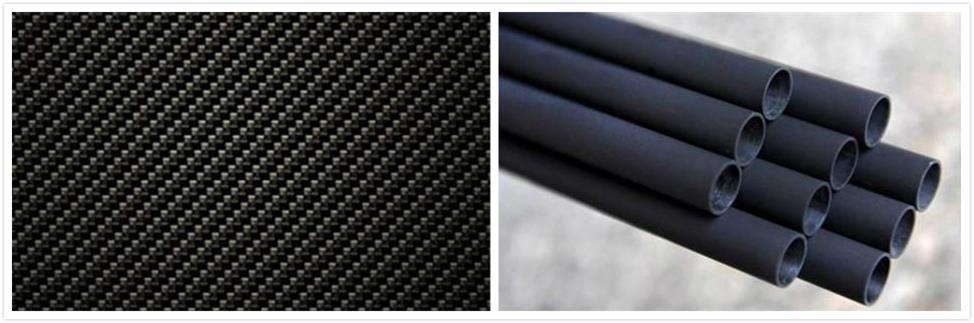
carbon fiber