Composite Materials in Hydropower Dam Construction: Applications & Benefits

Explore how advanced composite materials like GFRP, CFRP, and BFRP are revolutionizing hydropower dam construction. Learn about their applications in structural reinforcement, erosion control, and more.

The construction of large-scale hydropower stations represents a monumental engineering challenge. These projects demand materials that can withstand extreme forces, constant exposure to water, and harsh environmental conditions. While traditional materials like steel and concrete have long been the backbone of these projects, the integration of advanced composite materials has introduced a new era of innovation, offering superior performance in specific applications.

With their high strength-to-weight ratio, exceptional corrosion and fatigue resistance, and remarkable design flexibility, composites are increasingly supplementing or even replacing conventional materials in critical components. This article provides a comprehensive overview of the most common composite materials used in hydropower dam construction, detailing their unique properties and key applications, from structural reinforcement to erosion protection.

Glass Fiber Reinforced Polymer (GFRP): Versatile & Cost-Effective

GFRP, often referred to as fiberglass, is one of the most widely used composite materials in hydro-engineering due to its favorable cost-to-performance ratio. Its excellent corrosion resistance, low weight, and insulating properties make it an ideal choice for a variety of non-primary structural components and protective systems.

  • Pressure Pipes & Penstock Linings: GFRP pipes are an excellent alternative to traditional steel pipes, particularly for small to medium diameters. They are lightweight, making installation easier, and their smooth inner surface reduces friction, improving hydraulic efficiency.
  • Accessways, Walkways, & Grates: GFRP gratings and floor panels are widely used in maintenance corridors and walkways. They are lightweight, non-corrosive, non-conductive, and offer superior slip resistance, making them perfect for the perpetually wet environments of hydropower facilities.
  • Cable Trays & Conduits: The excellent electrical insulation and corrosion resistance of GFRP make it the material of choice for cable trays and protective conduits, ensuring the safety and longevity of electrical systems.
  • Trash Racks: Replacing metal bars in trash racks with GFRP can significantly reduce weight and minimize the maintenance associated with rust and corrosion.

Carbon Fiber Reinforced Polymer (CFRP): The Gold Standard for Structural Reinforcement

CFRP is a high-performance composite known for its extremely high specific strength and stiffness. Its primary application in hydropower is in the structural strengthening and repair of aging infrastructure.

  • Dam & Structure Reinforcement: CFRP is a game-changer for extending the service life of concrete structures. Carbon fiber sheets or plates can be bonded to dams (gravity dams, arch dams), powerhouse structures, spillway piers, and tunnel linings to enhance their load-bearing capacity and repair cracks.
  • High-Performance Components: In high-head, high-speed turbines, CFRP can be used to manufacture or repair critical areas of turbine blades, offering exceptional strength and rigidity while reducing weight.
  • Sensor Encapsulation: CFRP is used to encapsulate and protect sensitive sensors, such as fiber Bragg grating sensors, that are embedded within concrete structures for long-term monitoring.

Aramid Fiber Reinforced Polymer (AFRP): Engineered for Impact & Protection

AFRP, a composite made from aramid fibers like Kevlar, is valued for its extraordinary toughness and impact resistance. Its role is crucial for safety and protection, particularly in manufacturing protective panels.

  • Protective Armor Panels: The primary use of AFRP is in manufacturing protective panels to shield critical equipment and personnel from flying debris, such as in generator halls or control rooms.

Ultra-High Molecular Weight Polyethylene (UHMWPE) Composites: The Ultimate in Abrasion Resistance

UHMWPE is a unique material with a remarkably low coefficient of friction and exceptional resistance to abrasion, making it indispensable in areas of hydropower stations subjected to high-velocity, sediment-laden water.

  • Abrasion-Resistant Linings: UHMWPE liners are installed in draft tubes, spillways, and sluiceways where sediment scour is a major issue. Its abrasion resistance is several times greater than that of steel.
  • Bearings & Slides: Its self-lubricating properties and wear resistance make UHMWPE an excellent material for gate slides and other mechanical components that require low-friction bearings.

Basalt Fiber Reinforced Polymer (BFRP): A Promising, Sustainable Alternative

BFRP is emerging as a strong contender in the composite market, offering properties that bridge the gap between GFRP and CFRP. Made from a widely available natural resource, basalt rock, it presents a more sustainable and often more cost-effective option.

  • Reinforcement Bars (BFRP Rebar): BFRP rebar is an ideal substitute for steel rebar in concrete structures exposed to corrosive environments, completely eliminating the risk of rebar corrosion.

Engineering Ceramic Composites & Coatings: The Front Line of Erosion Protection

Cavitation and abrasion are two of the most destructive forces acting on turbine components. Ceramic matrix composites and ceramic coatings provide an extremely hard and durable surface to combat this wear.

  • Anti-Erosion & Anti-Cavitation Coatings: These coatings are crucial for protecting turbine runner blades, wicket gates, and spillway floors. Common materials include tungsten carbide (WC) and chromium carbide (Cr₃C₂).

Hydropower Dam

Summary & Future Trends in Hydro-Engineering

The application of composite materials in hydropower is a testament to the industry’s commitment to durability, efficiency, and long-term sustainability. The strategic use of materials like GFRP for non-structural parts, CFRP for critical structural repairs, and UHMWPE for high-wear areas ensures the longevity and resilience of these massive projects.

As composite technology continues to advance and costs decrease, their role in the construction, maintenance, and operation of hydropower stations will only become more extensive. The introduction of these materials, as exemplified in projects like the Yarlung Tsangpo Hydropower Station‌, underscores a forward-thinking approach to building the next generation of resilient and efficient energy infrastructure.

Why Carbon Fiber Is the Future of Sports Equipment

Learn the benefits, applications, and how MDC Mould supports high-performance manufacturing through advanced compression tooling and composite mold solutions.

Introduction: Why the Sports Industry Loves Carbon Fiber

From Olympic cycling to high-speed archery, carbon fiber has become the material of choice for performance-driven sports equipment. Known for its light weight, high strength, and fatigue resistance, carbon fiber is transforming how athletes train, compete, and win.

At MDC Mould, we support this revolution by supplying high-precision carbon fiber moldscompression molds, and composite tooling to leading manufacturers of sports equipment in China and abroad.

What Makes Carbon Fiber Special?

Carbon fiber is a composite material made by reinforcing carbon filaments into fabric and infusing it with resin. This structure results in a product that is:

  • 75% lighter than steel but up to 12 times stronger
  • Highly resistant to fatigue, corrosion, and impact
  • Customizable in stiffness, thickness, and layering direction

These properties make carbon fiber ideal for crafting sports equipment where every gram and every vibration matters.

Top Applications in Sports

  • Carbon Fiber Bicycles: Frames as light as 1.15 kg reduce rider fatigue and increase aerodynamic efficiency. Used in Olympic-level competitions.
  • Carbon Fiber Archery Bows: Recurve limbs deliver faster arrow speeds and reduced hand shock, enhancing accuracy and comfort.
  • Tennis Rackets: Improve swing control and reduce joint strain thanks to excellent vibration dampening.
  • Rowing Shells & Poles: Carbon builds offer lower water drag and higher stroke efficiency in competitive rowing.
碳纤维自行车架

Why Manufacturers Trust MDC for Carbon Fiber Tooling

Zhejiang MDC Mould Co., Ltd. specializes in designing and manufacturing SMC/BMC/GMT/Carbon Fiber compression molds tailored for sports equipment production.

We integrate simulation, CNC machining, and vacuum systems into every mold to ensure flawless surface quality, tight tolerances, and reliable demolding—key factors for high-performance carbon fiber parts.

The Market is Growing

According to industry forecasts, the global market for carbon fiber sports equipment is expected to grow at a CAGR of 12% over the next five years. As lightweight performance becomes a standard expectation, the demand for composite molds and compression tooling is also rising.

Whether it’s for professional athletes or consumer-grade equipment, precision-molded carbon fiber parts are becoming the benchmark of quality in modern sports manufacturing.

Challenges and MDC’s Solutions

While carbon fiber offers many benefits, it also comes with production challenges:

  • High processing temperatures and precise pressure control are required during molding
  • Complex shapes demand accurate mold design with proper draft and fiber orientation
  • Demolding can be difficult if molds are not polished and vented correctly

With decades of experience, MDC provides engineered mold solutions that address these issues, offering:

  • Mirror-polished cavities for easier demolding
  • Vacuum-assist systems for improved fiber compaction
  • Temperature-uniform channels to ensure even curing

Conclusion: Lightweight Innovation Starts with the Right Mold

As carbon fiber continues to redefine the limits of sports equipment, manufacturers need trusted partners who can deliver molds with precision, durability, and performance in mind. MDC Mould is proud to be part of this transformation—helping brands bring cutting-edge gear to athletes around the world.

If you’re developing carbon fiber sports products, contact us today to learn how our composite mold and carbon fiber tooling expertise can elevate your next product line.

What is Compression Mold?

Learn what a compression mold is, how the compression molding process works, and why it is widely used for SMC, BMC, and composite parts manufacturing.

Introduction

compression mold is a specialized tool used in the compression molding process, a widely adopted manufacturing method for forming composite parts. It involves placing a preheated material, such as SMC (Sheet Molding Compound)BMC (Bulk Molding Compound), or other thermoset materials, into a heated mold cavity, then applying pressure to shape and cure the material.

Compression molds are essential in industries such as automotive, electrical, construction, and aerospace, where lightweight, high-strength, and heat-resistant components are needed.

Structure of a Compression Mold

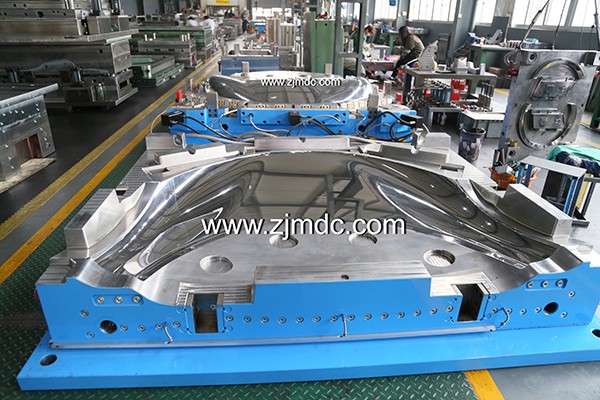
A typical compression mold includes two main halves: the cavity and the core. It may also include:

  • Heating systems – to maintain the required temperature for curing
  • Guide pins and bushings – for accurate mold alignment
  • Ejection mechanisms – to release the molded part after curing
  • Vacuum systems – for gas removal and surface quality improvement

Depending on the application, compression molds can be made from hardened steel, aluminum, or other high-strength alloys. Surface treatments like chrome plating may be applied to improve mold longevity and part release.

compression mold SMC Engine hood Mold

Compression Molding Process

The compression molding process typically follows these steps:

  1. Material Loading: The composite material is loaded into the open mold cavity.
  2. Preheating: The material may be preheated to reduce cycle time and improve flow.
  3. Compression: The mold is closed and pressure is applied using a hydraulic press.
  4. Curing: Heat and pressure are maintained until the material is fully cured.
  5. Demolding: The press opens and the finished part is ejected.

This process is suitable for high-volume production of components with intricate geometries and excellent mechanical properties.

Applications of Compression Mold

Compression molds are used to manufacture various thermoset and composite parts, including:

  • Automotive parts: EV battery enclosures, trunk lids, bumpers, and engine splash shields
  • Electrical housings: Insulators, switchgear, and fuse boxes
  • Construction materials: SMC ceilings, wall panels, water tanks
  • Sanitary products: SMC bathroom panels and bathtubs

Thanks to their strength-to-weight ratio, compression-molded parts are replacing metal and thermoplastic components in many structural and semi-structural applications.

Advantages of Compression Molding

Using a compression mold offers several benefits:

  • High strength and durability – especially with fiber-reinforced composites
  • Lower tooling cost compared to injection molding
  • Reduced material waste and scrap
  • Excellent surface finish for Class-A automotive parts
  • Compatibility with large, complex shapes

For manufacturers seeking reliable and repeatable performance, compression molding with precision molds remains a top choice.

SMC Mold vs. BMC Mold

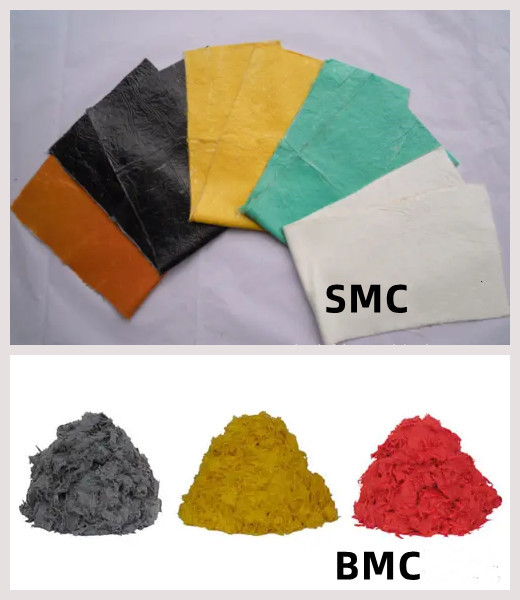
Both SMC molds and BMC molds are used in compression molding, but they differ slightly:

  • SMC Mold: Designed for sheet-like materials; suitable for larger structural parts
  • BMC Mold: Suited for dough-like bulk materials; ideal for smaller or more detailed parts

Choosing the right mold depends on the geometry, performance, and surface requirements of the final part.

smc vs bmc

Conclusion

compression mold is an integral part of the composite molding industry. From automotive components to building materials, its role in shaping and curing high-performance parts makes it indispensable. With advancements in material science and precision tooling, compression molding continues to evolve and serve as a key process in modern manufacturing.

For companies looking to invest in SMC moldsBMC molds, or custom compression tooling, working with an experienced mold manufacturer is essential to ensure durability, precision, and production efficiency.