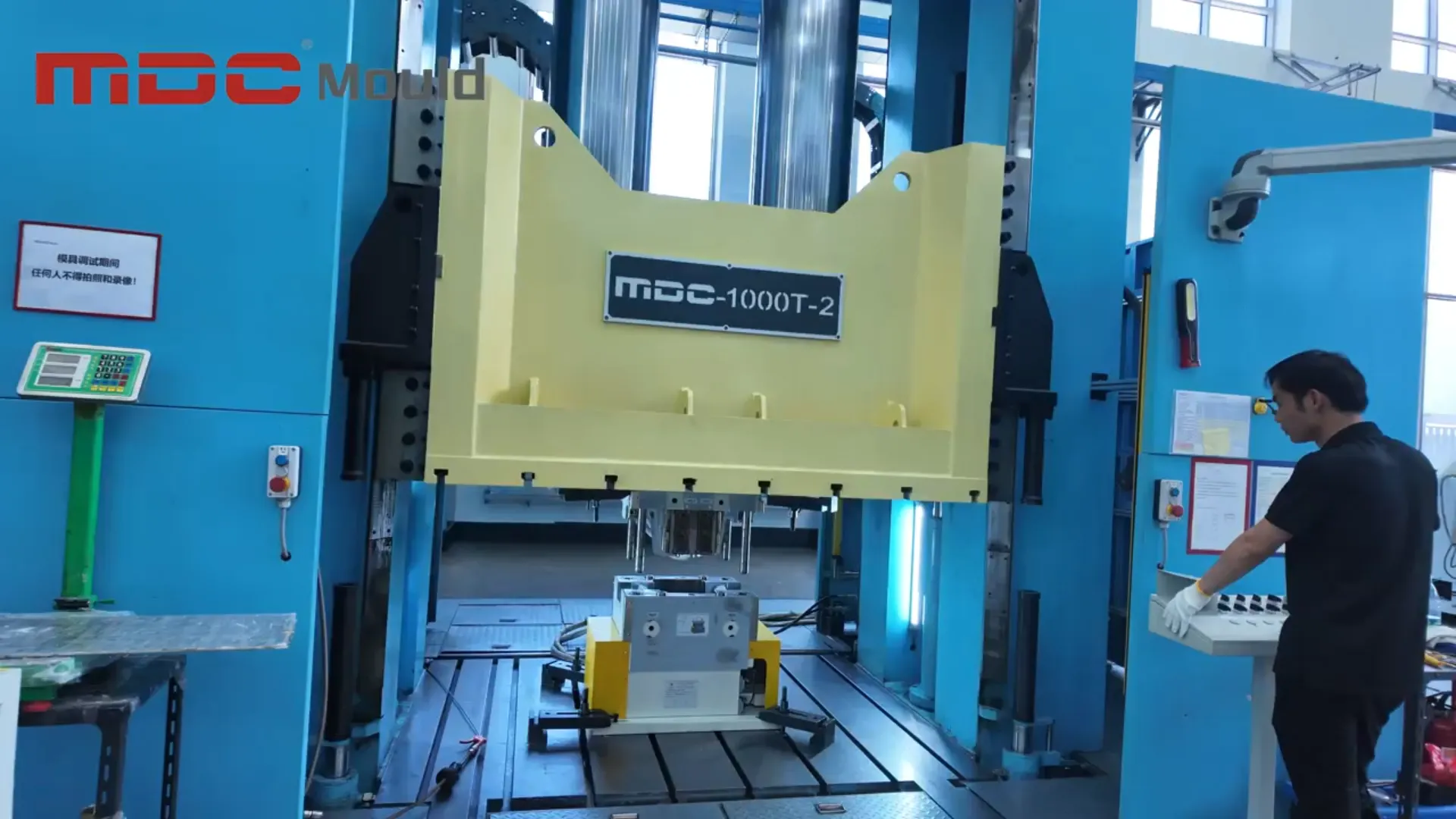
Advanced Press Tooling for SMC & Composite Compression Molding

Explore professional press tooling solutions for composite manufacturing, including compression molds, SMC molds, BMC molds, and thermoset tooling.

In modern industrial manufacturing, press tooling plays a crucial role in producing high-precision components with consistent quality and structural integrity. From automotive structural parts to electrical enclosures and infrastructure components, press tooling enables manufacturers to shape materials using controlled heat and pressure within a press machine.

As industries increasingly adopt lightweight composite materials, advanced tooling technologies such as compression mold systemsSMC molds, and composite molds have become essential for high-efficiency mass production.Professional tooling manufacturers like MDC Mould specialize in designing and producing high-precision press tooling solutions for global industrial applications.

What Is Press Tooling?

Press tooling refers to specialized molds used within mechanical or hydraulic press machines to shape materials through compression, forming, or molding processes. The tooling system creates a controlled cavity where raw materials are transformed into finished products under pressure and temperature.

Typical materials used in press tooling production include:

  • Sheet Molding Compound (SMC)
  • Bulk Molding Compound (BMC)
  • Carbon fiber composite materials
  • Thermoset composite sheets
  • Thermoplastic structural materials
  • Metal forming materials

Using high-precision compression tooling, manufacturers can produce complex structural components with excellent dimensional accuracy and repeatability.
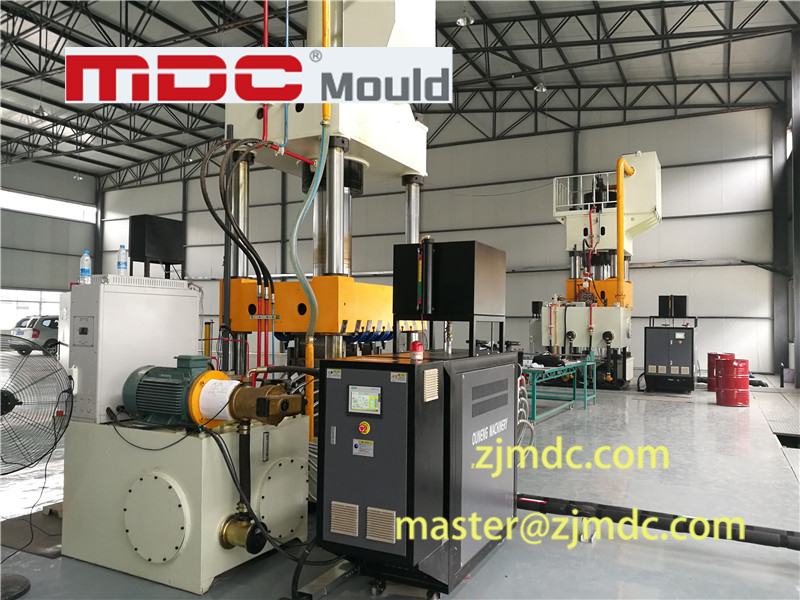
compression mould machine

Main Types of Press Tooling Used in Composite Manufacturing

SMC Mold (Sheet Molding Compound Mold)

SMC molds are widely used in the automotive and electrical industries. They enable the compression molding of glass-fiber reinforced composite materials into strong, lightweight components.

Typical SMC mold applications include:

  • Automotive exterior panels
  • EV battery enclosures
  • Engine splash shields
  • Structural composite components

BMC Mold (Bulk Molding Compound Mold)

BMC molds are commonly used to produce electrical insulation components and high-strength industrial parts. BMC materials offer excellent flame resistance and electrical insulation properties.

Common BMC mold applications:

  • Electrical connector housings
  • Switchgear components
  • Lighting fixtures
  • Industrial equipment enclosures

Composite Compression Mold

Composite compression molds are designed for advanced composite materials such as carbon fiber, fiberglass, and hybrid composites. These tools are essential for producing lightweight structural components with superior mechanical performance.

Learn more about professional composite tooling solutions at: Compression Mold Manufacturing

Key Components of a Professional Press Tooling System

Upper and Lower Mold Structure

Press tooling typically consists of two primary mold halves: the upper mold and the lower mold. These components create the mold cavity where material shaping occurs during the compression molding process.

Precision Mold Cavity

The cavity design determines the final geometry and structural features of the product. Proper cavity engineering ensures uniform material flow, reduces defects, and improves final product strength.
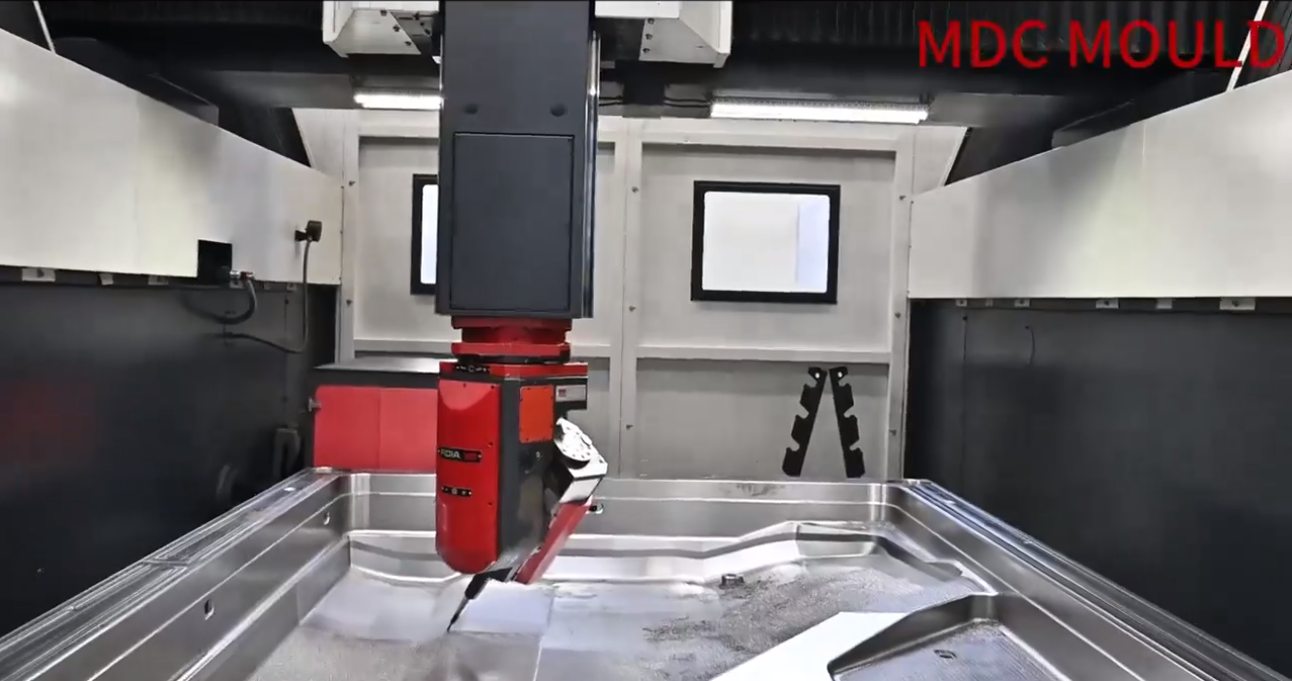
high speed milling

Heating System

Most thermoset composite molds integrate heating systems that maintain consistent curing temperatures. These heating systems may include:

  • Electric heating rods
  • Oil circulation heating channels
  • Temperature sensors
  • Thermal insulation layers

Ejection System

An effective ejection system ensures smooth demolding after the compression cycle. This may involve hydraulic ejectors, mechanical ejector pins, or pneumatic release mechanisms.

Materials Used in Press Tooling Manufacturing

High-quality press tooling requires durable materials capable of withstanding high pressure and repeated thermal cycles.

Tooling MaterialMain AdvantagesTypical Applications
P20 Tool SteelGood machinability and durabilityGeneral composite molds
H13 Tool SteelExcellent heat resistanceHigh-temperature compression molds
718 SteelHigh strength and wear resistanceLarge industrial press tooling
Aluminum ToolingLightweight and fast machiningPrototype molds

Industrial Applications of Press Tooling

Advanced press tooling is widely used across multiple industries requiring high-strength and lightweight components.

Automotive Industry

  • EV battery enclosure molds
  • Trunk board molds
  • Engine splash shield molds
  • Exterior body panels

Electrical Industry

  • Electrical connector molds
  • Switchgear insulation components
  • Lighting housings

Infrastructure and Construction

Advantages of High-Quality Press Tooling

Investing in professionally designed press tooling provides significant advantages for manufacturers.

  • High dimensional accuracy for consistent production quality
  • Improved manufacturing efficiency with optimized molding cycles
  • Superior surface finish for reduced post-processing
  • Long tooling lifespan due to high-quality steel materials
  • Lower production costs through high-volume manufacturing capability

Future Development Trends in Press Tooling Technology

The future of press tooling is being shaped by technological innovations and new material developments.

compression molds

FAQ About Press Tooling

What is the difference between press tooling and compression mold?

Press tooling is a general term for molds used in press machines, while a compression mold specifically refers to tooling designed for compression molding processes used with thermoset or composite materials.

What industries use press tooling?

Press tooling is widely used in automotive, aerospace, electrical equipment, infrastructure construction, and industrial manufacturing sectors.

How long does press tooling last?

High-quality press tooling manufactured from hardened tool steel can typically last hundreds of thousands to millions of molding cycles depending on production conditions.

Conclusion

Press tooling is a core technology in modern manufacturing, enabling the efficient production of high-precision components across multiple industries. With the increasing demand for lightweight materials and high-volume production, advanced tooling solutions such as SMC moldsBMC molds, and composite compression molds are becoming increasingly important.

Professional tooling manufacturers like MDC Mould continue to innovate in press tooling engineering, providing global customers with reliable, high-performance solutions for modern composite manufacturing.

Thermoforming vs. Thermoset Molding: A Compression Tooling Guide

In-depth guide to thermoforming moulds, thermoset molds, and compression molding processes. Learn differences, tooling design, materials, and applications for composite manufacturing.

As lightweight design, structural integration, and high-volume manufacturing continue to shape modern industries, advanced composite molding technologies have become essential. Among these technologies, thermoforming moldsthermoset molds, and compression molding tooling play a decisive role in determining part quality, production efficiency, and long-term durability.

This article provides a comprehensive overview of thermoforming toolingthermoset plastic molding, and the compression molding process, helping manufacturers select the most suitable mold solution for composite applications.

Understanding Thermoforming Moulds and Tooling

Thermoforming is a manufacturing process in which heated thermoplastic sheets are shaped over or into a mold using vacuum, pressure, or mechanical force. The thermoforming mould defines the final geometry, surface finish, and dimensional accuracy of the part.

Thermoforming

Key Features of Thermoforming Molds

  • Designed for thermoplastic materials such as PP, ABS, PET, PMMA, and reinforced thermoplastics
  • Lower tooling cost compared to compression or injection molds
  • Fast heating and cooling cycles for high production efficiency
  • Suitable for large, thin-walled, and complex-shaped components

Modern thermoforming tooling is commonly manufactured from aluminum or composite materials, offering excellent thermal conductivity and dimensional stability.

Applications of Thermoforming Moulds

  • Automotive interior panels and trim components
  • Packaging trays and containers
  • Medical device housings
  • Industrial enclosures and lightweight covers

What Is a Thermoset Mold?

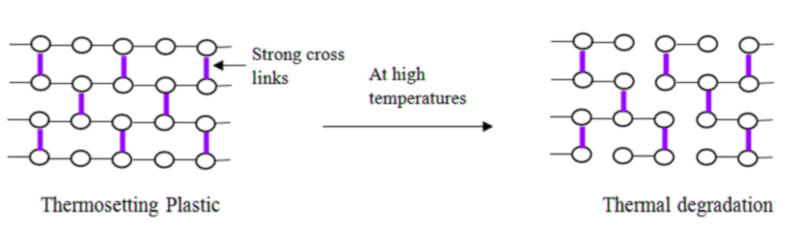
Unlike thermoplastics, thermoset plastics undergo an irreversible chemical curing process. Once cured, the material cannot be remelted or reshaped. A thermoset mold is specifically designed to withstand high pressure, elevated temperature, and repeated curing cycles.

Common Thermoset Materials

  • Sheet Molding Compound (SMC)
  • Bulk Molding Compound (BMC)
  • Epoxy resin systems
  • Phenolic and polyester resins

Thermoset molds are typically manufactured from hardened steel or high-strength alloy materials, ensuring long service life and excellent surface finish.

thermosetting-plastic-heated

Compression Molding Process Explained

Compression molding is one of the most widely used processes for thermoset composite manufacturing. In this process, a pre-measured charge of thermoset material is placed into a heated mold cavity and compressed under controlled pressure and temperature.

Steps in the Compression Molding Process

  1. Material loading into the mold cavity
  2. Mold closing and application of pressure
  3. Heat-induced curing of thermoset plastic
  4. Cooling and demolding of the finished part

Precision compression molding tooling ensures uniform material flow, minimal voids, and consistent mechanical properties across high-volume production runs.

Thermoforming Mold vs Thermoset Compression Mold

AspectThermoforming MoldThermoset Compression Mold
Material TypeThermoplasticThermoset Plastic
RecyclabilityHighLimited
Tooling CostLowerHigher
Structural StrengthModerateExcellent
Typical ApplicationsInterior panels, packagingAutomotive, electrical, structural components

Choosing the Right Tooling Solution

Selecting between thermoforming tooling and thermoset compression molding depends on several critical factors:

  • Mechanical performance requirements
  • Production volume and cycle time
  • Part thickness and structural complexity
  • Material recyclability and sustainability goals

For high-strength, load-bearing composite components, thermoset molds and compression molding remain the preferred solution. For lightweight, cost-sensitive, and recyclable applications, thermoforming molds offer outstanding advantages.

Advanced Composite Tooling Expertise at MDC

At Zhejiang MDC Mould Co., Ltd., we specialize in the design and manufacturing of thermoforming moldsthermoset molds, and compression molding tooling for global customers.

Our tooling solutions are widely used in automotive, electrical, energy storage, and industrial composite applications, ensuring high precision, long mold life, and stable mass production performance.

By combining advanced engineering, material expertise, and strict quality control, MDC delivers reliable composite mold solutions that support the future of lightweight manufacturing.

What is Compression Mold?

Learn what a compression mold is, how the compression molding process works, and why it is widely used for SMC, BMC, and composite parts manufacturing.

Introduction

compression mold is a specialized tool used in the compression molding process, a widely adopted manufacturing method for forming composite parts. It involves placing a preheated material, such as SMC (Sheet Molding Compound)BMC (Bulk Molding Compound), or other thermoset materials, into a heated mold cavity, then applying pressure to shape and cure the material.

Compression molds are essential in industries such as automotive, electrical, construction, and aerospace, where lightweight, high-strength, and heat-resistant components are needed.

Structure of a Compression Mold

A typical compression mold includes two main halves: the cavity and the core. It may also include:

  • Heating systems – to maintain the required temperature for curing
  • Guide pins and bushings – for accurate mold alignment
  • Ejection mechanisms – to release the molded part after curing
  • Vacuum systems – for gas removal and surface quality improvement

Depending on the application, compression molds can be made from hardened steel, aluminum, or other high-strength alloys. Surface treatments like chrome plating may be applied to improve mold longevity and part release.

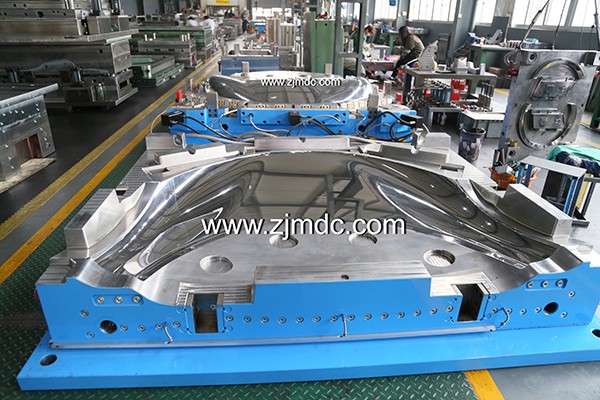
compression mold SMC Engine hood Mold

Compression Molding Process

The compression molding process typically follows these steps:

  1. Material Loading: The composite material is loaded into the open mold cavity.
  2. Preheating: The material may be preheated to reduce cycle time and improve flow.
  3. Compression: The mold is closed and pressure is applied using a hydraulic press.
  4. Curing: Heat and pressure are maintained until the material is fully cured.
  5. Demolding: The press opens and the finished part is ejected.

This process is suitable for high-volume production of components with intricate geometries and excellent mechanical properties.

Applications of Compression Mold

Compression molds are used to manufacture various thermoset and composite parts, including:

  • Automotive parts: EV battery enclosures, trunk lids, bumpers, and engine splash shields
  • Electrical housings: Insulators, switchgear, and fuse boxes
  • Construction materials: SMC ceilings, wall panels, water tanks
  • Sanitary products: SMC bathroom panels and bathtubs

Thanks to their strength-to-weight ratio, compression-molded parts are replacing metal and thermoplastic components in many structural and semi-structural applications.

Advantages of Compression Molding

Using a compression mold offers several benefits:

  • High strength and durability – especially with fiber-reinforced composites
  • Lower tooling cost compared to injection molding
  • Reduced material waste and scrap
  • Excellent surface finish for Class-A automotive parts
  • Compatibility with large, complex shapes

For manufacturers seeking reliable and repeatable performance, compression molding with precision molds remains a top choice.

SMC Mold vs. BMC Mold

Both SMC molds and BMC molds are used in compression molding, but they differ slightly:

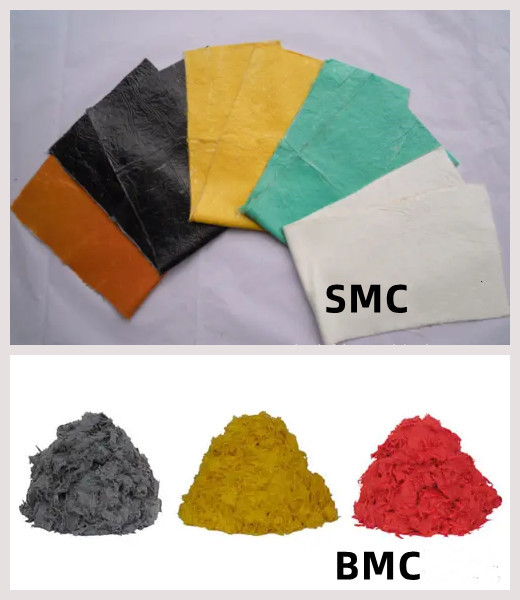
  • SMC Mold: Designed for sheet-like materials; suitable for larger structural parts
  • BMC Mold: Suited for dough-like bulk materials; ideal for smaller or more detailed parts

Choosing the right mold depends on the geometry, performance, and surface requirements of the final part.

smc vs bmc

Conclusion

compression mold is an integral part of the composite molding industry. From automotive components to building materials, its role in shaping and curing high-performance parts makes it indispensable. With advancements in material science and precision tooling, compression molding continues to evolve and serve as a key process in modern manufacturing.

For companies looking to invest in SMC moldsBMC molds, or custom compression tooling, working with an experienced mold manufacturer is essential to ensure durability, precision, and production efficiency.