Composite Materials: The Future of Zero-Emission Cargo Ships

Discover how composite materials, compression molds, and FRP tooling are transforming zero-emission cargo ships.

As the global shipping industry accelerates toward its zero-carbon transition, the International Maritime Organization (IMO) has set an ambitious goal: reduce greenhouse gas emissions by 50% by 2050 compared to 2008 levels. To achieve this, zero-emission cargo ships powered by batteries, hydrogen, or ammonia will define the future of maritime transportation.

However, traditional steel-based vessels face severe limitations. Heavy self-weight, frequent maintenance, and poor efficiency hinder their compatibility with new energy systems. This is where composite materials—enabled by technologies such as compression molding, SMC mold, BMC mold, and FRP tooling—bring transformative advantages.

Limitations of Steel in Zero-Emission Shipping

  • Weight vs. Endurance: A 2,000-ton steel ship requires battery packs accounting for 30% of its total weight just to cover 200 nautical miles, reducing cargo capacity dramatically.
  • Corrosion & Maintenance: Steel corrodes quickly in marine environments, needing repainting every 2–3 years, which increases lifecycle costs and emissions.
  • Hydrodynamic Inefficiency: Welded steel hulls suffer 15–20% higher drag compared to composite hulls, lowering propulsion efficiency.

composite ship

Advantages of Composite Materials in Shipbuilding

Advanced composites such as GFRP (Glass Fiber Reinforced Plastics) and CFRP (Carbon Fiber Reinforced Plastics) deliver unmatched benefits:

  • Lightweight Efficiency: Hull weight reductions of up to 44% with GFRP and 50%+ with CFRP, directly improving range and cargo capacity.
  • Durability: Composite hulls last 25–30 years, compared to 15–20 years for steel, with far lower maintenance needs.
  • Streamlined Hydrodynamics: Molding methods like compression molding and VARTM enable seamless hulls with reduced drag and enhanced efficiency.

Composite Applications Beyond the Hull

Composite materials also play key roles in propulsion and storage systems:

  • Battery Housings: CFRP enclosures improve safety and reduce weight by up to 60%.
  • Hydrogen Storage Tanks: CFRP-wrapped cylinders are 75% lighter than steel tanks.
  • Ammonia Fuel Systems: Hybrid CFRP + PTFE tanks resist chemical corrosion while reducing mass.
  • Propellers & Deck Equipment: CFRP/GFRP propellers improve propulsion efficiency by 12–15%.

MDC’s Role in Composite Shipbuilding

At Zhejiang MDC Mould Co., Ltd., we specialize in high-precision tooling for marine composites. Our portfolio includes SMC moldsBMC moldscompression molds, hot press molds, and FRP tooling, enabling scalable production of large and complex parts such as:

  • Lightweight hull panels using GFRP and CFRP
  • Battery housing systems for electric cargo ships
  • Hydrogen and ammonia storage tank shells
  • Composite propellers and marine equipment

By combining expertise in compression molding with advanced materials, MDC ensures efficient, durable, and cost-effective production solutions for the next generation of ships.

Future Outlook: Toward IMO 2050

With continuous innovations in composite materials and molding technologies, costs are expected to fall significantly by 2030. This will make composite vessels increasingly competitive with traditional steel or aluminum ships.

By 2030, composite-based cargo vessels are forecast to represent 40% of inland shipping and 25% of coastal fleets. As a leader in composite mold technology, MDC is committed to supporting global shipbuilders in achieving IMO’s 2050 decarbonization goals.
Advancements and Future Trends of Composite Materials in Commercial Aviation

Explore the latest advancements in composite materials for civil aviation, including liquid molding, thermoplastic composites, green technologies, and prepreg innovations.

In recent years, the emergence of new materials and advanced manufacturing processes has accelerated the development of composite materials toward higher performance, greater efficiency, lower cost, and improved sustainability. This trend is driving the application of composites in commercial aircraft to new levels, making them a critical benchmark in evaluating the advancement of next-generation civil aviation programs.

Today, composite usage in major aircraft models continues to climb. The Airbus A350 features composites in 53% of its structural weight, while the Boeing 787 Dreamliner incorporates 50%. China’s domestically developed wide-body aircraft is also expected to achieve a similar level. Aircraft fuselages, wings, and secondary load-bearing components increasingly rely on composites. Over 90% of these parts are produced using autoclave molding processes, with epoxy-based carbon fiber prepregs as the primary material. Airbus plans to raise A350 output to 12 per month by 2028, while Boeing has reached up to 13 B787 units per month in past production cycles.

Growth of Liquid Molding Technologies

Beyond autoclave technology, liquid molding processes are advancing rapidly. Europe, the U.S., and Russia have all invested heavily in alternatives such as Resin Transfer Molding (RTM) and Vacuum Assisted Resin Infusion (VARI). These techniques are now the leading non-autoclave processes for resin-based composites and have expanded from secondary to primary load-bearing structures. Their advantages include lower production costs, scalability, and the potential for batch manufacturing of large aerospace components.

Advances in Thermoplastic Composites

Thermoplastic composites have achieved remarkable progress in recent years. Compared to thermoset composites, thermoplastic systems offer greater toughness, better flame resistance, and compatibility with various non-autoclave manufacturing methods. They deliver shorter cycle timesreduced costs, and higher efficiency. Initiatives such as the EU’s Clean Sky and NASA’s HiCAM (High-Rate Composite Aircraft Manufacturing) program highlight thermoplastics as a strategic research priority, making this one of the fastest-growing areas in aerospace composites.

composite mold

Green and Sustainable Composite Technologies

With rising use of composites, the industry faces challenges in recycling and sustainability. Emerging green composite technologies aim to mitigate these impacts through biodegradable polymers and eco-friendly matrix materials. Though currently in the R&D stage, these solutions will play a vital role in achieving long-term sustainability in aerospace manufacturing.

High-Performance Prepreg Innovations

Another area of advancement is the development of high-performance prepregs. Companies like Hexcel (IM10 carbon fiber) and Toray (T1100/3960 prepreg system) have launched materials with superior strength and stiffness. Toray’s TC1130 thermoplastic prepreg also solves the problem of low bonding strength, expanding the potential of thermoplastic composites in critical aerospace structures.

Future Outlook

The history of commercial aviation demonstrates that composite technology has continually advanced with each new generation of aircraft. In the future, adoption levels will rise further, particularly in areas such as:

  • Liquid molding for cost-efficient, large-scale production
  • Thermoplastic composites with enhanced toughness and flexibility
  • Green, recyclable materials for sustainability
  • Next-generation prepregs with improved performance

For China’s aviation industry, increasing R&D investment and strategic planning are essential. By fostering innovation in these directions, domestic manufacturers will ensure that future commercial aircraft composites remain competitive on a global scale while meeting both performance and sustainability objectives.

At Zhejiang MDC Mould Co., Ltd. (MDC), we are dedicated to advancing mold and tooling technologies for the aerospace sector. Our expertise covers SMC moldsBMC moldscompression moldscarbon fiber molds, and advanced composite tooling. By leveraging precision engineering, innovation, and sustainability, MDC continues to support the aerospace industry’s transition to a high-performance, cost-effective, and greener future.

Vacuum Assisted Resin Transfer Molding Process in Composite Structures

Explore the Vacuum Assisted Resin Transfer Molding (VARTM) process, its role in manufacturing advanced composite structures.

Vacuum Assisted Resin Transfer Molding (VARTM) has emerged as a leading technology in the field of composite molding. It provides an efficient and cost-effective method for fabricating high-performance composite structures across various industries.On this page

What is Vacuum Assisted Resin Transfer Molding (VARTM)?

The Vacuum Assisted Resin Transfer Molding process is an advanced closed-mold technique that uses vacuum pressure to draw resin into a fiber preform placed inside a mold. This method ensures thorough resin distribution, reduced void content, and superior fiber-to-resin bonding.

Process Overview

  1. Preparation of Fiber Preform: Dry fibers, fabrics, or stitched preforms are laid into the mold cavity.
  2. Sealing the Mold: A vacuum bag is applied to seal the mold system completely.
  3. Vacuum Application: Air is evacuated, creating negative pressure inside the cavity.
  4. Resin Infusion: Liquid resin is drawn into the preform by the vacuum, ensuring full impregnation.
  5. Curing: The infused part is cured at room temperature or under controlled heating conditions.
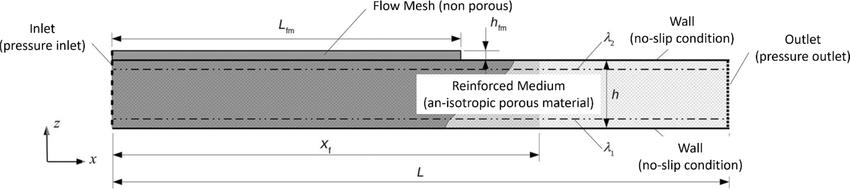
Computational domain and boundary conditions for the transient validation adapted from

Advantages of VARTM in Composite Molding

  • Cost-effectiveness: Lower tooling and equipment costs compared to autoclave curing.
  • Scalability: Suitable for both small-scale prototypes and large-scale composite structures.
  • High Fiber Volume Fraction: Delivers excellent strength-to-weight ratios.
  • Improved Quality: Reduced porosity and voids compared to open molding methods.
  • Environmental Benefits: Cleaner production process with reduced emissions.

Applications in Composite Structures

The vacuum assisted resin transfer molding process is widely applied across industries to create advanced composite structures:

  • Aerospace: Aircraft panels, fairings, and structural reinforcements.
  • Automotive: Lightweight body panels, structural frames, and EV battery enclosures.
  • Marine: Boat hulls, decks, and high-performance watercraft components.
  • Wind Energy: Large wind turbine blades requiring superior strength and durability.
  • Industrial: Pressure vessels, storage tanks, and corrosion-resistant infrastructure.
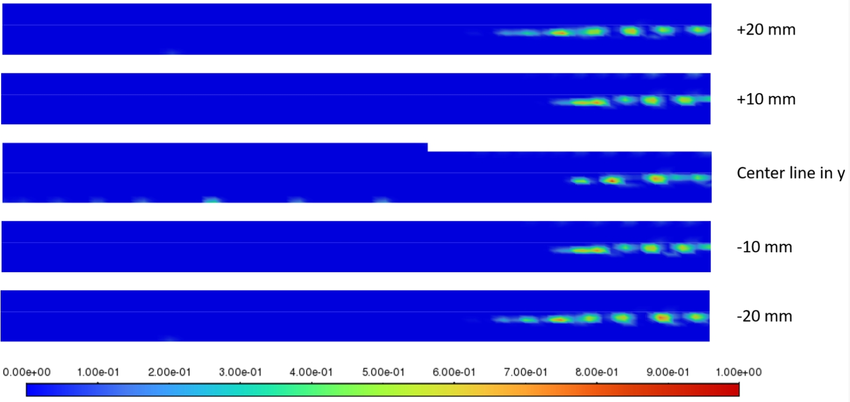
Resin volumetric fraction for five different ZX planes after 20s of injection time

Challenges and Considerations

Despite its advantages, VARTM has certain challenges:

  • Resin Flow Control: Achieving complete resin infusion in thick laminates can be difficult.
  • Process Consistency: Maintaining uniform quality across large-scale structures requires expertise.
  • Cure Time: Some resins require extended curing cycles, impacting productivity.

Future Trends in VARTM Technology

The future of composite molding through VARTM is marked by innovation:

  • Automation: Integration of sensors and AI-driven monitoring for real-time quality control.
  • Advanced Resins: Development of low-viscosity, fast-curing, and recyclable resins.
  • Hybrid Processes: Combination of VARTM with out-of-autoclave curing for superior performance.
  • Sustainability: Emphasis on bio-based resins and recyclable fiber reinforcements.

Conclusion

The vacuum assisted resin transfer molding process is transforming the way composite structures are designed and manufactured. As a versatile composite molding technique, VARTM offers a balance of cost efficiency, performance, and scalability. With continuous advancements, it is set to play a central role in the future of aerospace, automotive, marine, and industrial applications.

The Effect of Laser Cleaning on the Surface Quality of Compression Tooling Molds

Discover how laser cleaning improves the surface quality of compression tooling molds. Learn its effects on SMC molds, BMC molds, carbon fiber molds, and composite tooling, ensuring durability, precision, and sustainability.

Laser cleaning has emerged as a revolutionary technology for maintaining the surface quality of compression molds. This article explores its working principles, effects on tooling, and industrial applications across SMC moldsBMC molds, and composite molds.

Introduction

In high-precision industries, the surface quality of compression tooling molds directly impacts product performance and manufacturing efficiency. Over time, molds accumulate resin residues, release agents, carbon deposits, and oxides, leading to poor surface finishes and reduced part quality. Traditional methods such as chemical cleaning or sandblasting are either environmentally harmful or damaging to the mold surface.

By contrast, laser cleaning technology provides an eco-friendly, precise, and highly effective solution to restore mold integrity and prolong tool life.

Understanding Compression Tooling Molds

Compression molds are critical tools for shaping high-performance parts in industries such as automotive, aerospace, electronics, and consumer goods. These molds are commonly used with materials including:

  • SMC (Sheet Molding Compound)
  • BMC (Bulk Molding Compound)
  • GMT (Glass Mat Thermoplastic)
  • LFT (Long Fiber Thermoplastic)
  • Carbon fiber composites

The surface quality of these molds directly influences dimensional accuracy, demolding performance, and product aesthetics.

The Principle of Laser Cleaning

Laser cleaning uses high-intensity, short laser pulses to selectively remove contaminants without damaging the base mold material. The process is precise, non-contact, and environmentally friendly.

Key Benefits of Laser Cleaning

  • Micron-level precision for delicate tooling geometries
  • No abrasives or chemicals required
  • Preserves mold geometry and surface finish
  • Scalable and compatible with automation systems
SEM-images-and-3D-surface-profiles-of-a-S8-b-S10-c-S13-d-S14

Effects on Surface Quality of Compression Tooling Molds

1. Improved Surface Cleanliness

Laser cleaning effectively removes contaminants like resin, carbon, and oxides, restoring the mold surface and ensuring defect-free molded parts.

2. Preservation of Mold Geometry

Unlike abrasive cleaning, laser cleaning maintains the integrity of fine details and critical dimensions in SMC and BMC molds.

3. Surface Roughness Control

Laser parameters can be tuned to maintain smooth finishes or introduce micro-textures, improving resin flow and demolding performance.

4. Longer Mold Service Life

Reducing aggressive cleaning minimizes micro-cracks and surface fatigue, extending mold longevity.

5. Consistent Production Quality

Laser cleaning supports high-volume manufacturing by ensuring stable and repeatable mold conditions, especially in automotive compression molding.

Laser Cleaning vs. Traditional Cleaning Methods

Cleaning MethodLimitationsLaser Cleaning Advantages
Chemical cleaningHazardous waste, potential corrosionEco-friendly, no chemicals required
Sandblasting / Abrasive cleaningSurface wear, geometry alterationNon-abrasive, preserves mold accuracy
Manual polishingLabor-intensive, inconsistentAutomated, repeatable, precise
Ultrasonic cleaningSize limitations, liquid handlingDry, scalable, suitable for large molds

Industrial Applications of Laser Cleaning

  • SMC and BMC molds: Automotive body panels, battery covers, and electrical housings
  • Carbon fiber compression molds: Aerospace structural parts and sports equipment
  • Rubber compression molds: High-precision rubber seals and gaskets
  • Composite molds: Lightweight parts in automotive and renewable energy industries

Future Outlook

The future of mold maintenance lies in the integration of laser cleaning with automation and Industry 4.0 technologies. Robotics, AI-driven parameter control, and real-time surface monitoring will further improve efficiency and consistency.

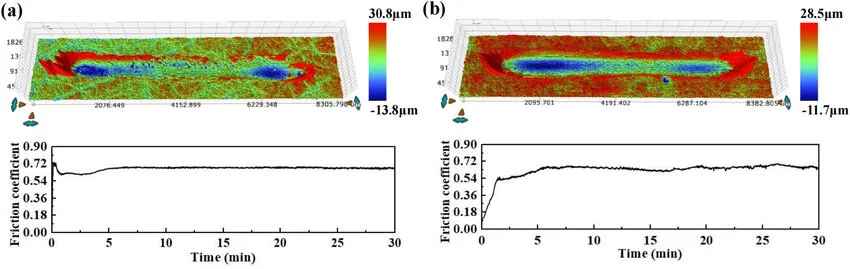
Friction-coefficient-evolution-during-tribological-testing-of-a-S0-and-b-S13-with

Conclusion

The effect of laser cleaning on the surface quality of compression tooling molds is profound. It ensures cleaner surfaces, longer mold life, consistent part quality, and environmental sustainability. For manufacturers using SMC molds, BMC molds, or carbon fiber molds, adopting laser cleaning is not only a technological upgrade but also a strategic move towards efficiency and sustainability.