The Complete Composite Mold Guide: SMC, BMC & Carbon Fiber Tooling

Professional guide to composite mold construction covering design, materials, CNC machining, SMC/BMC tooling, and carbon fiber mold manufacturing for automotive and industrial applications.

As global industries move toward lightweight engineering, structural integration, and high-efficiency production, the importance of composite mold construction continues to grow. From automotive lightweight components to FRP water tanks and electrical enclosures, high-performance composite molds are the foundation of consistent product quality and scalable manufacturing.
Composite Mold Manufacturing Process

At MDC, advanced expertise in SMC moldBMC moldcompression mold, and carbon fiber mold manufacturing ensures precision, durability, and optimized production performance. This guide provides a comprehensive overview of composite mold design, material selection, construction processes, and industry applications.

1. What is a Composite Mold?

composite mold is a specialized tooling system designed to shape composite materials such as SMC (Sheet Molding Compound), BMC (Bulk Molding Compound), GMT, LFT, and carbon fiber composites under controlled heat, pressure, and curing conditions.

Unlike traditional metal forming tools, composite tooling must consider resin flow behavior, fiber orientation, curing kinetics, and thermal expansion, making its engineering process more complex and highly specialized.

2. Types of Composite Molds

Types of Composite Molds

2.1 Compression Mold

The compression mold is widely used for SMC and BMC molding. It delivers high strength, excellent surface finish, and repeatability, making it ideal for automotive exterior panels and structural components.

2.2 RTM Mold (Resin Transfer Molding)

RTM molds are closed systems where resin is injected into dry fiber preforms, ensuring high dimensional accuracy and smooth surface quality.

2.3 Thermoforming Mold

Thermoforming molds are designed for thermoplastic composites such as GMT and LFT, offering fast production cycles and cost efficiency.

2.4 Carbon Fiber / Autoclave Mold

These molds are used in high-performance applications requiring high temperature and pressure resistance, particularly in aerospace and premium automotive components.

3. Key Materials for Composite Mold Construction

  • Tool Steel: High durability and wear resistance for mass production
  • Aluminum Alloy: Lightweight with excellent thermal conductivity
  • Composite Tooling: Cost-effective for large or low-volume molds
  • Invar: Low thermal expansion for precision aerospace tooling

Material selection directly affects tool life, surface quality, cycle time, and overall production cost.

4. Composite Mold Construction Process
Composite Mold CNC Machining and Assembly

4.1 CAD/CAE Design

Advanced engineering includes:

  • 3D modeling and surface optimization
  • Mold flow simulation and filling analysis
  • Thermal distribution and curing simulation

4.2 CNC Machining

High-precision 5-axis CNC machining ensures accurate reproduction of complex geometries and tight tolerances.

4.3 Heat Treatment

Improves hardness, wear resistance, and dimensional stability of the mold.

4.4 Surface Finishing

Includes polishing, coating, and texturing to achieve Class-A surface quality.

4.5 Assembly and Testing

Final assembly integrates heating systems, cooling channels, and ejector mechanisms, followed by mold trials and validation.

5. Critical Design Considerations

  • Thermal Management: Ensures uniform curing and reduced cycle time
  • Resin Flow Control: Prevents defects such as voids and dry spots
  • Ventilation Design: Eliminates trapped air
  • Structural Rigidity: Maintains dimensional accuracy under pressure
  • Ease of Maintenance: Modular design for quick servicing

6. Applications of Composite Molds

  • Automotive: Body panels, EV battery enclosures, structural parts
  • Construction: FRP panels, GRP water tanks, building components
  • Electrical: Insulation housings and switchgear parts
  • Aerospace: Lightweight structural components
  • Energy: Wind turbine and industrial composite structures
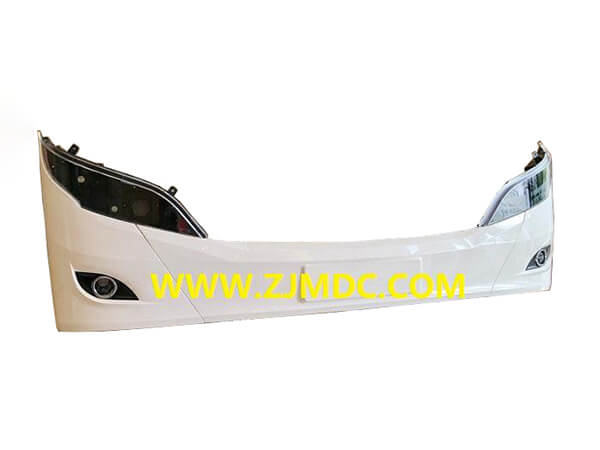
Composite Mold Automotive and FRP Applications

7. Advantages of Advanced Composite Mold Construction

  • High dimensional accuracy and consistency
  • Reduced cycle time and improved efficiency
  • Superior surface finish
  • Long service life
  • Support for complex integrated designs

8. Challenges and Optimization Solutions

  • Complex Mold Design: Solved through CAE simulation
  • Thermal Control Issues: Optimized heating systems
  • High Initial Cost: Offset by long-term productivity
  • Material Handling: Requires strict process control

9. Future Trends in Composite Tooling

  • AI-driven mold design and process optimization
  • Industry 4.0 smart manufacturing integration
  • Rapid tooling and additive manufacturing
  • Recyclable and sustainable composite tooling materials

Conclusion

Composite mold construction is a core technology enabling modern composite manufacturing. From SMC mold and BMC tooling to advanced carbon fiber mold systems, high-quality tooling determines product performance, efficiency, and long-term competitiveness.

At MDC, continuous innovation in composite mold design, precision machining, and advanced tooling engineering ensures reliable solutions for global customers in automotive, construction, and industrial sectors.
Wood vs Composite Moulding: Which is Better for Industrial Apps?

An in-depth technical comparison of wood vs composite moulding, explaining wood-based composites, composite moulding technologies, and the composite moulding process for modern industrial manufacturing.

As global manufacturing continues to shift toward higher consistency, improved performance, and sustainable material solutions, the comparison between traditional wood processing and composite moulding has become increasingly relevant.

While wood has been used as a structural and decorative material for centuries, modern composite moulding processes enable wood-based materials to achieve a level of precision, durability, and scalability that traditional methods cannot provide.

Traditional Wood as an Industrial Material

Wood is a natural, renewable material valued for its availability and aesthetic qualities. It is widely used in furniture, construction, and interior applications. However, from an industrial manufacturing perspective, wood presents several inherent limitations.

  • Natural variability in density, grain structure, and strength
  • Sensitivity to moisture, temperature, and long-term aging
  • Limited suitability for complex or highly integrated geometries
  • Challenges in maintaining tight dimensional tolerances

These characteristics restrict the use of traditional wood in high-volume, high-precision industrial production.

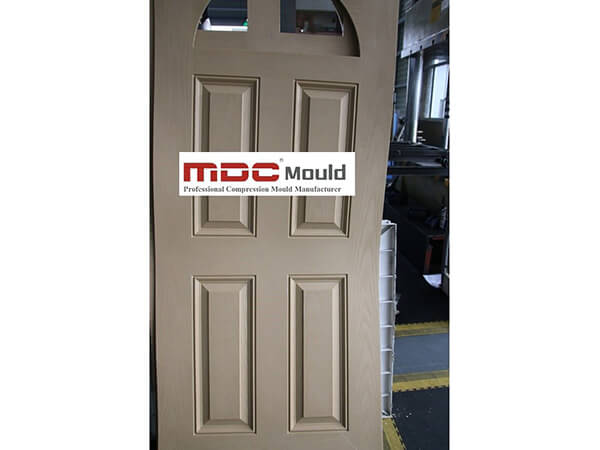
SMC door mould

What Is Composite Moulding?

Composite moulding is an advanced manufacturing method in which reinforcement materials and resin systems are shaped under controlled heat and pressure using precision-engineered moulds.

When wood fibers or wood flour are used as reinforcement, the resulting material is known as a wood composite. This approach combines the natural advantages of wood with the engineered performance of composite materials.

The Composite Moulding Process

The composite moulding process is defined by precise control of material formulation, temperature, pressure, and mould geometry. Compared with traditional woodworking, it delivers repeatable and highly engineered results.

1. Material Preparation

Wood fibers or wood flour are dried and blended with thermoset or thermoplastic resin systems. Additives and coupling agents are used to improve fiber–matrix bonding and processing stability.

2. Mould Loading

The prepared composite material is placed into a mould cavity designed for uniform pressure distribution and optimized material flow.

3. Heat and Pressure Application

During mould closing, heat activates resin flow and curing (for thermosets) or melting and consolidation (for thermoplastics). Pressure ensures high density, low void content, and accurate part geometry.

4. Curing or Cooling

The composite material solidifies under controlled thermal conditions, maintaining dimensional accuracy and surface quality.

5. Demoulding and Finishing

Once sufficient strength is achieved, the part is demoulded and may undergo trimming, coating, or surface treatment.

Wood vs Composite Moulding: Technical Comparison

The key differences between wood and composite moulding can be summarized from an engineering perspective:

  • Material Consistency: Composite moulding delivers engineered, repeatable material properties.
  • Design Freedom: Composite moulding enables complex shapes and integrated features.
  • Dimensional Stability: Composite parts are less affected by humidity and temperature.
  • Mechanical Performance: Fiber distribution can be optimized for specific load paths.
  • Production Efficiency: Composite moulding supports automated and high-volume manufacturing.
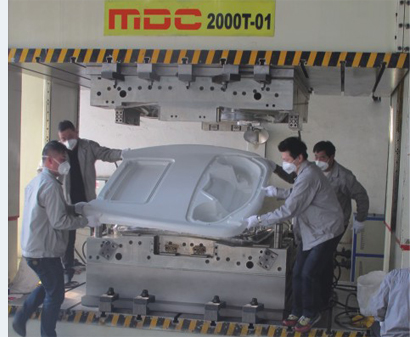
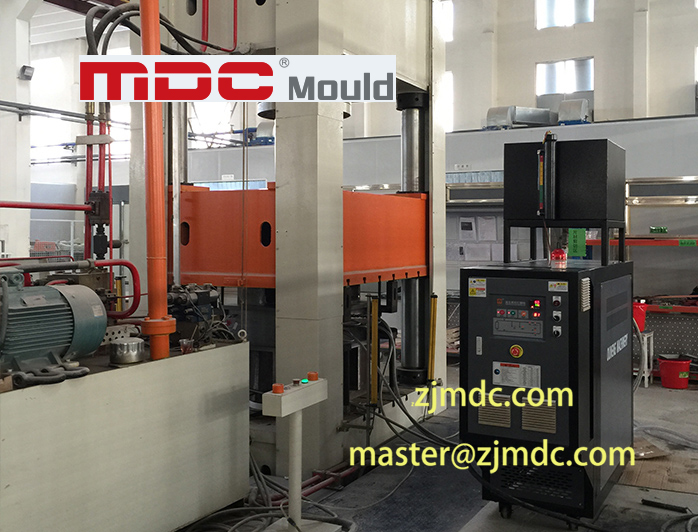
compression molding machine

Why Composite Moulding Is Replacing Traditional Wood Processing

In many industrial sectors, composite moulding is gradually replacing traditional wood processing due to its superior process control and lifecycle performance. Manufacturers benefit from lower rejection rates, reduced post-processing, and improved product reliability.

Industrial Applications of Wood Composite Moulding

Wood composite moulding is widely used in:

  • Furniture structures and panels
  • Architectural and building components
  • Automotive interior parts
  • Industrial and electrical enclosures
  • Consumer and functional products

The Role of Precision Moulds in Composite Moulding

The success of any composite moulding process depends on high-quality mould design and manufacturing. Precision moulds ensure uniform pressure, controlled resin flow, efficient demoulding, and long tool life.

Sustainability and Wood-Based Composites

By combining renewable wood resources with advanced composite moulding technologies, manufacturers can reduce material waste, improve durability, and support sustainable manufacturing strategies.

Conclusion

The comparison of wood vs composite moulding clearly demonstrates the shift from traditional material processing to precision-engineered manufacturing. Through a controlled composite moulding process, wood-based materials can achieve superior performance, stability, and scalability.

For companies focused on advanced composite tooling and moulding technology, wood composite moulding represents a strategic direction for future industrial applications.

High-Performance Composite Materials for Extreme Environments

Explore how advanced composite materials and precision tooling developed by MDC Mould enable reliable performance under extreme temperatures, pressures, corrosion, and radiation conditions.

As aerospace propulsion systems push their thrust-to-weight ratios beyond 15 and deep-sea exploration equipment advances toward operational depths of 11,000 meters, extreme environments have become the ultimate testing grounds for material technology. Temperatures exceeding 1500°C, pressures above 100 MPa, long-term corrosion, and high-radiation conditions demand materials that combine ultra-high stability with exceptional reliability.

In recent years, continuous innovation in SMC moldcompression mold design, fiber architecture, matrix systems, and precision tooling has driven high-performance composites from laboratory prototypes to large-scale engineering applications. These advancements are particularly aligned with MDC Mould’s long-term expertise in composite mold manufacturing and high-precision thermoforming processes.

1. Aerospace & Propulsion Systems: High-Temperature and High-Load Applications

In aerospace engines, where combustion chamber temperatures can exceed 1500°C and structural components undergo millions of thermal cycles, advanced composites now demonstrate mechanical properties once exclusive to superalloys.

1.1 Ceramic Matrix Composites (CMCs)

CMC materials with SiC/SiC architecture retain strength above 1300°C, reduce weight by 35–50%, and improve fatigue resistance. These are now utilized in combustion liners, blade shrouds, and thermal shielding components.

1.2 Carbon–Carbon Composites

In hypersonic vehicle structures, C/C composites offer ultra-high ablation resistance and dimensional stability under repeated thermal shocks, supporting Mach 6+ trajectories and extreme flight profiles.

1.3 Precision Mold & Tooling for Aerospace Composites

The demand for defect-free molding surfaces and fiber consistency drives the use of large-format compression molds, high-pressure SMC tools, and autoclave-compatible composite molds — areas where MDC Mould is continuously innovating in thermal management and demolding performance.

composite

2. Deep-Sea Engineering: Surviving 110 MPa Pressure

Deep-sea environments impose unique challenges requiring materials that balance strength, corrosion resistance, and long-term durability.

2.1 Pressure-Resistant Composite Structures

Basalt fiber reinforced composites have been implemented in full-ocean-depth equipment. At water depths of 11,000 m, composite housings maintain 92% compressive strength retention with no microcrack propagation.

2.2 Marine Corrosion-Resistant Composites

Glass fiber reinforced vinyl ester composites show minimal mass loss (<0.3%) after 10,000 hours of salt-spray exposure. These materials are increasingly used in walkways, cable channels, and offshore structural systems.

2.3 High-Pressure Composite Piping

Carbon-fiber composite high-pressure RO pipes elevate allowable pressure from 8 MPa (steel) to 12 MPa while reducing system weight by 70%—improving efficiency in large-scale desalination facilities.

3. Energy & Nuclear Engineering: Materials Built for 60-Year Lifecycles

In nuclear power, hydrogen energy, geothermal systems, and next-generation reactors, materials must withstand heat, radiation, and chemical degradation for decades without structural compromise.

3.1 Radiation-Resistant Composite Systems

Multi-phase resin matrices incorporating ceramic fillers have demonstrated significant improvements in neutron-radiation resistance and dimensional stability.

3.2 Composite Tooling for Energy Applications

Large composite tooling — particularly high-temperature composite molds and compression systems — enable defect-free forming of thick laminate structures for shielding and containment applications.

4. Industrial Equipment: Lightweight, High-Strength, High-Precision

From semiconductor manufacturing to power transmission and intelligent equipment, the industrial sector is increasingly adopting high-performance composites for precision components that require stiffness, minimal deformation, and long service life.

4.1 Precision Structural Frames

Carbon-fiber reinforced epoxy structures provide 3–5× stiffness-to-weight advantages over metal frames, supporting micron-level positional accuracy in high-speed production equipment.

4.2 Corrosion-Resistant Chemical Equipment

Composite tanks, valves, and covers benefit from tailored resin systems and C-glass reinforcement, offering outstanding acid and alkali resistance under long-term continuous operation.

composite2

5. From Lab Innovation to Large-Scale Engineering: Key Enablers

The transformation of composite materials into extreme-environment applications depends on breakthroughs in five core areas:

  • Microscale fiber architecture optimization for better load transfer
  • High-purity, high-temperature matrix systems (CMC, BMI, PEEK, cyanate ester)
  • Advanced compression molding technologies delivering repeatable accuracy
  • Precision composite tooling with improved thermal control and demolding performance
  • Automated fiber placement & intelligent RTM improving consistency and throughput

MDC Mould’s continuous improvement in SMC MoldComposite Mold, and Compression Tooling provides an essential foundation for these engineering breakthroughs.

Conclusion

Extreme environments — high temperature, high pressure, corrosion, and radiation — represent the highest evaluation criteria for advanced materials. High-performance composites, driven by innovations in matrix chemistry, fiber design, and precision tooling, are rapidly becoming the core solution for next-generation aerospace, marine, energy, and industrial systems.

With proven expertise in hot-press composite tooling, SMC molds, BMC molds, high-temperature compression molds, and advanced composite manufacturingMDC Mould will continue supporting global industries with engineering-grade solutions that push the boundaries of material performance.

Vacuum Assisted Resin Transfer Molding Process in Composite Structures

Explore the Vacuum Assisted Resin Transfer Molding (VARTM) process, its role in manufacturing advanced composite structures.

Vacuum Assisted Resin Transfer Molding (VARTM) has emerged as a leading technology in the field of composite molding. It provides an efficient and cost-effective method for fabricating high-performance composite structures across various industries.On this page

What is Vacuum Assisted Resin Transfer Molding (VARTM)?

The Vacuum Assisted Resin Transfer Molding process is an advanced closed-mold technique that uses vacuum pressure to draw resin into a fiber preform placed inside a mold. This method ensures thorough resin distribution, reduced void content, and superior fiber-to-resin bonding.

Process Overview

  1. Preparation of Fiber Preform: Dry fibers, fabrics, or stitched preforms are laid into the mold cavity.
  2. Sealing the Mold: A vacuum bag is applied to seal the mold system completely.
  3. Vacuum Application: Air is evacuated, creating negative pressure inside the cavity.
  4. Resin Infusion: Liquid resin is drawn into the preform by the vacuum, ensuring full impregnation.
  5. Curing: The infused part is cured at room temperature or under controlled heating conditions.
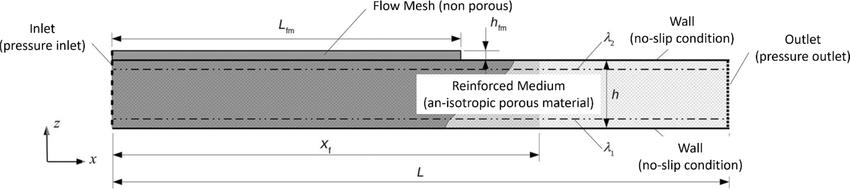
Computational domain and boundary conditions for the transient validation adapted from

Advantages of VARTM in Composite Molding

  • Cost-effectiveness: Lower tooling and equipment costs compared to autoclave curing.
  • Scalability: Suitable for both small-scale prototypes and large-scale composite structures.
  • High Fiber Volume Fraction: Delivers excellent strength-to-weight ratios.
  • Improved Quality: Reduced porosity and voids compared to open molding methods.
  • Environmental Benefits: Cleaner production process with reduced emissions.

Applications in Composite Structures

The vacuum assisted resin transfer molding process is widely applied across industries to create advanced composite structures:

  • Aerospace: Aircraft panels, fairings, and structural reinforcements.
  • Automotive: Lightweight body panels, structural frames, and EV battery enclosures.
  • Marine: Boat hulls, decks, and high-performance watercraft components.
  • Wind Energy: Large wind turbine blades requiring superior strength and durability.
  • Industrial: Pressure vessels, storage tanks, and corrosion-resistant infrastructure.
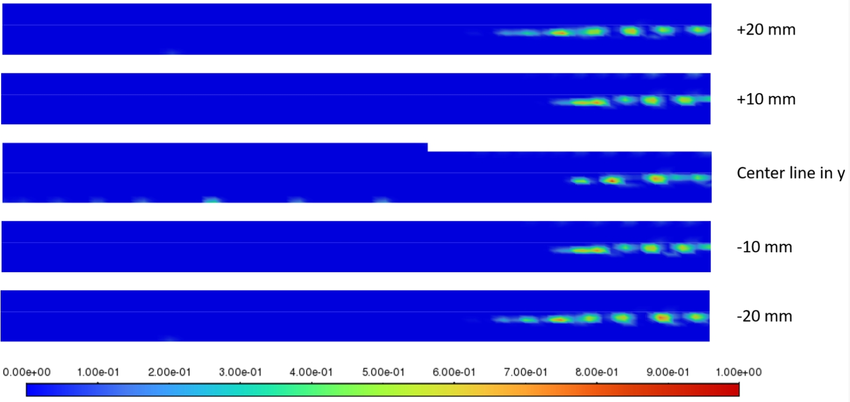
Resin volumetric fraction for five different ZX planes after 20s of injection time

Challenges and Considerations

Despite its advantages, VARTM has certain challenges:

  • Resin Flow Control: Achieving complete resin infusion in thick laminates can be difficult.
  • Process Consistency: Maintaining uniform quality across large-scale structures requires expertise.
  • Cure Time: Some resins require extended curing cycles, impacting productivity.

Future Trends in VARTM Technology

The future of composite molding through VARTM is marked by innovation:

  • Automation: Integration of sensors and AI-driven monitoring for real-time quality control.
  • Advanced Resins: Development of low-viscosity, fast-curing, and recyclable resins.
  • Hybrid Processes: Combination of VARTM with out-of-autoclave curing for superior performance.
  • Sustainability: Emphasis on bio-based resins and recyclable fiber reinforcements.

Conclusion

The vacuum assisted resin transfer molding process is transforming the way composite structures are designed and manufactured. As a versatile composite molding technique, VARTM offers a balance of cost efficiency, performance, and scalability. With continuous advancements, it is set to play a central role in the future of aerospace, automotive, marine, and industrial applications.