Application of SMC Mold in Medicine

SMC molds can be used to manufacture various parts of medical equipment. The advantages are that the material has the characteristics of high strength, corrosion resistance, high temperature resistance, etc., and has good formability and surface quality.

SMC mold (sheet molding compound mold) is a plastic mold that will be filled with resin, The compression mold of reinforcing fiber and filler is prefabricated into a sheet, and then the sheet is heated and formed in a hot mold to make a molded part. SMC molds can play an important role in medical applications, such as:

  1. Transparent containers: SMC molds can be used to manufacture transparent medical containers, such as test tubes, centrifuge tubes, petri dishes, etc. These vessels have high transparency and optical performance, which can help doctors observe processes such as cell culture, drug response and virus detection. In the manufacturing process, SMC molds can achieve different shapes and sizes through a variety of molding processes, such as stamping molding, injection molding, etc., and can achieve different optical properties through surface treatment, such as polishing, optical coating, etc.Transparent containers
  2. Operating bed: The operating bed is another important application field. The shell and base of the operating bed need to have high strength and rigidity to ensure the stability and safety of the operating bed. SMC molds can realize complex shapes and structures through mold design and molding process, and at the same time, fillers and fiber reinforcements can be added to improve strength and rigidity.Operating table
  3. Hospital beds and wheelchairs: Hospital beds and wheelchairs are also important applications of SMC molds in medicine. The shells and bases of these devices need to be high-strength and lightweight, so that patients and medical staff can move and transport. SMC molds can achieve different shapes and sizes through a variety of molding processes, and fillers and fiber reinforcements can be added to improve strength and lightweight properties.bed
  4. Diagnostic equipment: SMC molds can be used to manufacture shells and structural components of medical diagnostic equipment, such as X-ray machines, CT machines, nuclear magnetic resonance machines, etc. These devices need to have high precision and stability to ensure diagnostic accuracy and safety. SMC molds can realize complex shapes and structures through mold design and molding process, and at the same time, fillers and fiber reinforcements can be added to improve strength and stability. In addition, the surface quality of SMC molds is also very important, and different surface finishes and optical properties can be achieved through a variety of surface treatment technologies, such as grinding, painting, etc.
  5. Others: The medical device shell made of SMC mold has a smooth surface, easy to clean, and has high strength and rigidity, which can ensure the stability and safety of the device. The handles and housings of surgical instruments can also be made of SMC molds, which have high strength, rigidity and corrosion resistance, and at the same time have smooth surfaces, which are easy to clean and sterilize. The housing and base of dental equipment can be made of SMC molds, which have high strength and rigidity, and at the same time have a smooth surface, which is easy to clean and disinfect. The housing and structural parts of medical imaging equipment can be made of SMC molds, which have high precision and stability, and at the same time have a smooth surface, which is conducive to optical imaging.

In general, SMC molds can be used to manufacture various parts of medical equipment. The advantages are that the material has the characteristics of high strength, corrosion resistance, high temperature resistance, etc., as well as good formability and surface quality, as well as good optical properties, and It is also beneficial to the weight reduction of medical equipment and the reduction of manufacturing cost.

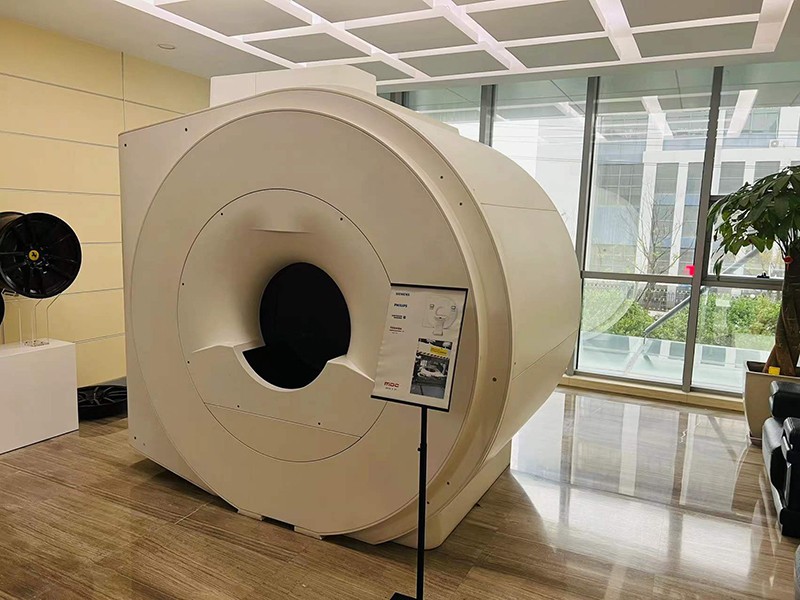
MDC Mould is a well-known mold manufacturer at home and abroad. The picture below is the MRI machine Shell Mold made by MDC Mould. The molds developed by our company have the advantages of high difficulty, long life, short cycle time, reasonable price, prompt delivery and considerate service, especially in the field of SMC molds, which are favored by customers at home and abroad. If you have any needs, welcome to contact us.

MRI shell mold

Do You Know How to Heat the SMC Mould?

In the process of mold processing, different mold materials and shapes will affect the heating method, and different heating methods will also have different effects on the performance and processing efficiency of the mold. This article will introduce in detail the common mold heating methods, their respective characteristics, applicable scenarios and their impact on SMC molds.

SMC(sheet molding compound) mould has excellent corrosion resistance, soft quality and easy engineering design, flexible and other advantages. Its mechanical properties can be compared with some metal materials, and the products manufactured by it have the advantages of good rigidity, deformation resistance, and wide temperature range. SMC molds require heating channels instead of cooling channels in injection molds. Normal heating systems are steam, oil, electricity or high pressure water. The working temperature of SMC mold is usually 140 degrees to 160 degrees. When designing the temperature system, it is necessary to keep the mold surface at a close temperature. Molds with uniform temperatures will fill more easily and produce parts with less warpage, improved dimensional stability and a uniform surface appearance.

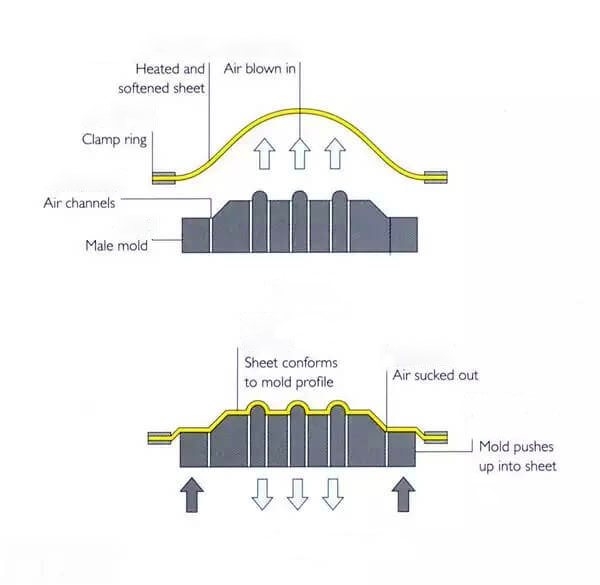
compression molding process

In the process of mold processing, different mold materials and shapes will affect the heating method, and different heating methods will also have different effects on the performance and processing efficiency of the mold. This article will introduce in detail the common mold heating methods, their respective characteristics, applicable scenarios and their impact on SMC molds.

Electric Heating

Electric heating is a mold heating method commonly used at present. The electrothermal effect occurs on the surface of the mold by electrification, thereby heating the mold. It can be achieved by heating rods, convection heating and other different ways. Electric heating has the advantages of simple operation, fast heating speed, uniform and stable heating temperature, high temperature control accuracy, and no need to wait for heating or cooling time. It is suitable for mold heating of all materials. At the same time, electric heating can also realize the control of different temperature regions through the adjustment of heating elements, so as to realize different processing schemes and patterns. However, electric heating has a relatively large demand for electricity, and the cost of using an electric heater is also relatively high.

Electric heating is often used for heating plastic molds, especially for molds that require high precision, such as SMC molds. Compared with traditional heating methods, electric heating can control the mold temperature more precisely, so that the manufactured molds are more accurate and the shell quality is higher.

For SMC moulds, electric heating can help speed up the mold heating speed and temperature rise, thereby reducing manufacturing time, speeding up production rhythm, and improving production efficiency. performance, thereby ensuring the service life of the mold. Electric heating can also increase the hardness and strength of SMC composites, thereby improving the performance and quality of products. However, there are some factors that need to be paid attention to when using electric heating, such as the reasonable setting of voltage and current, and the control of heating time and temperature, so as to avoid affecting the performance and service life of the mold and damaging the mold.

heating rod

Steam Heating

Steam heating means that steam is transported into the mold through pipelines for heating. The temperature control of steam heating is more precise, and the heating speed is relatively fast. Steam heating is suitable for molds with complex and irregular shapes and needed temperature is not too high. However, steam heating requires a complete steam pipeline and supporting equipment. This method is more energy efficient than electric heating, but relatively consumes more energy. Steam heating is a commonly used mold heating method. Its basic principle is to use the heat energy of high-temperature and high-pressure steam to contact the mold, thereby increasing the temperature of the mold to meet the processing requirements.

This heating method has the following characteristics:

1. Uniform heating: Steam can be evenly distributed on the surface of the mold, so that the entire mold is heated evenly, avoiding thermal stress caused by excessive temperature gradient.

2. Efficient and safe: The steam heating speed is fast and the efficiency is high. At the same time, because there is no open flame in the steam heating process, it has higher safety.

3. Precise temperature control: When steam is heated, sensors can be used for real-time monitoring and adjustment, so as to achieve precise temperature control.

Steam heating is widely used in plastic molds, die-casting molds, rubber molds, etc., and can also be used for preheating and annealing of metal molds.

For SMC molds, SMC molds are usually made of composite materials, which have high strength and corrosion resistance, but there are also some shortcomings, such as thermal stress and surface adhesion. The uniformity of steam heating and the accuracy of temperature control can effectively solve these problems, avoiding the thermal stress caused by the local temperature being too high or too low during the heating process. At the same time, steam heating can also promote the fluidity of SMC materials, thereby improving the molding quality and production efficiency of products.

Steam mold temperature controller

Oil Heating

Oil temperature heating, also called heat conduction oil heating. It means that the electric heating tube is placed in the heating oil tank, and the high-temperature heat transfer oil is used to transfer heat to the mold for uniform heating and maintain a certain temperature range. This method is easier to control the temperature, can achieve precise temperature control, and heat evenly, so as to ensure that the mold will not be damaged due to excessive temperature. Heat conduction oil can transfer high-speed heat and heat up quickly, so it is suitable for some bigger and complex shapes molds and molds that require high temperature heating. At the same time, heat conduction oil heating can also maintain the flatness of the mold surface during mold making and processing, avoid problems such as slack and cracks, and make the mold surface deform more uniformly, and it is not easy to appear towering and uneven. However, oil temperature heating also has some disadvantages, for example, the heat transfer oil needs to be replaced frequently during operation, and the heating speed is relatively slow.

For SMC molds, heat conduction oil heating can reduce the internal stress left by shrinkage during processing, make the mold more uniform, and is more effective than electric heating in processing time, which can speed up the production efficiency of the mold, and can also avoid material overheating damage. However, some matters need to be paid attention to during the heating process of heat transfer oil, such as heating on site and safety protection measures.

Oil temperature machine

The above are common heating methods, and the selection of different mold heating methods depends on factors such as mold material, shape and processing requirements.

As a professional SMC mold supplier, MDC Mould have experienced engineers, imported equipment, precise processing flow, years of research in SMC mold design and SMC mold technology, and a supporting SMC mold trial line to ensure that SMC molds can meet customer needs from initial design to subsequent mass production.

Advanced Measuring Equipment and SMC Molds: Precise Control of Quality and Optimization of Production Processes

As an important composite material mold, SMC mould is widely used in automobile, aerospace, electronics and other fields. Its production process requires strict control of parameters such as the size, shape, and position of the mold to ensure stable and consistent product quality. However, traditional measurement methods, such as manual measurement and traditional measuring instruments, have problems such as low measurement accuracy and low measurement efficiency, which are difficult to meet the requirements of SMC mold production. And advanced measuring equipment and instruments, such as Three coordinate measuring instrument, have been widely used in the production of SMC molds due to their high precision, high efficiency and multi-functional characteristics.

The basic principle and structure of CMM

The Coordinate Measuring Machine(CMM) is a measuring device based on a three-dimensional coordinate system. Its basic principle is to obtain the position and shape information of the object in the three-dimensional space by measuring the movement of the probe on the three coordinate axes, so as to realize the precise measurement of the object. and detection. A Coordinate Measuring Machine usually consists of a coordinate measuring system, a measuring probe, a workbench, a computer and related software.

CMM structure

The coordinate measurement system is the core component of a Coordinate Measuring Machine, usually composed of three mutually perpendicular measurement axes and corresponding sensors, used to measure the position of the probe on the three coordinate axes. The measuring probe is the part that is in contact with the object to be measured. It can trigger the measurement action through the trigger, and transmit the measurement result to the computer for processing through the sensor. The workbench is used to place and fix the measured object, and usually has high-precision planes and fixtures to ensure the stability and accuracy of the measurement. The computer and related software are used to control the movement of the measuring instrument, process the measurement data, and generate measurement reports and data analysis.

triple coordinate admeasuring apparatus structure

Features of CMM

Coordinate Measuring Machine has many advantages that make it one of the advanced measuring equipment.

  • High precision: The Coordinate Measuring Machine adopts advanced sensor technology and measurement algorithm, and has a high degree of measurement accuracy, usually at the micron level. This enables it to meet the measurement requirements for high-precision products, especially in SMC molds, and can accurately measure parameters such as the size, shape and position of the mold.
  •  High efficiency: The Coordinate Measuring Machine has a fast measurement speed and an automated measurement process, which can greatly improve the measurement efficiency. At the same time, it can also realize the rapid detection and sorting of large batches of molds through the application of batch measurement and automatic measurement procedures, thereby improving production efficiency.
  •  Multifunctional: The Coordinate Measuring Machine can not only measure parameters such as size, shape and position, but also perform complex measurement tasks such as shape and position tolerance measurement, curved surface measurement, and contour measurement. At the same time, it can also perform data analysis, report generation, CAD comparison and other functions to help users conduct comprehensive quality control and data analysis.
  •  Non-contact measurement: The Coordinate Measuring Machine usually adopts a non-contact measurement method to avoid contact with the measured object, thereby avoiding measurement errors and damage to the object. This is especially important for SMC molds that require high surface quality, and can ensure the integrity and quality of the mold.

Application of CMM in SMC mould

CMM is widely used and important in SMC mold production. The following are its main applications in SMC mold production:

  1.  Mold size measurement: The Coordinate Measuring Machine can quickly and accurately measure the size of the SMC mold, including parameters such as length, width, height, and diameter. This is very important to ensure that the size of the mold meets the design requirements and ensure the accuracy and consistency of the product.
  2.  Mold shape measurement: The Coordinate Measuring Machine can measure the complex shape of the SMC mold, including surface shape, contour shape, etc. It can realize comprehensive and accurate measurement of the shape of the mold through high-precision sensors and measurement algorithms to ensure that the shape of the mold meets the design requirements.
  3.  Mold position measurement: The Coordinate Measuring Machine can measure the position of the mold in three-dimensional space, including the position, posture and relative position of the mold. This is very important to ensure the positioning accuracy of the mold, the matching accuracy of adjacent parts, and the assembly and disassembly of the mold.
  4.  Shape and position tolerance measurement: SMC molds usually need to meet certain shape and position tolerance requirements to ensure the assembly and use performance of the product. The Coordinate Measuring Machine can measure the shape and position tolerance, including parallelism, perpendicularity, position tolerance, angle tolerance, etc., to help ensure that the shape and position tolerance of the mold meets the design requirements.
  5.  Mold quality control: The Coordinate Measuring Machine can carry out comprehensive quality control on SMC molds. Through the analysis and comparison of measurement data, it can judge whether the mold is qualified, provide measurement reports and data analysis, and help manufacturers find and solve molds in time. Quality issues, to ensure the quality stability and consistency of the mold.
  6. Mold improvement and optimization: CMM can also be used for mold improvement and optimization. By analyzing the measurement data of the mold, the existing problems and potential improvement space of the mold can be found out, and a scientific basis can be provided for the optimal design and production of the mold.
Coordinate Measuring Machine

To sum up, the Coordinate Measuring Machine has important application value in the production of SMC molds, which can ensure the accurate measurement and quality control of parameters such as the size, shape, position and geometric tolerance of the mold, and help manufacturers improve product quality and reduce reduce production costs and improve production efficiency.

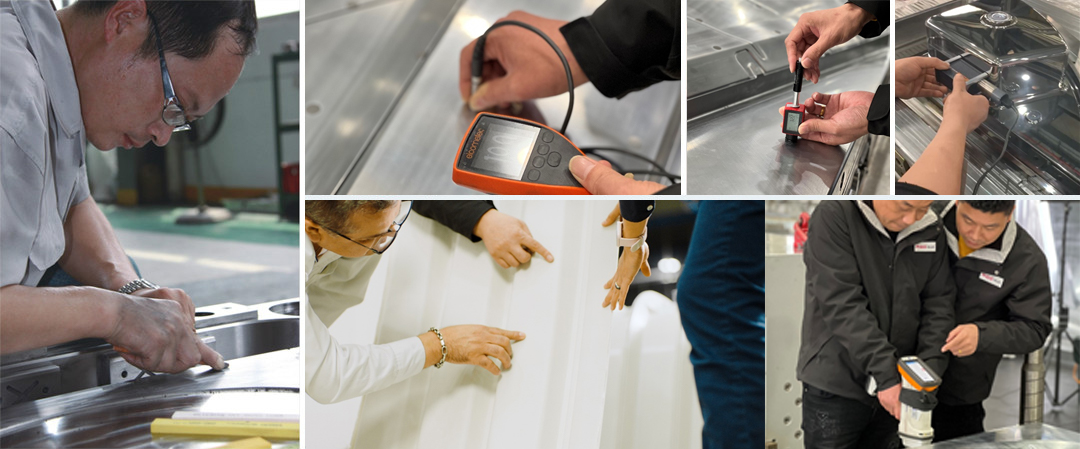
As a professional SMC mould manufacturer, MDC Mould have a lot of equipment and measuring and testing instruments continuous improvement. We have purchased advanced measuring equipment and instruments such as imported Coordinate Measuring Machine, which allow us to understand the quality situation of each product, process, and standard, and provide the best service for our quality control department. Our QC department will conduct product inspection and submit test report within 24 hours after mold test. The report will include comprehensive testing and analysis on product size, appearance, injection technology and physical parameters. We use different inspection standards and tools for different products. In our laboratory, we have carried out different tests on high pressure injection, high speed injection, clamping time, etc. The quality control department proposes modification and improvement suggestions for unqualified products. We have accumulated rich experience and applied it in mold production to provide customers with good solutions.

Technical Inspection

Good Quality of SMC Molds Come from Good Die Design

In modern manufacturing, mold is a key production tool, which is widely used in the manufacturing process of various products. In the production of composite products, Sheet Molding Compound (SMC) mold is a special type of mold. SMC is a high-performance composite material composed of resin, glass fiber and fillers. It has the advantages of light weight, high strength and corrosion resistance. It is widely used in automotive, aerospace, construction and other fields. However, in order to produce high-quality SMC products, die design is a crucial link.

Die design refers to the comprehensive consideration of various factors such as reasonable mold structure, material selection, product design and mold processing in the manufacturing process of SMC molds, so that the mold can be realized in the production process efficient and stable production, and guarantee the quality and performance of the final product. High-quality SMC mold design should have the following characteristics.

Reasonable mold structure

Reasonable mold structure is the basis of high-quality SMC molds. The rationality of the mold structure directly affects the molding quality and production efficiency of SMC products. When designing the mold structure, factors such as the fluidity, shrinkage, and shrinkage rate of the SMC material need to be considered to ensure that the SMC material can fully flow in the mold cavity and fill every detail when the mold is closed. At the same time, the mold structure should take into account the shrinkage and deformation of the product to ensure the dimensional accuracy and shape consistency of the final product. In addition, a reasonable cooling system design is also a part that cannot be ignored in the mold structure, which can effectively control the mold temperature, improve production efficiency and prolong the life of the mold.

car-door-trim-mold-design

Release performance of SMC mold

SMC materials usually require a long curing and hardening process in the mold, therefore, the release performance of the product has a direct impact on the life of the mold and production efficiency. Reasonable product design should include proper demoulding slope, demoulding sequence, demoulding force, etc., so that when the mold is demolded, it can be easily separated from the mold without damaging the product or the mold.

smc mold making

Characteristics of SMC materials

Product design also has an important impact on the quality and performance of SMC molds. Product design should fully take into account the characteristics of SMC materials, including its fluidity, shrinkage, molding difficulty, etc. Reasonable product design can reduce the internal stress and deformation of SMC materials during the molding process, thereby ensuring the dimensional accuracy and appearance quality of the final product. In product design, it is necessary to reasonably set parameters such as product wall thickness, line angle, corner radius, etc., so as to obtain good filling effect and finished product quality during mold molding.

mold

suitable material selection

The mold material should have the characteristics of high strength, high hardness, wear resistance and corrosion resistance, so as to ensure that the mold will not have problems such as deformation, wear and corrosion during the long-term production process. At the same time, the mold material should also have good thermal conductivity in order to better control the mold temperature and improve production efficiency. In terms of material selection, it is necessary to comprehensively consider factors such as the use environment of the mold, production batch, product requirements, etc., and choose a suitable mold Material.

Structural Strength and Stability

SMC products usually need to have high strength and stability to meet their requirements in practical applications. In product design, it is necessary to fully consider the mechanical properties of SMC materials, and reasonably set the wall thickness, ribs, support structures, etc. of the product to ensure the strength and stability of the final product.

Precision and quality of mold processing

High-precision mold processing can ensure the dimensional accuracy and shape consistency of the mold, thereby ensuring the quality of the final product. In mold processing, it is necessary to pay attention to the dimensional control, surface finish, surface coating, etc. of the mold to ensure the appearance quality and performance of the final product. At the same time, high-quality equipment can also improve the precision of the mold.

compression seat mold
top panel mold

In conclusion, a good quality SMC mold comes from a good die design. Reasonable mold structure, appropriate material selection, full consideration of product design, and high-precision mold processing are all important factors to ensure the quality and performance of SMC molds. In the design and manufacturing process of SMC molds, the above factors need to be considered comprehensively to ensure that the molds can achieve efficient and stable production in the production process, and produce high-quality SMC products to meet the ever-growing market demand.

As a professional mold maker, MDC Mould has a team of experienced engineers using the latest engineering tools and software to help you build high-quality SMC mold. This also enables our tooling engineers to create the best and most cost-effective tooling for your project requirements. We can review your CAD files or part drawings and provide feedback on possible quality issues or areas for improvement to help ensure your product is manufacturable. We support a wide variety of file formats, including major software. MDC Mould can also create a full 3D model of your target part, or we can convert your 2-D drawing into a 3-D solid CAD model. If you have any needs, welcome to contact us.

3d mold

SMC compression moulding

SMC (Sheet Molding Compound) compression moulding is a manufacturing process used to produce composite materials. It involves compressing a pre-prepared mixture of chopped fibers, typically glass or carbon, and a thermosetting resin, such as polyester or epoxy, between two heated moulds to create a finished part.

Why Compression Moulding are Used in the Process for SMC Composites?

The Process of SMC Compression Moulding:

  1. Preparing the SMC: Sheet Molding Compound is typically produced by mixing chopped fibers (such as glass or carbon) with a thermosetting resin, along with other additives such as fillers, pigments, and release agents. The mixture is typically in the form of a sheet or a mat.
  2. Placing the SMC in the mould: The SMC sheet is placed in the mould, which is usually made of steel and consists of two halves that can be opened and closed. The mould is typically coated with a release agent to prevent the SMC from sticking to the mould during the curing process.
  3. Closing the mould: The two halves of the mould are closed, and pressure is applied to compress the SMC sheet. The pressure is typically applied hydraulically and can range from several hundred to several thousand pounds per square inch (psi), depending on the specific material and part requirements.
  4. Heating and curing: The closed mould, with the compressed SMC, is heated to a specific temperature, typically in the range of 120 to 180 degrees Celsius (250 to 356 degrees Fahrenheit), depending on the resin used. The heat causes the thermosetting resin to cure and harden, forming a solid composite part.
  5. Cooling and demoulding: After the curing process is complete, the mould is cooled, and the pressure is released. The mould is then opened, and the finished SMC part is demoulded. The part may require additional trimming, drilling, or other post-processing operations to achieve the desired final shape and finish.
smc moulding

As a professional and world-famous mold manufacturer, MDC Mould specialize in SMC mold, compression mold. The company has a skilled and experienced R&D team, as well as a group of high-quality production workers, committed to providing customers with the best quality mold solutions. If you have any need, please feel free to ask us.

Equipment |CNC precise machines

Last time we introduced Spark Erosion Machine we use in the manufacturing of SMC molds. Today we are gonna to talk about another machine we use to improve the machining accuracy – CNC precise machines.

equitment

equitment

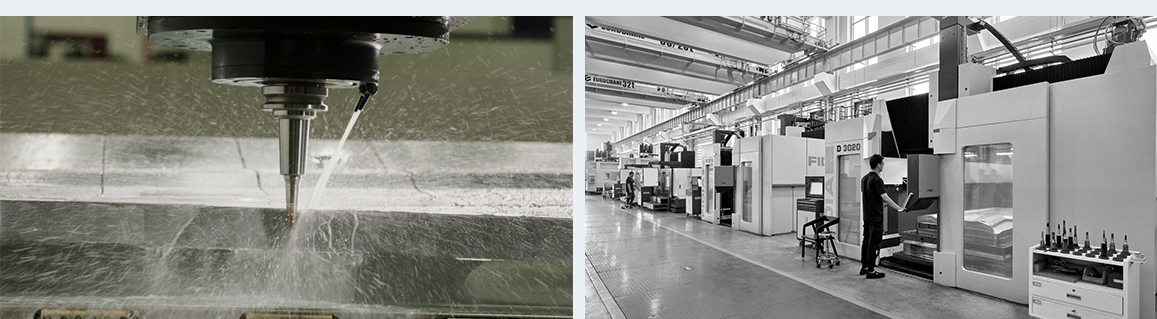
CNC (Computer Numerical Control) precision machine is a type of machine tool that uses computerized control and precision tools to produce high-precision parts. The machine is programmed using a set of instructions that control the movement of cutting tools, achieving high accuracy and repeatability during the manufacturing process.

CNC precision machines are used in various industries, including aerospace, automotive, and medical treatment, where accuracy and accuracy are crucial. These machines are capable of machining SMC molds with complex shapes and features while ensuring high-quality surface finish. Some examples of CNC precision machines include CNC lathes, CNC milling machines, and CNC milling machines.

Another advantage of CNC precision machines is that they can operate continuously for long periods of time, making them an ideal choice for mass production. They also have the ability to produce parts with strict tolerances, which helps reduce waste and improve efficiency in the manufacturing process.

insp

In short, as a well-known compression mold manufacturer at home and abroad, if you have any needs, then MDC Mould will be your best choice.

Equipment | Spark Erosion Machine

introduce the Spark Erosion Machine used in MDC Mould

SMC (Sheet Molding Compound) is a high-strength, lightweight composite material composed of resin, glass fiber, and fillers. SMC molds are commonly used to manufacture various types of complex shaped parts, such as automotive shells, aircraft components, ship parts, and so on. Therefore, in the manufacturing process of SMC molds, machining accuracy is a very important aspect.

As a professional SMC mold manufacturer, MDC Mould is equipped with experienced engineers, imported equipment, and sophisticated processing processes that can meet customer quality requirements. Today we will introduce the Spark Erosion Machine used in MDC Mould.

Spark erosion machine

Spark Erosion Machine, also known as electrical discharge machining machines, is a method of cutting workpieces through electrical discharge. In this process, the gap between the electrode and the workpiece is filled with a liquid medium (usually deionized water), which can generate electrical discharge between the electrode and the workpiece, and can also wash away the debris of the material being cut.

The main working principle of a spark erosion machine is to generate electrical pulses on the surface of the workpiece to discharge electricity, which ionizes the medium between the electrode and the workpiece, thereby generating a series of electric spark discharge phenomena. Each electric spark discharge process will impact and detach small particles on the surface of the workpiece, and the electrode will gradually consume. Through repeated electric spark discharge processes, small particles on the surface of the workpiece are gradually worn and reduced, ultimately forming the desired shape and profile.

Advantages: The spark erosion machine has high machining accuracy and can accurately process complex shapes and contours in SMC molds. That is to say, the obtained SMC mold not only has high accuracy, but also has high surface quality. At the same time, the processing process of a wire cutting machine does not generate thermal deformation or cutting stress, so it does not adversely affect the performance of SMC materials. This makes spark erosion machine one of the ideal choices for manufacturing SMC molds.

In short, as a well-known compression mold manufacturer at home and abroad, if you have any needs, then MDC Mould will be your best choice.

Influence of Different Types of Press Machines on SMC Mold Manufacturing

Do you know the differences among 500T, 1500T or other press machine? This article will tell you.

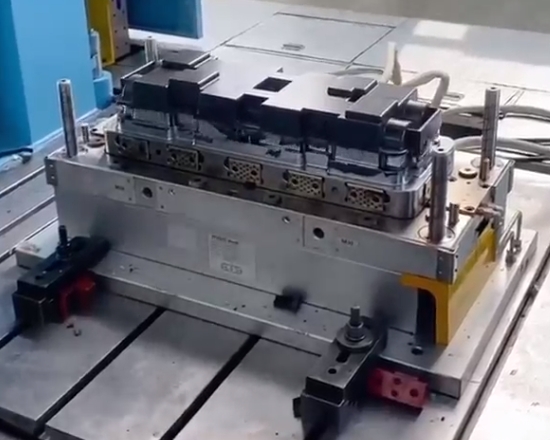
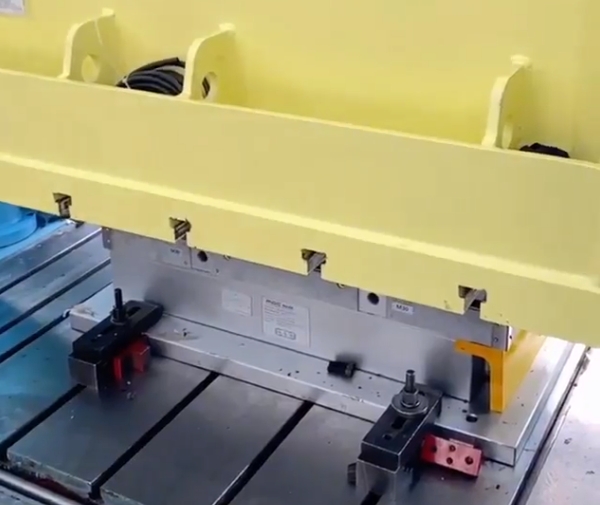
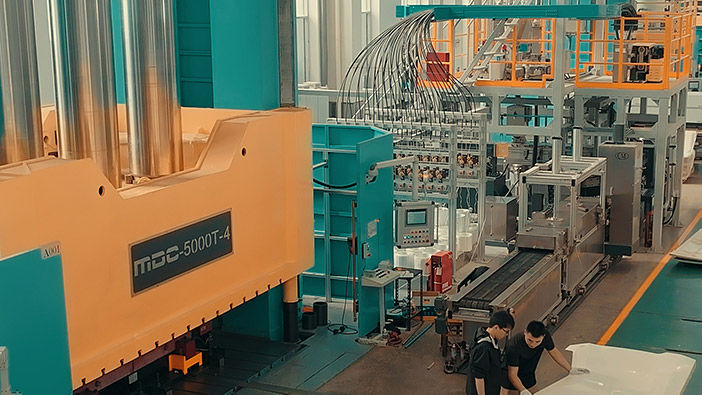
As a professional compression mold manufacturer, MDC Mould has professional compression machines, including 500T, 1500T&4000T Press machine.

compression-mould-machine
Compression Molding Machines

Sizes and Complexities

First of all, these different types of presses can provide different pressures and extrusion capabilities, providing different options for the manufacture of SMC molds of different sizes and complexities. For example, for smaller molds, 500T presses can be used to complete, while larger molds need to use 1500T , 2000T or 4000T presses.

Manufacturing Cycle and Cost

Secondly, these different types of presses can also affect the manufacturing cycle and cost of SMC molds. Smaller models of presses usually require longer molding cycles, while larger models of presses can complete the manufacture of SMC molds in a shorter time. However, larger models of presses are also relatively expensive and require more investment.

Accuracy and Quality

Finally, these different types of presses can also affect the manufacturing accuracy and quality of SMC molds. Larger models of presses generally provide higher pressure and more precise control, which can produce higher quality, higher precision SMC molds. Smaller models of presses may have some limitations in manufacturing accuracy, which may not be able to meet the requirements for some SMC mold manufacturing that requires high precision.

2000T press

Therefore, when selecting an SMC mold manufacturing press, it is necessary to select the appropriate press model according to the specific production needs and budget in order to achieve the best production efficiency and cost-effectiveness.

SMC shower base mould
SMC laundry tank mold

MDC Mould was established in 1997, mainly engaged in the development and production of hot pressing molds such as SMC mold, BMC mold, GMT mold, and fiberglass mold. The company adheres to the quality policy of “customer satisfaction is our eternal pursuit“, and meets customer requirements with high-level technology, scientific management, exquisite products, and thoughtful service, achieving win-win results is our company’s purpose. If you have any needs, we will provide you with the best service.

Maintenance of SMC Mold

The maintenance of SMC molds is an important measure to ensure the normal operation of the mold and prolong its service life.

SMC mold(sheet molding compound) is an important manufacturing tool used to produce various composite material products. However, these molds are subject to the risk of wear and damage during the production process, and attention needs to be paid to their maintenance and maintenance to ensure their long-term use, product quality and production efficiency.

compression molding process

Here are some detailed tips on SMC mold maintenance and maintenance:

1. Clean the surface and interior of the mold regularly: Before and after using the SMC mold, the mold needs to be cleaned. First, use air pressure to remove dust and dirt from the surface of the mold. Then, clean the surface and interior of the mold with a specific cleaning agent. Regular cleaning of molds will ensure they remain in top condition and reduce damage and wear from accumulated dirt and impurities.

2. Keep the mold surface lubricated: Proper lubricant can reduce wear and tear on the mold surface and reduce friction. Lubricant should be applied thinly on the surface of the mold to prevent too much lubricant from entering the mold and affecting product quality.

3. Regularly inspect the surface and interior of the mold: Regularly inspect the surface and interior of the mold for cracks, scratches, wear, or other damage. Finding and repairing these problems in time can avoid more serious damage and prolong the service life of the mold.

4. Keep the mold in a dry environment: SMC molds should be stored in a dry and ventilated environment. An environment with high humidity may cause rust and corrosion on the surface of the mold, affecting the service life of the mold.

5. Avoid overloading the mold: When using SMC molds, it is necessary to avoid overloading. Overloading may cause mold deformation, wear and breakage, causing irreversible damage to the mold.

6. Regular replacement of molds: SMC molds also need to be replaced regularly to ensure product quality and production efficiency. The service life of a mold depends on its material, manufacturing process and usage. Mold replacement should be considered when there is visible damage or wear to the mold surface, or when the product begins to change in size and shape.

insp

In short, the maintenance and maintenance of SMC molds is an important measure to ensure the normal operation of the mold and prolong its service life. Regular cleaning, lubrication and inspection of molds, as well as avoiding overloading, can ensure the normal operation and efficient production of molds. Maintaining and maintaining molds can help companies reduce production costs, improve product quality, and ensure the safety of the manufacturing process.

MDC Mould is a professional mould manufacturer, especially of SMC molds.The molds developed by our company have short (2-4 minutes) cycle time and the use of machined tool steel molds supports a program volume of more than 500,000 units per year. Our company adheres to the concept of professionalism and integrity, and will focus on developing higher-quality, higher-tech molded FRP molds in the future.

SMC mould
SMC Plastic Monument Mark Mold

Our molds not only have high difficulty, long service life and short cycle time, but also have reasonable price, timely delivery and considerate service, which are favored by customers at home and abroad. If you have any needs, welcome to contact us.

What are SMC And BMC?

MDC mould has been designing and manufacturing moulds for Sheet Moulding Compound (SMC) and Bulk Moulding Compound (BMC) materials since the 1990s.

Over the past few decades, composite materials have become important in traffic engineering, automotive, aerospace technology, electrical engineering and other industries. Composites based on Sheet Molding Compound (SMC) and Bulk Molding Compound (BMC) technologies allow the creation of small and medium-sized parts with the highest mechanical properties and heat resistance requirements.

Thermoset materials such as SMC, BMC, etc have excellent physical properties when getting compression molding. Structural parts molded from BMC or SMC can be replaced for metal products at the condition of weight reduction without lowering strength. Excellent heat resistance, compression strength, and dimensional stability are all advantages of compression molding materials.

Difference Between SMC and BMC Materials

Before the introduction begins, there are a few more proper nouns you need to know:

  • Polyester resin: an adhesive that provides three-dimensional crosslinking during processing, connects individual components, and plays an important role in achieving desired thermomechanical properties;
  • Mineral fillers: ensuring the transport of glass fibers during the flow of the material, can significantly reduce its cost and, in the case of aluminum hydroxide, significantly improve the refractoriness of the material;
  • Glass fiber: provides the mechanical strength of the product;
  • Catalyst: Provides initiation of three-dimensional cross-linking chemical reactions. The correct choice of catalyst is the most important condition for obtaining high-quality parts without underpressure, cracks and voids.

SMC material

SMC (Sheet Molding Compound) – Sheet material containing resins, fillers, reinforcing fibers. SMC is a material that can be pressed and processed at a high temperature of 120-160 SMC °C. The SMC is protected by a polymer film on both sides. Thickening agent, inorganic filler, initiator, additive, and pigment were added to the unsaturated polyester resin to make a mixture of resin, impregnated with short-cut fiber or felt piece, covered with PE film on both sides, after thickening, a thin sheet molded plastics were prepared. Unlike woven glass materials, SMC is not reinforced with bonded glass fibers. Because the glass fiber length is significantly longer than that of BMC, SMC has lower flow properties but higher strength properties. By using a chemical-resistant resin, a pressed material with high weather resistance can be obtained.

Typical SMC structure:

  • Fiberglass (15-50mm) – 27%;
  • Filler (talc) – 40%;
  • Resins (polyester, vinylester) – 28%;
  • Other additives – 5%.

Usually fibers in SMC products have two orientations. SMC also has the following varieties:

  • SMC LP is a thin material that can get products with high surface quality;
  • SMC LS – low shrinkage material;
  • HSSMC is a high strength material.

Depending on the specific product, different types of SMC can be used, each with different characteristics. The common denominator is minimal technical shrinkage and high impact strength. The significant advantages of SMC products compared to steel are high corrosion resistance and low specific gravity. SMC is processed into large-sized body parts by direct compression. During the pressing process, the pre-cut material is placed into the mold. The clamping time is 2-3 minutes, and the heating temperature is about 150 ℃.

The main application areas of SMC are: automotive industry, traffic engineering, lighting engineering, electrical network. The most notable achievement is the use of oil pans and valve covers made of SMC by car companies in production truck models. The following is a list of auto parts that can be manufactured with compression molds.

  • Automotive exterior parts: bumper linings, mudguards, wheel covers, spoilers and rear doors.
  • Automotive interior parts: instrument panel, door panel, glove box, car seat and various protection panels.
  • Structural and functional components: fuel tank, coolant tank, air filter cover, fan blades, intake pipe and cylinder head.

In addition to auto parts, SMC molding is also used to produce bathroom accessories, water tank accessories, motorcycle accessories, fitness equipment parts and meter housings.

BMC material

BMC (Bulk Molding Compound) – A special paste-like material containing resin BMC, fillers, and reinforcing fibers. It mixes a variety of inert fillers, fiber-reinforced materials, catalysts, stabilizers and pigments in thermosetting plastics to form a gluey “putty like” composite material for pressing or injection molding. The glass fibers in BMC are shorter than those in SMC, so the BMC material flows even better than SMC, and can be made into a better finish or more complex materials. BMC features light weight, electrical insulation, fire resistance, corrosion resistance, heat resistance, weather resistance, low shrinkage, stable dimensional control, good fluidity, and a variety of special properties combined into one, making bulk molding compound (BMC) the most ideal of materials to manufacture smaller but more complex and precise products used in various industries.

Typical BMC structure:

  • Fiberglass (5-20mm) – 20%;
  • Filler (talc) – 45%;
  • Resins (polyester, vinylester) – 30%;
  • Other additives – 5%.

BMC is a material that can be processed by pressing or injection. During pressing, metal is used to heat the substrate. Pressures from 30 to 100 atmospheres. The heating temperature is 100-160°C. The mold closing time is 2-3 minutes, during which heating occurs and polymerization is initiated. Injection molding uses a screw injection molding machine to feed material into a closed mold cavity.

BMC technology has also been widely used in the production of complex-shaped parts, such as pump casings, electrical components, etc.

Although there are differences between the two forms of material, both are suitable options for compression molding. In both cases, MDC mould offers SMC and BMC mould options that accompany MDC mould’s commitment to excellence.

SMC VS BMC

In general, when the mechanical properties of the products, including tensile strength, bending strength and impact strength, etc. are higher, the surface area of the products is larger, and the lightweight of the products is higher, SMC will be selected.In general, the requirements for economic cost control are too high, and the mechanical strength requirements are lower than SMC requirements; When the electrical properties and flame retardant properties of the products are higher; When the surface area of the product itself is small, people usually choose BMC.
SMC is light weight and high strengthSize stability of BMC
SMC integration degree is high, design freedomBMC has good water and solvent resistance
SMC has strong corrosion resistanceHigh heat resistance of BMC
SMC excellent heat resistance and coatingAging resistance of BMC
SMC pressing process is simpleThe electrical performance of BMC is outstanding
SMC vs BMC

MDC mould has been designing and manufacturing moulds for Sheet Moulding Compound (SMC) and Bulk Moulding Compound (BMC) materials since the 1990s. MDC Mould is one of well-known mold makers in china. With the most advanced production equipment and technology, it enables us to manufacture the best quality molds. MDC has a long history in the glass fiber compression molding industry. We are committed to the design, development and production of stampers, as well as provide technical support to customers worldwide, Our aim is to become the best supplier of stable, high-performance SMC mould and BMC mould.