Why Most SMC Molds Fail Before Reaching Their Expected Tool Life

Why do SMC molds fail early? Master the physics of fiber abrasion, thermal stress cracking, and shear edge wear to maximize compression tool life with MDC.

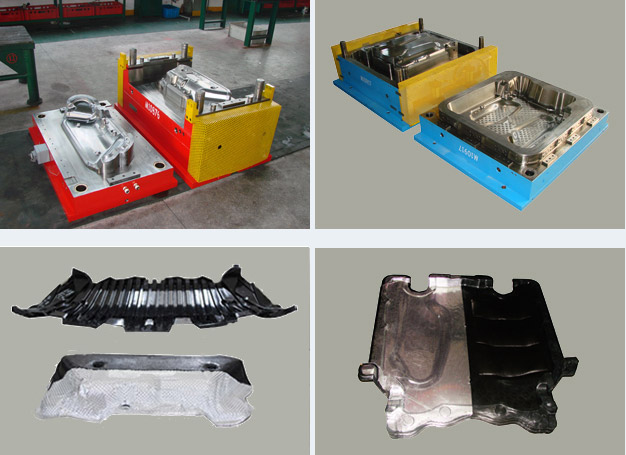
Tool life is one of the most important performance indicators in SMC compression molding. For automotive exterior panels, EV battery enclosures, sanitary ware products, electrical components, and structural composite parts, mold durability directly influences production costs, maintenance frequency, part consistency, and overall manufacturing profitability.

Many manufacturers assume that mold failure occurs because of poor maintenance or excessive production volume. In reality, most SMC molds begin losing performance long before they become unusable. Microscopic wear, thermal fatigue, cavity distortion, and surface degradation gradually accumulate until part quality can no longer meet specification requirements.

Understanding the primary failure mechanisms behind premature tooling wear allows manufacturers to improve mold design, optimize maintenance strategies, and significantly extend tooling service life.

Severe Glass Fiber Abrasion vs. Surface Hardness

One of the most common causes of premature SMC mold failure is the mismatch between glass fiber abrasion and mold surface hardness.

Typical SMC materials contain approximately 30% to 50% chopped glass fibers. During compression molding, these fibers flow across cavity surfaces under extremely high pressure while being carried by the resin system. Over thousands of molding cycles, this continuous movement creates severe scouring wear on mold surfaces.

Areas most vulnerable to abrasion include:

  • Material charge zones
  • Flow transition regions
  • Rib structures
  • Sharp corner geometries
  • Parting line surfaces

If mold steels such as 1.2311 or 1.2738 are not properly surface engineered, the abrasive action of glass fibers can gradually damage the cavity finish. Surface roughness increases, release performance deteriorates, and dimensional accuracy begins to decline.

This wear mechanism often results in:

  • Difficult demolding
  • Surface defects
  • Loss of Class A finish quality
  • Dimensional inconsistency
  • Increased maintenance frequency

To combat fiber abrasion, advanced SMC tooling frequently incorporates hard chrome plating, precision polishing, and specialized surface treatments capable of achieving surface hardness levels above 58 HRC while maintaining excellent release characteristics.
SMC moulding

Thermal Fatigue and Stress Cracking from Poor Heat Management

Temperature control is often discussed from a product quality perspective, but it is equally critical for mold longevity.

Most SMC compression molds operate continuously between 140°C and 160°C. During production, molds repeatedly heat up, cool down, and experience thermal expansion cycles. If heating channels are poorly designed or temperature distribution is inconsistent, localized thermal gradients develop within the steel structure.

These temperature differences generate internal thermal stress as different areas of the mold expand and contract at different rates.

Over time, repeated thermal cycling may lead to:

  • Thermal fatigue micro-cracking
  • Surface cracking
  • Loss of cavity precision
  • Localized distortion
  • Premature mold refurbishment

Large automotive components and EV battery enclosure molds are particularly sensitive because their extensive cavity surfaces make uniform temperature control more difficult.

Modern mold engineering increasingly relies on thermal simulation, optimized heating channel layouts, and zoned temperature control systems to minimize thermal stress and maximize tool life.

Shear Edge Micro-Chipping from Clamping Misalignment

The shear edge is one of the most critical and highly stressed features in an SMC compression mold.

In many automotive applications, shear edge clearances typically range between 0.03 mm and 0.05 mm. These extremely tight tolerances are necessary to control flash generation and maintain clean part edges.

However, if press alignment accuracy is insufficient or guide systems begin to wear, lateral forces can develop during mold closing.

Even small alignment deviations may cause the opposing shear edges to contact each other under substantial closing pressure. Over time, this repeated impact creates micro-chipping along the edge surfaces.

Common consequences include:

  • Excessive flash formation
  • Poor edge quality
  • Increased trimming costs
  • Part dimensional variation
  • Reduced automation efficiency

To minimize these risks, high-quality molds utilize precision guiding systems, wear plates, hardened inserts, and rigorous mold validation procedures before production launch.

Venting Erosion and Carbon Build-Up in High-Volume Production

Venting systems play a critical role in maintaining both product quality and mold health.

During molding, the resin system releases air, moisture, and volatile compounds that must be evacuated efficiently through venting slots and gas escape channels. As production volume increases, carbon deposits and resin residues may gradually accumulate within these vent areas.

Blocked venting systems can lead to:

  • Gas entrapment
  • Burn marks
  • Localized cavity erosion
  • Pressure concentration zones
  • Increased cleaning requirements

Proper vent design and routine maintenance are essential for preserving mold performance during long-term production programs.

Loss of Cavity Accuracy Due to Uneven Wear Distribution

Most molds do not fail suddenly. Instead, cavity accuracy gradually deteriorates through uneven wear distribution over thousands of production cycles.

Certain regions experience significantly higher material flow velocity, pressure, and abrasion than others. As a result, wear rates become uneven throughout the mold.

What begins as microscopic dimensional change can eventually develop into significant tolerance drift.

Potential consequences include:

  • Assembly issues
  • Seal surface leakage
  • Door panel gap inconsistency
  • Battery enclosure fitment problems
  • Reduced product repeatability

Regular cavity inspection and dimensional verification help identify these issues before they affect production quality.

How Chrome Plating and Surface Engineering Extend SMC Mold Life

Among all mold protection technologies, surface engineering remains one of the most effective methods for extending tooling life.

Hard chrome plating creates an extremely wear-resistant surface capable of withstanding continuous exposure to abrasive glass fibers and repeated molding cycles.

When combined with precision polishing, surface treatment provides multiple advantages:

  • Higher surface hardness
  • Improved release performance
  • Reduced fiber scouring wear
  • Lower maintenance frequency
  • Enhanced corrosion resistance
  • Improved Class A surface quality

For automotive exterior panels and high-volume industrial applications, properly executed chrome plating often represents one of the most valuable investments in long-term mold durability.
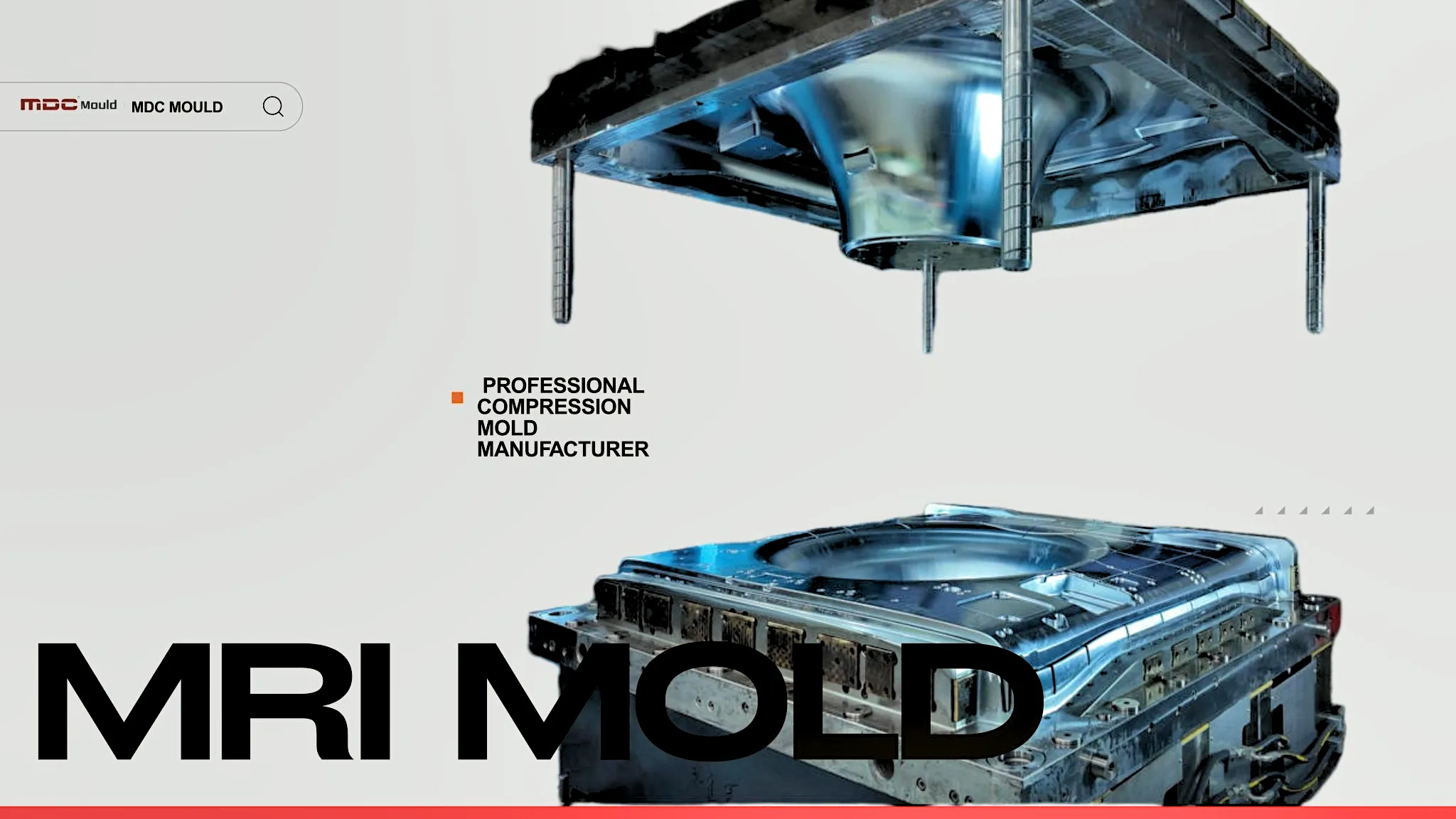
MRI mold

How Preventive Maintenance Extends Tool Life

Even the most advanced mold engineering cannot eliminate the need for preventive maintenance.

Rather than waiting for quality issues to appear, successful manufacturers implement proactive maintenance schedules that include:

  • Cavity surface inspection
  • Venting system cleaning
  • Guide system verification
  • Wear plate inspection
  • Heating system evaluation
  • Periodic polishing and repair

Preventive maintenance significantly reduces unexpected downtime and helps maintain consistent part quality throughout the mold’s service life.

What Determines Whether an SMC Mold Lasts 100,000 or 1,000,000 Cycles?

The difference between a mold that requires major refurbishment after 100,000 cycles and one that successfully exceeds 1,000,000 cycles rarely comes down to a single factor.

Long-term tooling durability is determined by the combined influence of:

  • Glass fiber abrasion resistance
  • Thermal fatigue management
  • Shear edge protection
  • Venting performance
  • Surface engineering quality
  • Structural rigidity
  • Preventive maintenance practices

When these factors are addressed during the design and manufacturing stages, tooling can achieve significantly longer service life while maintaining production efficiency and part quality.

MDC’s Approach to Long-Life SMC Mold Engineering

As a professional SMC mold manufacturer, MDC focuses on engineering solutions that maximize mold durability and production stability.

Our development process integrates:

  • DFM analysis
  • Material flow simulation
  • Thermal analysis
  • Structural rigidity evaluation
  • High-speed CNC machining
  • Precision polishing
  • Hard chrome plating
  • Comprehensive mold testing

By combining advanced engineering with strict manufacturing standards, MDC helps customers achieve longer tool life, lower maintenance costs, and more reliable composite part production.

Conclusion

Premature mold failure is rarely the result of a single defect. Instead, it develops through the combined effects of abrasion, thermal fatigue, alignment issues, venting deterioration, and insufficient surface protection.

Manufacturers that understand these failure mechanisms can make better tooling decisions and significantly improve the lifetime value of their investments. For demanding automotive, EV, infrastructure, and industrial applications, advanced SMC mold engineering remains the foundation of long-term manufacturing success.
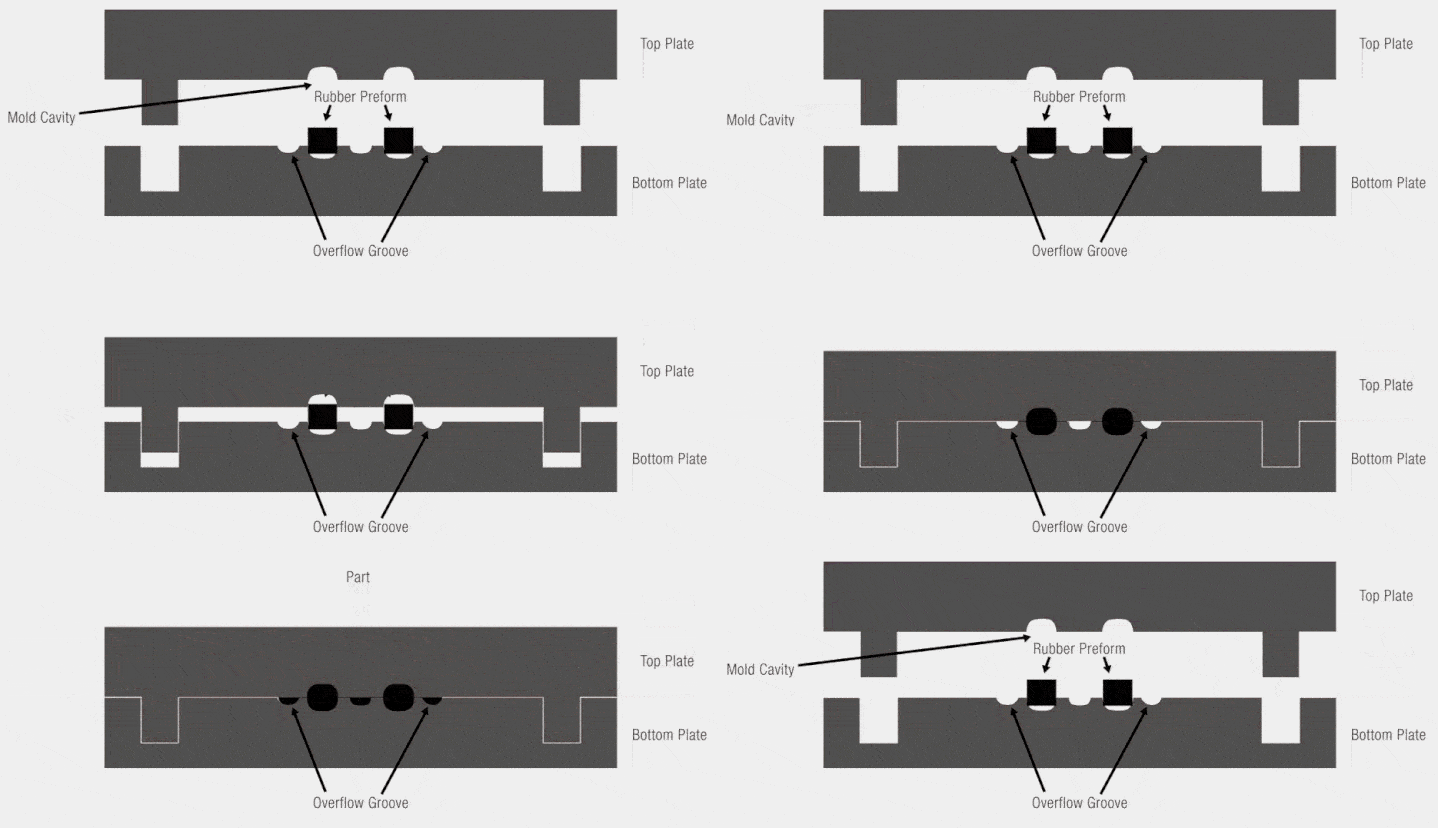
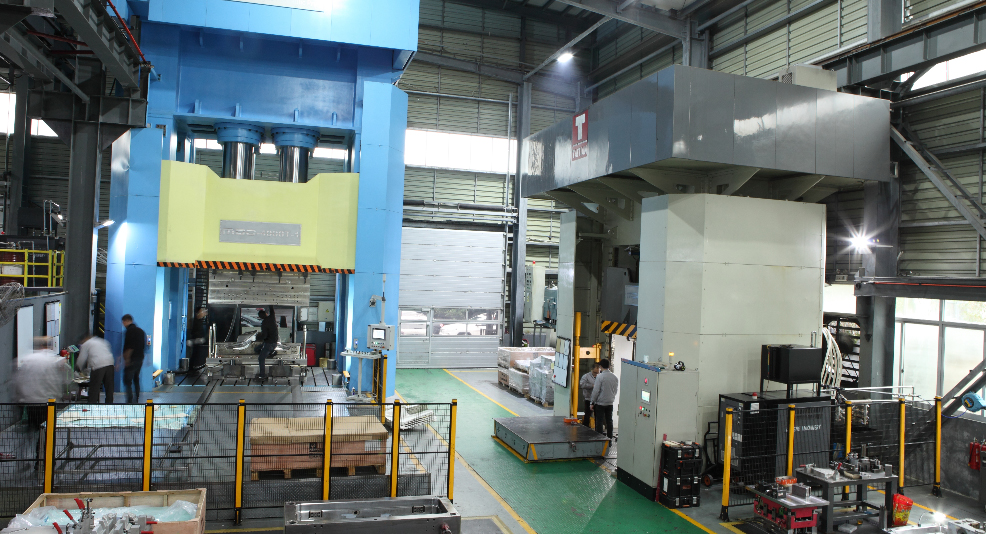
Parts of a Compression Molding Machine: Core Components Driving Composite Quality

Explore core compression molding machine parts. Learn how hydraulic systems, heating platens, and servo drives optimize SMC, BMC, and composite molding quality.

In modern composite manufacturing, product quality is no longer determined solely by mold design or raw materials. The performance of the compression molding machine itself plays a decisive role in controlling curing behavior, dimensional accuracy, mechanical properties, and long-term production consistency.

Whether manufacturing SMC automotive body panelsEV battery enclosuresBMC electrical components, or FRP water tank panels, every major machine component contributes directly to the quality of the finished part.

For this reason, leading composite manufacturers no longer view a compression molding press as simply a hydraulic machine. Instead, it is regarded as a highly integrated production system where pressure control, temperature uniformity, alignment precision, and digital process monitoring work together to eliminate defects and maximize production stability.

compression-molding

Why Machine Design Matters in Compression Molding

Many common composite molding defects—including porosity, blistering, under-curing, warpage, flash formation, dimensional variation, and inconsistent mechanical properties—can often be traced back to machine performance rather than mold design alone.

Modern compression molding machines are therefore engineered not only to generate force, but also to precisely control pressure profiles, platen temperature distribution, mold alignment accuracy, and real-time process monitoring.

Understanding the relationship between machine components and part quality is essential for achieving reliable manufacturing performance.

High-Tonnage Hydraulic System: Pressure and Multi-Stage Velocity Control

The hydraulic system is often considered the heart of a compression molding machine. However, its importance extends far beyond simply generating clamping force.

Modern compression molding presses utilize high-capacity hydraulic cylinders, servo-driven pumps, and precision proportional valves to create highly controlled pressure and velocity profiles throughout the molding cycle.

Rather than moving at a constant speed, the ram typically follows a carefully programmed multi-stage motion sequence:

  • Rapid closing approach
  • Controlled material contact
  • Degassing phase
  • Progressive compression phase
  • High-pressure curing phase
  • Pressure holding stage

This multi-stage velocity profile is particularly important when molding SMC and BMC materials.

During the early stages of mold closing, trapped air must be allowed to escape from the cavity. If excessive pressure is applied too quickly, air can become trapped inside the composite charge, resulting in internal porosity, blistering, and surface defects.

By carefully controlling closing speed and compression pressure, the hydraulic system enables efficient degassing before full compaction occurs.

During the curing phase, stable pressure distribution ensures proper resin flow, fiber consolidation, and dimensional accuracy throughout the entire component.

This is especially critical for large automotive exterior panels, EV battery covers, and structural composite components where internal voids can significantly reduce mechanical performance.

Smart Zoned Heating Platens: The Ultimate Factor in Cure Uniformity

Among all machine components, the heating platen system may have the greatest influence on composite part quality.

While mold designers often focus on cavity geometry and material flow, resin curing behavior is fundamentally governed by temperature control.

Modern compression molding machines utilize electrically heated platens, oil-heated platens, or steam-heated systems designed to maintain highly uniform temperature distribution across the entire molding surface.

Advanced zoned heating systems can often achieve temperature control accuracy within approximately ±1°C across large mold areas.

This level of thermal precision is essential for ensuring synchronized resin curing throughout the mold cavity.

Without uniform heating, different regions of the molded part may cure at different rates. Uneven curing generates localized residual stresses that can ultimately cause:

  • Warpage
  • Dimensional instability
  • Surface distortion
  • Fiber print-through
  • Reduced mechanical performance

For large SMC automotive body panels, battery enclosure covers, and BESS energy storage cabinet components, synchronized curing is critical for maintaining dimensional accuracy and surface quality.

By eliminating thermal gradients across the mold surface, high-precision platens help manufacturers achieve superior flatness, reduced internal stress, and highly consistent production results.

compression-mould-machine

Precision Guide Pillars and Bushings: Protecting Mold Alignment and Shear Edges

The movement accuracy of the machine slide or ram directly influences mold life and product quality.

During every molding cycle, the moving platen must travel vertically while maintaining perfect alignment with the stationary mold half.

To achieve this, compression molding machines utilize precision-engineered guide pillarsguide bushings, and advanced guiding systems.

Their function extends far beyond simple motion guidance.

In modern SMC tooling, many molds incorporate highly precise shear edge designs that help control flash formation and improve material flow behavior.

These shear edges often operate with extremely small clearances.

Even slight platen misalignment can create serious problems:

  • Excessive flash formation
  • Premature shear edge wear
  • Mold damage
  • Reduced dimensional accuracy
  • Increased maintenance requirements

For high-volume automotive composite molds, alignment errors measured in only a few microns can significantly affect both mold longevity and product consistency.

High-precision guiding systems therefore serve as a critical safeguard for mold protection and long-term production stability.

Programmable PLC Control Systems with Real-Time Data Logging

The most advanced compression molding machines are no longer controlled solely through mechanical adjustments. Instead, they operate through sophisticated PLC-based control architectures integrated with intelligent Human Machine Interface (HMI) systems.

These digital control systems continuously monitor and record every critical production parameter throughout the molding cycle.

Key process variables include:

  • Press force
  • Hydraulic pressure
  • Ram position
  • Closing speed
  • Mold temperature
  • Cure time
  • Cycle duration

Rather than simply displaying machine status, these systems create a complete digital manufacturing record for every molded part.

This real-time data logging capability enables true closed-loop process control, allowing manufacturers to detect deviations immediately and maintain highly repeatable production conditions.

For automotive, aerospace, and energy storage applications, digital traceability has become an essential supplier qualification requirement.

OEMs increasingly require manufacturers to provide detailed process records demonstrating that every part was produced within specified process windows.

Without comprehensive data acquisition and traceability capabilities, entering high-end automotive EV supply chains or aerospace programs becomes increasingly difficult.

How Machine Components Work Together to Eliminate Composite Defects

The true performance of a compression molding machine is not determined by any single component. Instead, quality results are achieved through the interaction of pressure control, temperature management, alignment precision, and intelligent process monitoring.

Machine ComponentPrimary Quality FunctionDefects Prevented
Hydraulic SystemMulti-stage compression and degassing controlPorosity, blistering, voids
Heating PlatensSynchronized curing and thermal uniformityWarpage, residual stress, distortion
Guide Pillars & BushingsMold alignment accuracyFlash, shear edge wear, mold damage
PLC Control SystemClosed-loop process monitoringProcess instability and quality variation

The Future of Compression Molding Machines

As composite materials continue expanding into electric vehicles, battery enclosures, hydrogen energy systems, aerospace structures, and infrastructure applications, compression molding equipment is evolving from traditional hydraulic presses into intelligent manufacturing platforms.

Future systems will incorporate AI-assisted process optimization, predictive maintenance, digital twin technology, and fully integrated factory data networks.

However, regardless of future innovations, the fundamental relationship remains unchanged: superior composite products begin with superior machine control.

Conclusion

The parts of a compression molding machine do far more than support machine operation. Each component directly influences composite part quality, production efficiency, and long-term manufacturing reliability.

From multi-stage hydraulic pressure control and precision heating platens to alignment systems and real-time digital process monitoring, every subsystem contributes to defect prevention and product consistency.

For manufacturers producing SMC automotive components, EV battery enclosures, BMC electrical parts, and advanced composite structures, understanding these machine-to-quality relationships is essential for achieving world-class molding performance.

At MDC Mould, we believe that successful composite manufacturing is built upon the combination of advanced mold engineering and precision-controlled molding technology, ensuring reliable production and superior product quality across every application.

GMT Molding in Automotive Lightweighting: High-Speed Tooling Solutions

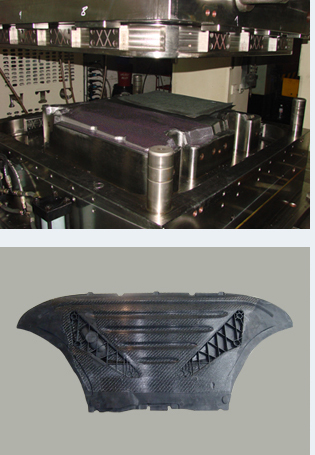
Accelerate high-volume automotive production with premium GMT molds by MDC. Optimize underbody shields and crash structures via high-speed compression tooling.

As global industries accelerate toward electrification, lightweight engineering, sustainability, and high-volume manufacturing, composite materials are playing an increasingly important role in modern product development. Among various composite technologies, Glass Mat Thermoplastics (GMT) have emerged as a highly attractive solution for manufacturing large structural components that require an optimal balance of strength, weight reduction, durability, and production efficiency.

For automotive manufacturers, energy storage system suppliers, commercial vehicle producers, and transportation equipment manufacturers, GMT technology is no longer viewed as a niche material solution. Instead, it is becoming a strategic manufacturing platform capable of replacing traditional metal assemblies with lightweight integrated composite structures.

Behind this growing adoption lies continuous innovation in GMT moldGMT mouldGMT tooling, and advanced GMT molding technologies. Modern compression molding systems are enabling manufacturers to produce increasingly complex thermoplastic composite components while maintaining the productivity levels required for mass production.

The Shift Toward Large Integrated Composite Structures

For decades, automotive and industrial products were designed around metal fabrication technologies. Complex structures often consisted of numerous stamped components connected through welding, riveting, or mechanical fastening processes.

While effective, this manufacturing approach presents several challenges:

  • High component counts
  • Complex assembly operations
  • Increased manufacturing costs
  • Additional weight
  • Greater supply chain complexity
  • Longer production cycles

As manufacturers pursue greater efficiency, the industry is increasingly moving toward large integrated structures that combine multiple functions into a single molded component.

Examples include:

  • Battery enclosure covers
  • Battery protection shields
  • Vehicle underbody panels
  • Front-end carrier systems
  • Load floors
  • Commercial vehicle roof structures
  • Trunk modules
  • Energy storage equipment housings

These applications are creating new opportunities for advanced GMT tool development and large-scale thermoplastic composite manufacturing.

gmt mold

Why GMT Is Attracting Attention Across Multiple Industries

GMT combines glass fiber reinforcement with thermoplastic resin systems to create a composite material that offers excellent mechanical performance while supporting high-volume manufacturing.

Unlike many traditional materials, GMT provides a unique combination of:

  • Lightweight performance
  • High impact resistance
  • Excellent energy absorption
  • Corrosion resistance
  • Design flexibility
  • Fast production cycles
  • Recyclability

This combination makes GMT particularly attractive for industries where lightweight structures and production efficiency are equally important.

GMT vs Traditional Material Solutions

When selecting materials for large structural components, engineers typically compare GMT against steel, aluminum, and thermoset composites such as SMC.

PropertyGMTSMCSteelAluminum
Weight ReductionExcellentExcellentLimitedGood
Impact ResistanceExcellentGoodExcellentModerate
Corrosion ResistanceExcellentExcellentRequires ProtectionGood
Cycle TimeVery FastModerateFastFast
RecyclabilityExcellentLimitedExcellentExcellent
Part Integration PotentialHighHighLimitedLimited

These advantages explain why GMT molding is becoming increasingly important for next-generation vehicle platforms and industrial equipment.

Ultra-Short Cycle Times: Why GMT Molding Fits Automotive Mass Production

One of the most significant advantages of GMT molding compared with traditional thermoset composite technologies is production speed.

Unlike SMC compression molding, which relies on thermoset resin cross-linking and curing reactions that often require several minutes per cycle, GMT materials are based on thermoplastic matrices. The GMT charge is preheated externally and transferred directly into the compression mold, where it is formed and cooled under pressure.

Because no chemical curing reaction is required, cycle times can be dramatically reduced.

For automotive OEMs, manufacturing efficiency is measured in seconds. Large structural components such as battery covers, underbody shields, front-end carriers, and load floors must be produced at production rates compatible with highly automated vehicle assembly lines.

At MDC, advanced GMT mold and GMT tooling solutions are engineered specifically for high-volume manufacturing environments. Through optimized thermal management systems, rapid mold actuation technologies, efficient material loading strategies, and automation-ready tooling architectures, large thermoplastic composite structures can often achieve production cycles below 60 seconds.

This capability allows GMT molding to bridge the gap between traditional metal stamping and advanced composite manufacturing, making lightweight composite structures economically viable for mass-market vehicle production.

Superior Energy Absorption and Impact Resistance Through Fiber Network Integrity

As electric vehicles continue to evolve, lightweight structures must also provide exceptional impact resistance and durability.

One of the most important advantages of GMT materials is the retention of a continuous glass fiber mat network throughout the molding process. Unlike short-fiber reinforced plastics, GMT maintains a three-dimensional reinforcement architecture that significantly improves toughness and energy absorption.

This unique fiber network allows GMT components to absorb impact energy efficiently while resisting crack propagation and penetration damage.

Applications that benefit from these characteristics include:

  • Battery protection covers
  • Vehicle underbody shields
  • Front-end carrier systems
  • Commercial vehicle protection panels
  • Energy storage equipment housings

However, achieving these performance levels depends heavily on tooling design.

At MDC, advanced cavity engineering focuses on maintaining fiber network integrity throughout the compression molding process. Through precise cavity clearance management, optimized charge placement strategies, and controlled material flow paths, fiber breakage and excessive fiber accumulation can be minimized.

The result is a more uniform composite structure with superior resistance to stone impact, road debris strikes, underbody abrasion, and demanding service conditions.

gmt mold

Zoned Mold Cooling Technology: Solving the Warpage Challenge of Large GMT Components

As GMT components become larger and more structurally complex, thermal management has become one of the most critical aspects of successful mold design.

Unlike thermoset composites, thermoplastic materials begin cooling and crystallizing immediately after compression. If cooling rates vary significantly across different areas of the mold, residual stresses can develop within the component.

These stresses often lead to:

  • Part warpage
  • Dimensional instability
  • Assembly difficulties
  • Surface distortion
  • Reduced long-term performance

For large automotive structures measuring over one meter in length, these challenges become particularly significant.

To address this issue, MDC incorporates advanced Zoned Cooling Systems into large-scale GMT tooling platforms.

By independently controlling temperatures across multiple mold regions and optimizing cooling channel layouts, heat extraction can be balanced throughout the molding cycle.

For highly complex geometries, MDC also applies engineering principles inspired by conformal cooling technology, enabling more uniform thermal conditions across critical molding surfaces.

The result is:

  • Reduced residual stress
  • Improved dimensional stability
  • Higher production consistency
  • Faster cycle times
  • Enhanced geometric accuracy

This technology helps manufacturers meet the stringent dimensional tolerance requirements demanded by modern automotive OEMs.

The Growing Role of GMT in Electric Vehicle Platforms

Electric vehicles have fundamentally changed the way automotive structures are designed.

Battery systems require large protective structures that must be lightweight, durable, electrically insulating, and cost-effective.

GMT molding offers an attractive solution for producing:

  • Battery pack covers
  • Battery protection shields
  • Underbody protection systems
  • Front-end modules
  • Structural reinforcement components

Through advanced compression molding processes, multiple metal parts can often be consolidated into a single integrated GMT component, reducing both weight and assembly complexity.

Expanding Applications Beyond Automotive

Although automotive manufacturing remains the primary market for GMT molding, adoption is expanding rapidly across multiple industries.

Energy Storage Systems

Large-scale energy storage projects require corrosion-resistant and lightweight housing structures. GMT components provide excellent durability while reducing overall system weight.

Commercial Vehicles

Electric trucks and buses benefit from GMT’s ability to deliver lightweight performance without sacrificing impact resistance.

Rail Transportation

Rail manufacturers increasingly use thermoplastic composites for interior panels, equipment housings, and structural assemblies.

Construction and Industrial Equipment

Heavy equipment manufacturers are adopting GMT for protective covers and large structural panels exposed to demanding operating environments.

Sustainability Is Accelerating GMT Adoption

Environmental regulations and carbon reduction initiatives are becoming increasingly important drivers of material selection.

Unlike many thermoset composites, GMT materials utilize thermoplastic resin systems that can be recycled and reprocessed after use.

This capability supports circular economy initiatives while helping manufacturers achieve sustainability objectives.

As environmental requirements continue to evolve, the recyclability of GMT is expected to become an even more important competitive advantage.

Future Requirements for GMT Tooling Manufacturers

The next generation of GMT applications will place increasingly demanding requirements on tooling suppliers.

Future GMT molds must deliver:

  • Larger molding capacities
  • Higher dimensional precision
  • Advanced cooling technologies
  • Faster production cycles
  • Automation compatibility
  • Improved thermal control
  • Digital manufacturing integration

Manufacturers capable of providing these advanced tooling capabilities will be well-positioned to support future growth in thermoplastic composite applications.

How MDC Supports Advanced GMT Manufacturing

As an experienced manufacturer of composite molds and compression tooling, MDC continues to invest in advanced technologies for large-scale thermoplastic composite applications.

MDC’s capabilities include:

  • Large GMT mold development
  • High-precision CNC machining
  • Advanced thermal management engineering
  • Zoned cooling system integration
  • Compression molding process optimization
  • Automotive composite tooling development
  • Mass-production tooling solutions

By combining engineering expertise, precision manufacturing, and practical production experience, MDC helps customers successfully transition from concept development to large-scale composite manufacturing.

Conclusion

The rise of large thermoplastic composite structures is transforming modern manufacturing. As industries pursue lightweight designs, higher production efficiency, and sustainable material solutions, GMT technology is becoming increasingly important.

Advanced GMT moldGMT mouldGMT tooling, and GMT molding technologies are enabling manufacturers to produce larger, stronger, and more integrated composite structures than ever before.

From electric vehicles and energy storage systems to commercial transportation and industrial equipment, GMT is no longer simply an alternative material—it is becoming a key manufacturing technology for the next generation of lightweight engineering.

Frequently Asked Questions (FAQ)

What is GMT molding?

GMT molding is a compression molding process that uses Glass Mat Thermoplastic materials to produce lightweight, impact-resistant composite components.

Why is GMT suitable for automotive mass production?

Because GMT uses thermoplastic materials that do not require chemical curing, production cycles can be significantly shorter than many thermoset composite processes.

What are the advantages of GMT compared with SMC?

GMT offers faster cycle times, excellent impact resistance, recyclability, and strong suitability for high-volume automated manufacturing.

Why is cooling technology important in large GMT molds?

Uniform cooling helps reduce residual stress, prevent warpage, improve dimensional stability, and ensure consistent product quality in large thermoplastic composite components.