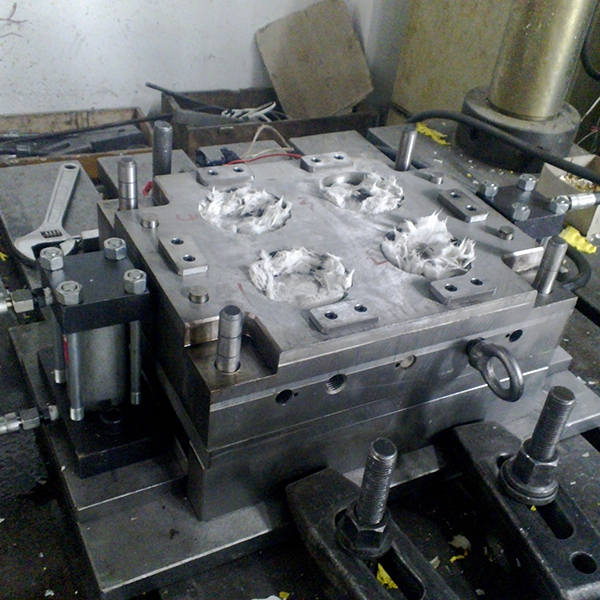
SMC Top Panel Technology: Mastering Class A Surfaces for Large EV Parts

Precision SMC top panel molds for large EV exteriors. Achieve Class A surface quality and 30% weight reduction with expert compression tooling from MDC Mould.

As the automotive industry accelerates toward lightweight engineering, large integrated structures, and high-efficiency manufacturingSMC top panel mould technology has become a key solution for producing large automotive exterior panels. Leveraging the advantages of compression moulding, manufacturers can efficiently form large flat-panel composite components with superior performance.

Components such as vehicle roof panels, front panels, and body covers require high dimensional accuracy, excellent surface quality, and structural strength. With SMC (Sheet Molding Compound), these requirements can be achieved while maintaining lightweight and cost-effective production.

MDC Mould has established strong cooperation with global automotive manufacturers, delivering advanced top panel mould solutions from concept design to final production.

What is an SMC Top Panel Mould?

An SMC top panel mould is a specialized compression mould used to manufacture large automotive panels such as roof panels and exterior covers. It is designed to process SMC composite materials under controlled temperature and pressure conditions.

Compared with traditional metal forming, SMC mould technology offers:

  • Lightweight composite structures
  • High strength and impact resistance
  • Excellent corrosion resistance
  • Class A surface finish for exterior applications

Why Compression Moulding is Ideal for Large Automotive Panels

Compression moulding is widely recognized as the optimal process for producing large flat-panel products, making it ideal for automotive top panel mould applications.

1. Superior Surface Quality

SMC materials enable smooth, paint-ready surfaces that meet automotive Class A standards.

2. Lightweight and High Strength

Compared to steel panels, SMC parts significantly reduce vehicle weight while maintaining excellent mechanical performance.

3. Complex Structure Integration

Features such as ribs, reinforcements, and mounting points can be integrated directly into the moulded panel, reducing assembly steps.

4. High Efficiency Production

Once developed, SMC top panel moulds support consistent, high-volume manufacturing with reduced cycle times.
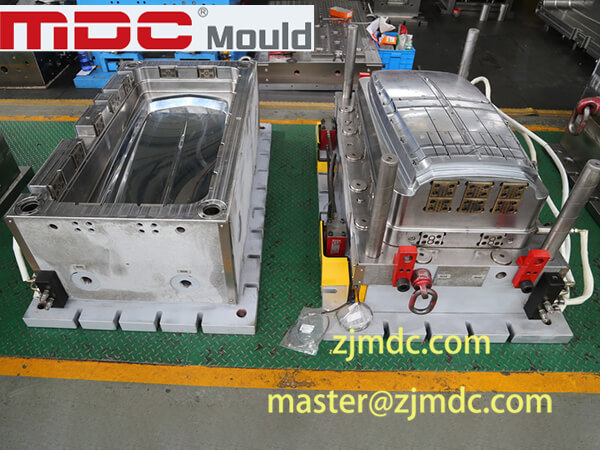
SMC Top Panel mold

MDC Mould Capabilities in SMC Top Panel Mould Projects

MDC Mould has extensive experience in delivering SMC top panel mould solutions for various automotive applications, including both domestic and international OEM projects.

Full Process Support

  • Concept design and feasibility analysis
  • CAE simulation and optimization
  • Precision mould design and manufacturing
  • Trial production and validation

Advanced Tooling Technology

With high-precision CNC machining and strict quality control, MDC ensures:

  • High dimensional accuracy
  • Excellent surface finishing
  • Long mould service life

Large-Scale Capability: 4000T Compression Moulding Machine

A key advantage of MDC is its large-tonnage compression moulding capability. Equipped with a 4000T press machine, MDC supports:

  • Full-size automotive panel production
  • Large SMC top panel mould trials
  • Complex composite structure validation

Maximum supported part size:

  • Up to 3,500 × 3,200 mm

This ensures reliable full-scale testing and process optimization before mass production.

Key Design Considerations for Top Panel Moulds

Designing a high-performance top panel mould requires careful control of multiple engineering factors:

  • Temperature control system: Ensures proper curing of SMC materials
  • Uniform pressure distribution: Prevents defects and ensures part consistency
  • Ventilation design: Eliminates air traps and surface imperfections
  • Surface polishing: Achieves high-quality Class A finish

Applications of SMC Top Panel Moulds

  • Passenger vehicle roof panels
  • Commercial vehicle exterior panels
  • Electric vehicle (EV) body components
  • Truck and bus composite structures

As the demand for lightweight automotive solutions continues to rise, SMC top panel mould technology plays a critical role in modern vehicle design.

Future Trends in Automotive Composite Moulding

  • Advanced lightweight composite materials
  • Integration of multifunctional components
  • Smart manufacturing and automation
  • Sustainable and recyclable SMC materials

These trends highlight the increasing importance of compression moulding and composite tooling in next-generation automotive manufacturing.

Conclusion: MDC Mould Driving Innovation in Large Panel Moulding

SMC top panel mould technology offers a powerful solution for producing large, lightweight, and high-performance automotive panels. By combining advanced compression moulding processes with precision tooling, manufacturers can achieve superior product quality and efficiency.

With proven expertise, full-service capabilities, and a 4000T large-scale press systemMDC Mould continues to support global automotive manufacturers with high-quality composite mould solutions.

For companies seeking reliable top panel mould and SMC mould solutions, MDC is a trusted partner for innovation and long-term success.
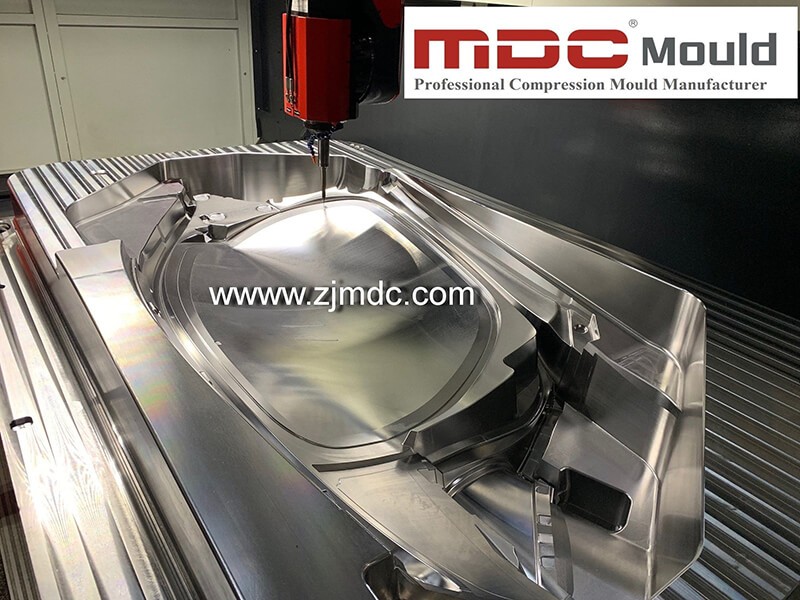

Revolutionizing EV Bodies: High-Precision SMC Molds for Lightweight Door Panels

Precision SMC door molds for EV panels. Achieve Class A surface finish and 30% weight reduction with expert compression tooling from MDC Mould

As the automotive industry accelerates toward lightweight engineering and electrification, composite materials are replacing traditional metals in many structural and exterior applications. Among these materials, SMC (Sheet Molding Compound) has become a key solution for producing high-performance automotive components.

The SMC door mold plays a critical role in manufacturing lightweight, durable, and corrosion-resistant vehicle door panels. By utilizing advanced compression molding tooling, manufacturers can achieve superior product quality, efficiency, and design flexibility.

What is an SMC Door Mold?

An SMC door mold is a high-precision compression mold used to form automotive door panels from sheet molding compound materials under controlled heat and pressure.

The process involves:

  • Loading SMC material into the mold cavity
  • Applying heat and pressure for material flow and curing
  • Achieving a fully formed composite door panel
  • Releasing a high-quality finished component

This method ensures consistent production of complex, high-strength automotive parts with excellent surface finish.

Key Advantages of SMC Door Molds

1. Lightweight and High Strength

SMC materials provide a superior strength-to-weight ratio compared to traditional steel, reducing overall vehicle weight and improving fuel efficiency or EV range.

2. Excellent Corrosion Resistance

Unlike metal door panels, SMC automotive parts are resistant to rust and environmental degradation, ensuring long-term durability.

3. High Design Flexibility

SMC compression molds allow complex geometries and integrated structures, reducing assembly steps and improving product performance.

4. Class A Surface Quality

Advanced mold finishing techniques enable automotive door molds to produce Class A surfaces suitable for direct painting.

5. Cost Efficiency in Mass Production

SMC molding offers shorter cycle times and reduced material waste, making it ideal for high-volume automotive manufacturing.

SMC door mold

Engineering Requirements for High-Performance SMC Door Molds

Designing a reliable SMC door mold requires advanced engineering capabilities:

  • Precision cavity design for accurate panel fit
  • Optimized heating systems for uniform temperature distribution
  • Advanced venting design to prevent defects
  • High-quality mold materials for durability and long service life
  • Surface polishing for Class A finish requirements

These factors ensure stable production and high-quality output in automotive applications.

Applications in Automotive Manufacturing

Passenger Vehicles

  • Exterior door panels
  • Inner structural door components
  • Reinforced composite modules

Electric Vehicles (EVs)

  • Lightweight door systems
  • Integrated structural panels
  • Energy-efficient body components

Commercial Vehicles

  • Truck and bus door panels
  • Heavy-duty composite enclosures

The versatility of SMC door molds makes them essential in modern vehicle manufacturing.

SMC vs Metal Door Manufacturing

FeatureSMC Door MoldMetal Stamping
WeightLightweightHeavy
Corrosion ResistanceExcellentRequires coating
Design FlexibilityHighLimited
Surface FinishClass A possibleSecondary processing required
Production EfficiencyHighComplex process

MDC Mould: Professional SMC Door Mold Manufacturer

MDC Mould is a leading manufacturer specializing in high-precision SMC compression molds for automotive applications.

  • Expertise in automotive composite tooling
  • Advanced CNC machining and mold engineering
  • Customized solutions for OEM and Tier 1 suppliers
  • Stable mass production performance

Our SMC door molds are designed to meet the highest standards of quality, durability, and efficiency in global automotive manufacturing.

FAQ: SMC Door Mold and Compression Molding

What is an SMC door mold used for?

An SMC door mold is used to manufacture lightweight composite automotive door panels using compression molding technology.

Why use SMC instead of metal for car doors?

SMC offers lower weight, better corrosion resistance, and greater design flexibility compared to traditional metal materials.

What industries use SMC compression molds?

SMC molds are widely used in automotive, transportation, and industrial equipment manufacturing.

Conclusion

The SMC door mold is a key technology enabling lightweight, high-performance automotive design. With its advantages in durability, efficiency, and flexibility, SMC compression molding is becoming the preferred solution for modern vehicle manufacturing.

By adopting advanced compression molding tooling, manufacturers can achieve superior product quality and maintain competitiveness in the evolving global automotive market.

Precision Composite Molds: Aerospace-Grade Solutions for UAVs & Space Tech

Discover how Artemis II drives innovation in aerospace composite molds, SMC tooling, and compression mold manufacturing. Insights from MDC Mould.

The successful advancement of the Artemis II mission by NASA marks a new era in human space exploration. As the first crewed mission to orbit the Moon in over 50 years, Artemis II is not only a milestone in aerospace engineering but also a powerful signal of technological evolution across the entire manufacturing ecosystem.

Behind every aerospace breakthrough lies a foundation of high-precision tooling, advanced composite molds, and sophisticated manufacturing processes. For companies like Zhejiang MDC Mould Co., Ltd. (MDC Mould), the rapid development of aerospace technologies is creating unprecedented opportunities and technical demands in the field of composite mold manufacturing.

This article explores how aerospace programs such as Artemis II are reshaping the requirements for SMC molds, compression molds, and composite tooling, and how advanced mold manufacturers are adapting to meet the stringent standards of the aerospace industry.

1. Aerospace Innovation and the Rise of Advanced Composite Materials

Modern aerospace systems rely heavily on lightweight, high-strength composite materials to achieve performance, fuel efficiency, and structural integrity. In missions like Artemis II, components must withstand:

  • Extreme temperature fluctuations
  • High mechanical stress and vibration
  • Radiation exposure in deep space
  • Strict weight limitations for launch efficiency

To meet these requirements, aerospace manufacturers increasingly utilize:

  • Carbon fiber reinforced polymers (CFRP)
  • Glass fiber reinforced polymers (GFRP / GRP)
  • Sheet Molding Compound (SMC)
  • Bulk Molding Compound (BMC)

These materials require highly specialized composite molds and compression tooling to ensure dimensional accuracy, surface quality, and repeatability.

2. The Critical Role of Composite Molds in Aerospace Manufacturing

In aerospace applications, the margin for error is virtually zero. Every component must meet strict tolerances and performance standards. This makes high-precision mold design and manufacturing a critical factor in the success of aerospace programs.

Key requirements for aerospace-grade molds include:

  • Ultra-high dimensional accuracy (micron-level precision)
  • Excellent thermal stability under high curing temperatures
  • Uniform pressure distribution in compression molding
  • Superior surface finish for aerodynamic performance
  • Long mold life under high production cycles

At MDC Mould, advanced SMC mold and compression tooling solutions are engineered to meet these requirements, supporting industries that demand aerospace-level quality standards.

Artemis II Launch

3. Compression Molding Technology in Aerospace Components

Compression molding has become one of the most important processes for manufacturing composite aerospace components. It allows for:

  • High-volume production with consistent quality
  • Complex geometries with integrated structural features
  • Reduced material waste compared to traditional machining
  • Excellent surface finish (Class A surfaces)

In aerospace and related industries, SMC molds, BMC molds, and carbon fiber molds are widely used for:

  • Interior structural panels
  • Lightweight enclosures and housings
  • Thermal protection components
  • Electrical insulation systems

The same technologies are also increasingly applied in automotive lightweighting, EV battery enclosures, and high-end industrial applications, demonstrating the cross-industry impact of aerospace innovation.

4. How Artemis II Drives New Standards for Mold Manufacturing

The technological requirements of missions like Artemis II are pushing the entire supply chain—including mold manufacturers—to adopt higher standards in:

  • Material selection: High-performance tool steels and composite-compatible surfaces
  • CNC machining: Multi-axis precision machining for complex mold geometries
  • Surface treatment: Advanced coatings for durability and release performance
  • Process simulation: Digital modeling of pressure, temperature, and material flow

At MDC Mould, the integration of high-speed CNC machining, precision polishing, and advanced mold testing systems ensures that every mold meets international quality standards required by demanding industries such as aerospace and automotive.

5. Lightweight Engineering and the Future of Tooling

One of the core objectives of Artemis II and future space missions is weight reduction without compromising strength. This concept is directly influencing mold design and composite manufacturing.

Modern tooling must support:

  • Thin-wall composite structures
  • Integrated functional designs (reducing assembly steps)
  • Hybrid material systems (metal + composite)

This requires mold manufacturers to have deep expertise in:

  • Material behavior during curing
  • Thermal expansion control
  • Precision alignment systems
  • Vacuum and pressure-assisted molding technologies

6. MDC Mould’s Role in the Advanced Composite Tooling Industry

As a professional manufacturer of SMC molds, compression molds, and composite tooling, MDC Mould is positioned at the forefront of this technological transformation.

With extensive experience in:

  • Automotive lightweight components
  • EV battery enclosure molds
  • SMC water tank molds and panels
  • Industrial composite applications

MDC Mould applies aerospace-level precision and engineering principles to deliver:

  • High-performance composite molds
  • Optimized compression tooling solutions
  • Reliable production consistency
  • Cost-effective manufacturing efficiency
Artemis II Orion Solar Array Wings Installed

7. Future Outlook: Aerospace Trends Shaping Mold Manufacturing

Looking ahead, the continued development of space exploration programs such as Artemis II will accelerate innovation in:

  • Advanced composite materials
  • Automation and smart manufacturing
  • Digital twin and simulation technologies
  • Sustainable and recyclable composite systems

Mold manufacturers who invest in these technologies will be better positioned to support the next generation of aerospace and high-performance industrial applications.

Conclusion

From the launchpad of Artemis II to the precision workshops of advanced mold manufacturers, aerospace innovation is transforming the way high-performance components are designed and produced.

For companies like MDC Mould, this represents not only a challenge but also a significant opportunity—to deliver world-class composite molds, SMC tooling, and compression mold solutions that meet the evolving demands of global industries.

As aerospace technology continues to push the boundaries of engineering, the role of precision mold manufacturing will remain a cornerstone of innovation, enabling the future of lightweight, high-strength, and high-efficiency composite structures.

FAQ

What is an aerospace composite mold?

A high-precision mold used to manufacture composite aerospace components.

Why is compression molding important?

It ensures high strength, consistency, and efficiency.

What materials are used?

Carbon fiber, glass fiber, SMC, and BMC.

The Complete BMC Molding Guide: Precision Tooling for Electrical & Heat-Resistant Parts

Explore BMC mold, BMC tooling, and BMC molding process. Learn how BMC mould systems deliver high-strength, electrically insulating composite parts for electrical, automotive, and industrial applications.

Quick Answer:

BMC molding is a compression molding process using BMC molds and BMC tooling to produce high-strength, electrically insulating composite parts. It is widely used in electrical enclosures, automotive components, and industrial applications due to its durability, precision, and efficiency.

In modern composite manufacturing, BMC moldBMC mould, and BMC tooling systems are essential for producing high-performance thermoset components. As industries demand lightweight materials, electrical insulation, and high-volume productionBMC molding has become one of the most reliable and scalable manufacturing solutions.

What is BMC Molding?

BMC (Bulk Molding Compound) is a thermosetting composite material composed of resin, glass fibers, fillers, and additives. BMC moulding is a process where this material is compressed in a heated BMC mold to form complex parts with excellent mechanical and electrical properties.

Definition: BMC molding is a thermoset compression process using bulk molding compound and precision BMC tooling to produce durable, heat-resistant, and electrically insulating composite components.

BMC Mold and BMC Tooling: Core Technologies

1. BMC Mold / BMC Mould Design

A high-quality BMC mold determines product accuracy, surface finish, and production efficiency. Modern BMC mould design includes:

  • Optimized cavity structure for uniform material flow
  • Advanced venting systems to eliminate air traps
  • Efficient thermal channels for consistent curing
  • Precision machining for tight tolerances
bulk-moulding-compound

2. BMC Tooling and BMC Tool System

BMC tooling includes the complete mold system and supporting components such as heating, ejection, and alignment systems. A well-designed BMC tool ensures:

  • Stable production cycles
  • Reduced defect rates
  • Long mold service life
  • High repeatability in mass production

BMC Molding Process (Step-by-Step)

  1. Material Preparation – Controlled BMC compound formulation
  2. Loading – Material placed into heated BMC mold
  3. Compression – High pressure applied by press machine
  4. Curing – Resin crosslinking under heat
  5. Demolding – Finished part ejected

This process enables high efficiency, repeatability, and dimensional stability, making BMC molding ideal for industrial production.

Advantages of BMC Molding

  • Excellent Electrical Insulation – ideal for electrical applications
  • High Strength and Durability
  • Flame Retardant Properties
  • Corrosion Resistance
  • Complex Geometry Capability

Applications of BMC Molded Components

  • Electrical Industry: circuit breakers, insulators, enclosures
  • Automotive: lighting reflectors, covers
  • Industrial Equipment: housings and structural parts
  • Infrastructure: utility and control systems

BMC vs SMC vs Injection Molding

ProcessBMC MoldingSMC MoldingInjection Molding
Material FormBulkSheetPellet
StrengthHighHighMedium
ComplexityHighMediumHigh

How to Choose a BMC Mold Manufacturer

  • Strong experience in BMC mold and tooling
  • Advanced CNC machining capability
  • Engineering and simulation support
  • Proven project cases
  • Customization ability

Future Trends in BMC Tooling

  • Smart molds with temperature monitoring
  • Automation and Industry 4.0 integration
  • Eco-friendly composite materials
  • Faster cycle time optimization

Conclusion

BMC moldBMC mouldBMC tooling, and BMC molding technologies are essential for producing high-quality composite components. They offer an optimal balance of performance, efficiency, and cost-effectiveness for modern manufacturing.

Key Insight: BMC molding combines advanced composite materials with precision tooling to deliver high-strength, electrically insulating components with excellent dimensional stability and long-term durability.

BMC molds

FAQ

What is BMC molding used for?

BMC molding is used to manufacture electrical, automotive, and industrial composite components requiring strength and insulation.

What is the difference between BMC mold and BMC tooling?

A BMC mold is the cavity tool shaping the product, while BMC tooling includes the complete system such as heating, ejection, and support components.

Why is BMC molding preferred?

BMC molding offers high strength, excellent insulation, corrosion resistance, and efficient mass production.