Preheating Compression Moulds: Enhancing Efficiency and Quality in Composite Molding

Learn how MDC Mould applies advanced preheating technology in compression moulds to improve composite molding performance, product quality, and production stability.

In the field of compression molding for composite materials, precise temperature control is the foundation of product stability and mold longevity. Among the most critical yet often underestimated steps is preheating the compression mold. At MDC Mould, this process is considered a key factor in achieving high-performance results for SMC, BMC, and carbon fiber components.

Why Preheating Compression Molds Matters

The compression molding process involves applying heat and pressure to a composite charge within a mold cavity. If the mold is not adequately preheated before production, material flow becomes unstable, leading to defects such as voids, incomplete curing, or warping. MDC’s engineering experience shows that maintaining precise mold temperature from the first cycle is vital to achieving dimensional consistency and optimal resin cross-linking.

  • Ensures even material flow and uniform curing;
  • Prevents air entrapment and surface imperfections;
  • Improves resin-fiber bonding strength;
  • Extends mold life by reducing thermal stress shock.

The Science of Mold Preheating

Different composite systems—such as SMC (Sheet Molding Compound)BMC (Bulk Molding Compound), and carbon fiber-reinforced composites—require specific mold temperatures for optimal molding conditions. Typically, SMC and BMC molds operate between 130°C and 160°C, while aerospace-grade carbon fiber applications may require preheating up to 180°C or beyond.

MDC’s hot press molds integrate precision heating channels and temperature sensors to maintain balanced thermal distribution across large and complex cavity surfaces. This uniformity minimizes localized hot spots and ensures consistent material flow during the entire molding cycle.
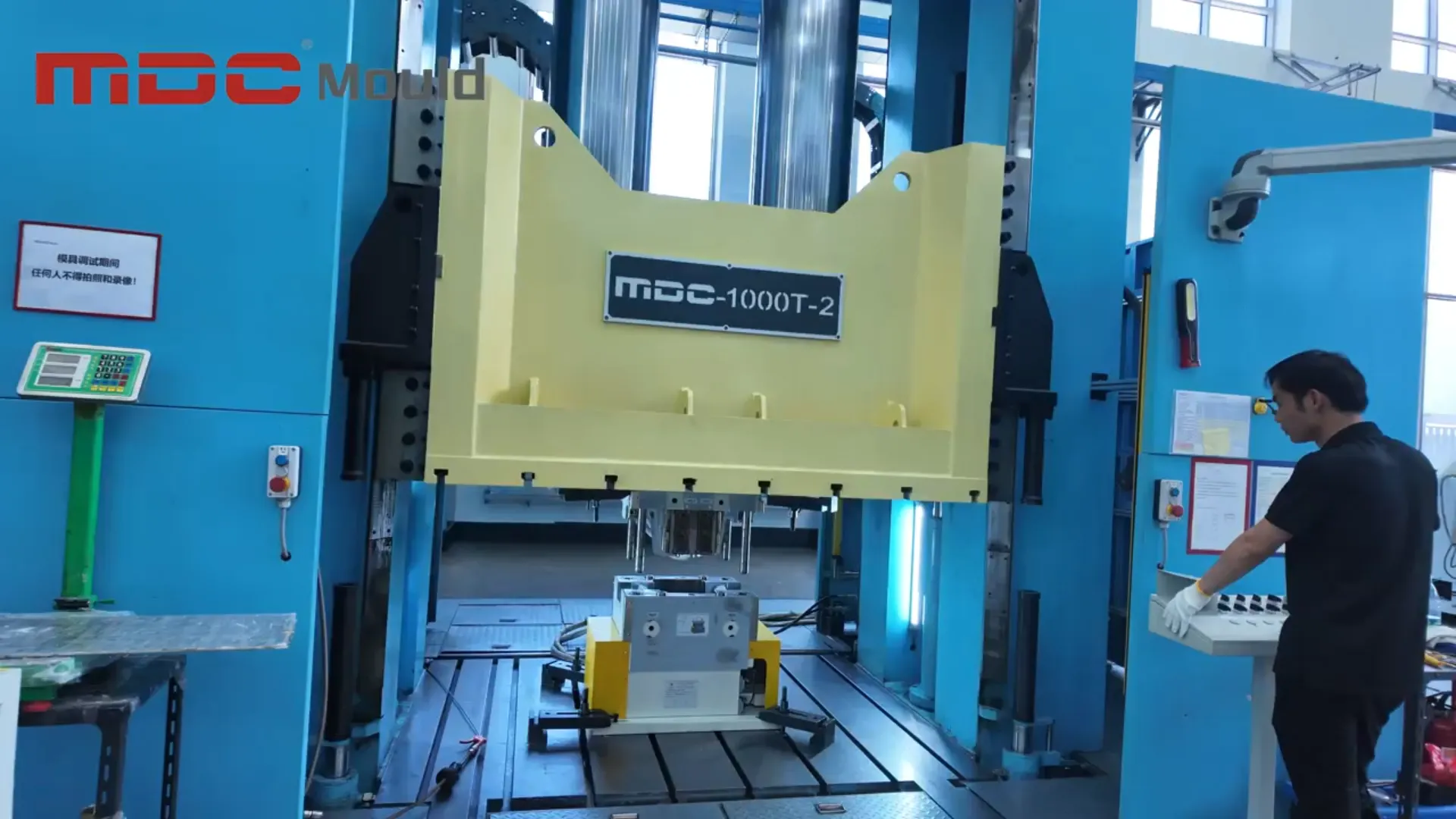
compression molds

Mold Preheating Methods Used at MDC

MDC utilizes a range of preheating systems according to material type and production scale:

  • Electric heating systems – offering precise and independent control for each mold zone;
  • Oil heating systems – providing steady, even temperature for large or multi-cavity molds;
  • Steam and hot-water preheating – suitable for low to mid-temperature composite applications;
  • Integrated PID control – ensuring real-time temperature regulation and safety monitoring.

Through advanced mold design and thermal simulation, MDC engineers ensure that heat transfer efficiency is maximized while minimizing energy loss, resulting in shorter preheating times and stable production.

Benefits of Proper Mold Preheating

Preheating a compression mold properly has direct impact on final product performance and overall production efficiency. Benefits include:

  • Enhanced surface quality – reduced flow marks and resin-rich zones;
  • Stable cycle times – consistent curing rates and dimensional control;
  • Increased mechanical properties – improved tensile and flexural strength;
  • Reduced energy waste – improved heating efficiency and fewer startup defects.

MDC’s Engineering Approach

At MDC, every compression mould is designed with precision and long-term durability in mind. The company integrates thermal analysis and simulation into its design phase, allowing engineers to predict heat flow, temperature gradients, and curing uniformity. This predictive approach ensures that each mold delivers stable performance even under continuous production conditions.

MDC’s preheating solutions are particularly beneficial for:

  • SMC auto parts such as bumpers, battery covers, and trunk boards;
  • BMC electrical components requiring high dimensional precision;
  • Carbon fiber structural parts in aerospace and industrial sectors.

Future Trends in Compression Molding Temperature Control

As composite manufacturing advances, mold temperature systems are becoming increasingly intelligent. MDC is developing new-generation preheating and thermal management solutions featuring real-time data acquisition, energy-efficient heating technologies, and smart temperature regulation to further enhance product quality and sustainability.

Conclusion

Preheating is not just a preparatory step — it is a foundation for precision molding. Through continuous innovation in compression mold design and temperature control technologyMDC Mould empowers manufacturers to achieve higher efficiency, stability, and quality in composite production. MDC remains committed to advancing composite mold engineering for a lighter, stronger, and more sustainable future.
Optimization Techniques in Compression Moulding — Insights for High-Precision SMC Tooling

Learn how advanced optimization methods in compression moulding improve process stability, product quality, and production efficiency.

Recent studies, such as “Optimization Techniques in Compression Moulding: A Comprehensive Review” (Materials Science Forum, 2024), provide valuable insight into how process parameters, materials, and design strategies influence the quality and performance of molded composite parts. At Zhejiang MDC Mould Co., Ltd., these research findings are directly reflected in our development of advanced SMC and BMC molds for automotive, electrical, and construction industries.

Why Optimization Matters in Compression Moulding

Compression moulding remains one of the most efficient methods for manufacturing high-strength, thermoset and thermoplastic composite components. However, parameters such as mould temperature, pressure, preheat time, and curing cycle have a significant impact on mechanical properties and surface quality. Improper control leads to defects like warpage, porosity, or uneven fiber orientation. Optimization therefore becomes essential — not only to enhance part quality, but also to minimize cycle time, material waste, and energy consumption.

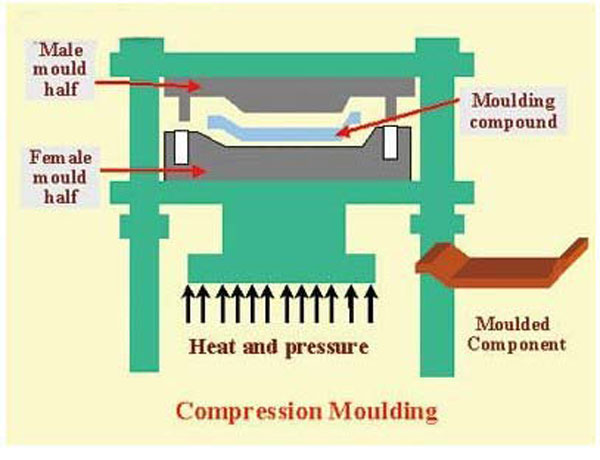
compression molding process

Key Process Parameters Identified in Research

The reviewed paper summarizes more than 25 studies on compression moulding optimization. The most influential parameters include:

  • Mould Temperature: Directly affects resin flow, cure rate, and part dimensional accuracy.
  • Compression Pressure: Determines fiber wet-out and void content; typically ranges from 50–150 bar for SMC/BMC systems.
  • Moulding Time: Controls complete curing without over-heating or resin degradation.
  • Preheat and Material Charge Weight: Influence the uniformity of fiber distribution and part density.

Studies applying Taguchi methods and Response Surface Methodology (RSM) confirm that optimized combinations of these factors yield higher tensile and flexural strength while reducing shrinkage and surface defects.

Modern Optimization Techniques

The paper highlights several powerful optimization tools now used by leading manufacturers:

  • Taguchi Design of Experiments (DoE): Efficiently determines the effect of multiple variables with minimal trials.
  • Response Surface Methodology (RSM): Builds predictive models to find optimal temperature-pressure-time relationships.
  • Genetic Algorithms (GA): Search for global optima to avoid local minimum traps in complex parameter interactions.
  • Finite Element Simulation (FEM): Predicts fiber orientation, resin flow, and curing deformation to refine tooling design before production.
  • Artificial Neural Networks (ANN): Emerging data-driven method for predicting quality responses in nonlinear, multi-variable processes.

Connecting Research to MDC Engineering

At MDC Mould, the optimization principles described in the study are applied to every project. Our engineering team integrates CAE simulation, thermal analysis, and digital process validation throughout the mold-making workflow. By simulating resin flow and heat transfer, we minimize trial iterations and ensure Class-A surface finish and dimensional accuracy from the first shot.

Furthermore, MDC applies a data-driven approach to balance heating zone control, cavity venting, and ejection systems. This guarantees stable cure cycles, reduced air entrapment, and improved surface gloss in large-scale SMC parts such as EV battery covers, truck panels, and water tank components.

Sustainable Manufacturing Through Optimization

Optimization is not only about performance — it also contributes to sustainability. Advanced compression tooling shortens cure times and lowers energy use per cycle. Optimized resin distribution reduces waste and extends mold life. These improvements align with MDC’s goal of building eco-efficient composite molding systems for global customers.

The Future: Intelligent Compression Tooling

Looking ahead, MDC is exploring AI-assisted mold temperature control and real-time process monitoring. Combining sensor feedback with predictive models (inspired by RSM and ANN approaches) enables adaptive process correction during production — ensuring consistent quality even under varying material conditions.

Conclusion

Optimization research provides a strong scientific foundation for modern compression moulding. By integrating advanced algorithms and thermal simulation into tool design, MDC Mould continues to set new standards in SMC/BMC mold engineering. Every optimized parameter — from mold temperature to ejection force — translates directly into higher productivity, better surface finish, and longer tool lifespan.

For technical consultation or customized SMC compression mold design, contact our engineering team at www.zjmdc.com.