BMC Mold & Tooling: Solutions for High-Volume Composite Production

MDC Mould specializes in BMC mold, BMC mould, and BMC tooling for high-volume compression molding. Our BMC molding solutions deliver stable quality, long mold life, and efficient composite manufacturing.

As global industries continue to pursue lightweight structures, high mechanical performance, and cost-effective mass production, BMC molding and BMC moulding have become essential composite manufacturing processes. At the core of this technology lies the BMC mold (also known as the BMC mould), together with precision-engineered BMC tooling and BMC tools, which directly determine product quality, production efficiency, and long-term manufacturing stability.

As a professional composite mold manufacturer, Zhejiang MDC Mould focuses on the development and manufacturing of high-performance BMC molds and BMC tooling systems, supporting global customers in achieving reliable and scalable composite production.

bulk-moulding-compound

What Is BMC Molding?

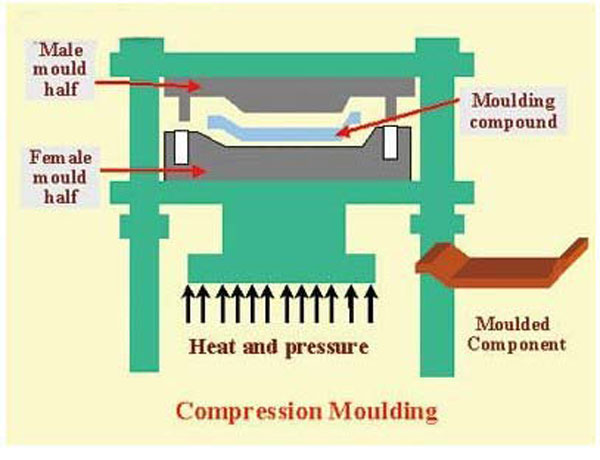
BMC molding is a compression molding process using Bulk Molding Compound, a ready-mixed thermoset composite material consisting of chopped glass fibers, thermosetting resin, fillers, and functional additives. The BMC material is placed into a heated mold cavity and shaped under high pressure, where curing occurs simultaneously.

Compared with other composite processes, BMC moulding offers excellent dimensional stability, short cycle times, and consistent surface quality, making it ideal for high-volume production.

  • Short molding cycles suitable for mass production
  • Excellent surface finish with minimal post-processing
  • Stable mechanical and electrical properties
  • High repeatability and dimensional accuracy
  • Ability to mold complex integrated structures

The Importance of the BMC Mold

The performance of BMC molding depends heavily on the quality and engineering of the BMC mold. During compression molding, the mold must withstand high clamping forces, repeated thermal cycles, and abrasive fiber-filled materials, all while maintaining precise cavity geometry.

A high-quality BMC mould typically includes:

  • High structural rigidity to resist deformation
  • Precision-machined cavities for consistent wall thickness
  • Optimized material flow paths for uniform fiber distribution
  • Effective venting systems to eliminate trapped air
  • Long service life for continuous production environments

BMC Tooling Design and Engineering

BMC tooling design requires deep knowledge of compression molding mechanics, thermoset curing behavior, and fiber flow characteristics. Unlike thermoplastic injection molds, BMC tools must accommodate controlled material flow, pressure balance, and reliable venting.

Key engineering principles for BMC tooling include:

  • Uniform pressure distribution across the mold surface
  • Controlled material flow to prevent fiber segregation
  • Thermal balance for stable and complete curing
  • Reliable sealing to maintain molding pressure
  • Easy demolding to protect both parts and tooling
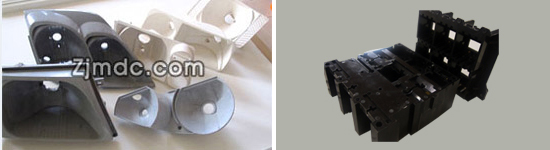
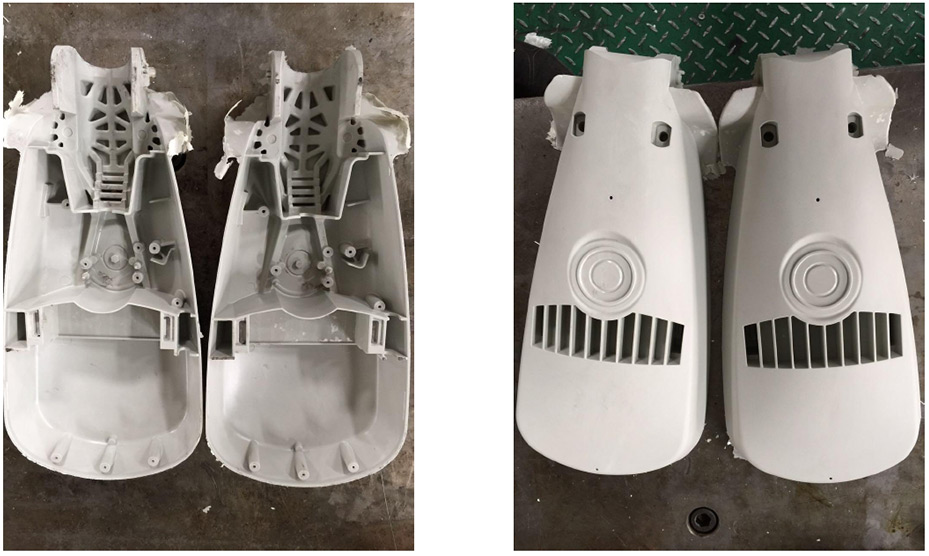
BMC mould
BMC product

Materials and Manufacturing of BMC Molds

BMC molds are typically manufactured from high-grade tool steels or selected aluminum alloys, depending on production volume and application requirements. For high-volume and structural components, steel BMC molds are preferred due to their wear resistance and dimensional stability.

MDC Mould applies advanced manufacturing processes including:

  • High-precision CNC machining
  • Optimized venting and gating design
  • Surface treatments for improved durability
  • Integrated heating systems for stable cycle times
  • Reinforced mold structures for high-tonnage presses

Applications of BMC Molding

Thanks to its balanced mechanical, thermal, and electrical properties, BMC molding is widely used across multiple industries:

  • Automotive structural and functional components
  • Electrical enclosures and insulation parts
  • New energy and EV-related composite housings
  • Industrial equipment covers and supports
  • Construction and infrastructure composite components

Why Choose MDC Mould for BMC Mold Solutions

Zhejiang MDC Mould provides complete BMC moldBMC mould, and BMC tooling solutions, covering design, manufacturing, and production support.

  • Extensive experience in BMC molding and compression tooling
  • Process-oriented mold design for stable mass production
  • Custom BMC tools for complex composite structures
  • Long mold service life with reduced maintenance
  • Technical support from prototyping to serial production

Conclusion

BMC mold and BMC tooling technology plays a critical role in modern composite manufacturing. Through precise engineering, durable materials, and process-optimized design, BMC moulds enable manufacturers to fully realize the advantages of BMC molding and BMC moulding.

Zhejiang MDC Mould remains committed to advancing BMC mold technology, delivering reliable, high-performance tooling solutions for global composite manufacturers.

How Composite Materials Extend EV Range Through Lightweighting

Advanced composite molding technologies such as SMC, BMC, and compression molding significantly reduce vehicle weight, improve energy efficiency, and extend EV driving range.

Under the rapid expansion of the global new energy vehicle (NEV) industry and the implementation of carbon neutrality and carbon peaking strategies, improving energy efficiency and driving range has become a core objective of automotive manufacturing upgrades.

Industry data shows that every 10% reduction in vehicle weight can reduce fuel consumption of internal combustion vehicles by 6–8%, while increasing electric vehicle driving range by 5–10%. As a result, automotive lightweighting has become a critical technical pathway to balance performance, efficiency, and sustainability.

Composite Materials as the Foundation of Automotive Lightweighting

Advanced composite materials are increasingly replacing traditional metallic materials due to their unique combination of high specific strengthlow density, and design flexibility.

Common automotive composite materials include carbon fiber reinforced polymers (CFRP)glass fiber reinforced plastics (GFRP), and basalt fiber reinforced composites.

Compared with steel and aluminum alloys, composite materials typically offer:

  • Density only one-quarter to one-third of steel
  • Specific strength 3–6 times higher than conventional metals
  • Component weight reduction of 30–60%
  • Overall vehicle mass reduction of 10–30%

In addition to weight reduction, composites provide excellent corrosion resistance, fatigue performance, vibration damping, and noise reduction, significantly lowering long-term maintenance costs.

Composite Materials EV

Lightweight Composite Applications in Vehicle Body Structures

In modern vehicle body design, composite materials are widely used in body frames, doors, hoods, tailgates, and roof structures. Through integrated molding processes, CFRP and GFRP components can achieve weight reductions of 35–50%.

Composite body structures also enable optimized aerodynamic designs, reducing driving resistance and improving overall energy efficiency. In several new energy vehicle platforms, the adoption of composite body structures has resulted in double-digit improvements in driving range.

Chassis and Powertrain Lightweighting with Composite Molding

Composite materials play a critical role in chassis and powertrain systems, particularly in suspension components, drive shafts, and structural reinforcements. Reducing unsprung mass improves vehicle handling, ride comfort, and energy utilization.

Carbon fiber composite drive shafts can reduce weight by more than 40% compared with steel alternatives, while improving power transmission efficiency by 5–8%.

For electric vehicles, EV battery enclosures represent one of the most important lightweighting targets. GFRP composite battery housings offer:

  • More than 50% weight reduction compared with steel enclosures
  • Excellent fire resistance and impact protection
  • Superior water sealing and corrosion resistance

These composite solutions directly contribute to lower vehicle energy consumption and extended driving range.

Interior System Lightweighting and Functional Integration

Lightweight composite materials are increasingly applied to interior components such as seat frames, instrument panel carriers, and door inner panels. Typical weight reductions range from 25–40%.

Composite seat frames can be up to 50% lighter than steel frames, improving space utilization and vehicle packaging efficiency. Glass fiber reinforced thermoplastic instrument panel carriers also provide improved acoustic performance and vibration damping.

Composite Materials EV

Advanced Composite Manufacturing and Tooling Technologies

Continuous innovation in materials and processes is accelerating the large-scale adoption of composites in automotive manufacturing.

Key composite molding technologies include:

  • SMC and BMC compression molding
  • High-pressure resin transfer molding (HP-RTM)
  • Automated fiber placement (AFP)
  • Advanced composite tooling and press mold systems

These technologies enable stable quality, high production efficiency, and cost-effective mass manufacturing for global automotive platforms.

Sustainability and the Future of Automotive Composites

Automotive lightweighting is closely linked to sustainability. Lighter vehicles consume less energy throughout their lifecycle, contributing to lower emissions and reduced environmental impact.

Emerging trends such as recyclable composites, bio-based resin systems, and digital process monitoring are further enhancing the sustainability of composite automotive manufacturing.

Conclusion

Composite materials have become the core enabler of automotive lightweighting, directly supporting energy efficiency improvements and extended driving range for both conventional and electric vehicles.

With continuous advances in composite molding technologiescompression molding tooling, and automotive composite applications, the automotive industry is accelerating toward lighter, more efficient, and more sustainable vehicle architectures.

Temperature Effects on Fatigue of Thermoset and Thermoplastic Composites

A professional analysis of how temperature influences the static and fatigue performance of thermoset and thermoplastic composites, and what it means for compression mold.

As industries push toward lightweight, high-efficiency, and long-duration structures, the mechanical performance of thermoset composites and thermoplastic composites under extreme environmental conditions has become a critical research topic. Applications in aerospaceautomotivenew energy, and industrial machinery demand composite materials that maintain high stiffness, strength, and fatigue resistance across large temperature variations.

In a recent study, researchers evaluated one commercial thermoset material and two high-performance thermoplastic composites in the temperature range of −30°C to +120°C. These conditions simulate real operating environments such as winter cold starts, under-hood temperatures in vehicles, and heating cycles found in industrial systems. The research provides new insights highly relevant to manufacturers of composite toolingcompression molds, and high-temperature composite components.

1. Static Mechanical Performance: Thermoset vs. Thermoplastic Composites

Tensile tests performed across the full temperature range reveal clear differences in the static behavior between thermoset and thermoplastic materials. The evaluated thermoset composite maintains a relatively stable modulus and tensile strength even as temperature approaches +120°C, confirming its suitability for high-temperature composite mold applications and structural components in automotive environments.

In contrast, the two thermoplastic composites exhibit more significant variations in stiffness and elongation. Their temperature-dependent viscoelastic behavior leads to reduced modulus at high temperatures but improved impact performance at low temperatures. This duality makes them ideal for parts manufactured through compression molding, especially components requiring energy absorption.

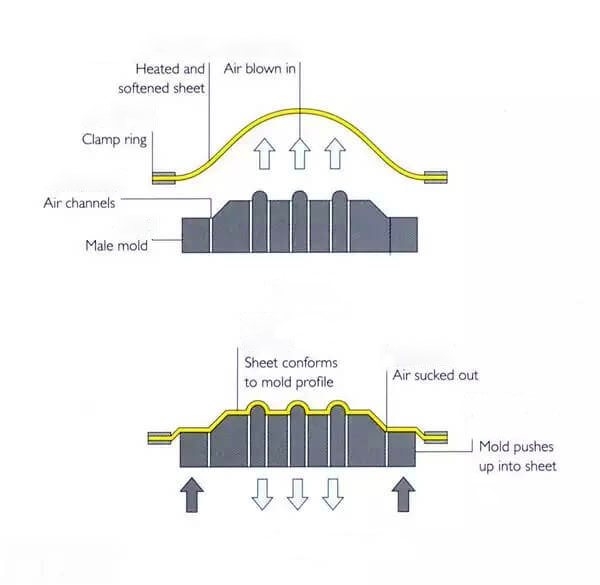
thermoforming

2. Fatigue Behavior Under Extreme Temperatures

The fatigue test results highlight temperature as a dominant factor in long-term structural reliability. At elevated temperatures, polymers undergo chain mobility changes and microstructural relaxation, accelerating fatigue damage. The thermoplastic materials show greater sensitivity to this effect, while the thermoset composite demonstrates superior high-temperature fatigue resistance due to its highly cross-linked network.

This is particularly important for manufacturers of compression-molded composite parts, including:

  • Automotive underbody protection systems
  • EV battery structural housings
  • Engine compartment covers
  • High-load brackets and cross-car beams
  • Industrial pump and motor components

MDC’s expertise in SMC moldBMC moldcarbon fiber mold, and thermoplastic composite mold development ensures reliable processing for these demanding applications.

3. Implications for Composite Mold and Compression Molding Production

Understanding the temperature-dependent fatigue behavior is essential not only for material selection but also for designing advanced composite moulds and compression tooling. Mold temperature control, heating uniformity, and optimized venting must all be aligned with the specific thermal response of the material.

For example:

  • Thermoset composites (e.g., SMC, BMC) require precise temperature control (135–160°C) to ensure full curing.
  • Thermoplastic composites (e.g., LFT, CF-reinforced PP) need rapid heating & cooling cycles to maintain consistency.
  • Carbon-fiber hybrid composites demand stable mold rigidity and low thermal distortion for aerospace-grade accuracy.

These factors directly influence mold lifespan, cycle time, and part repeatability—areas where MDC Mould has extensive industrial experience.

4. Research Funding and Industrial Context

This study is partially funded by the Italian Ministry of Enterprises and Made in Italy (MIMIT) under the project: “New Generation of Modular Intelligent Oleo-dynamic Pumps with Axial Flux Electric Motors.” The research aligns strongly with global industry trends in improving thermal stability and mechanical reliability of composite components used in motors, pumps, automotive assemblies, and energy systems.

Conclusion

The investigation into the temperature-dependent fatigue performance of thermoset and thermoplastic composites provides critical insights for high-precision composite manufacturing. As the automotive and energy industries transition toward lightweight structures, the demand for temperature-resistant, high-fatigue-strength materials will continue to rise.

With advanced technical capability in SMC moldsBMC moldscarbon fiber moldsthermoplastic composite molds, and large-format composite toolingMDC Mould is positioned to support global customers developing next-generation high-performance composite parts.

Curing Cycle Optimization in Compression Molding

Discover how Zhejiang MDC Mould optimizes the curing cycle in compression molding to enhance the strength, precision, and efficiency of composite components for automotive and industrial applications.

In the field of compression molding for composite materials, the curing cycle is one of the most decisive factors determining product performance, dimensional accuracy, and production efficiency. At Zhejiang MDC Mould Co., Ltd., mastering the curing cycle is not just process control—it is the essence of MDC’s precision engineering and its leadership in advanced composite mold manufacturing.

What Is the Curing Cycle in Compression Molding?

The curing cycle refers to the specific combination of time, temperature, and pressure applied to thermosetting composite materials within a compression mold. During this stage, materials such as SMC (Sheet Molding Compound) or BMC (Bulk Molding Compound) undergo crosslinking reactions that transform them from a semi-solid state into a rigid, durable component with stable mechanical properties.

A typical curing cycle involves three stages:

  • Heating phase: The mold is heated (130°C–170°C) to initiate resin polymerization.
  • Holding phase: The material remains under constant heat and pressure for full crosslinking.
  • Cooling phase: Controlled cooling solidifies the material and reduces internal stress before demolding.
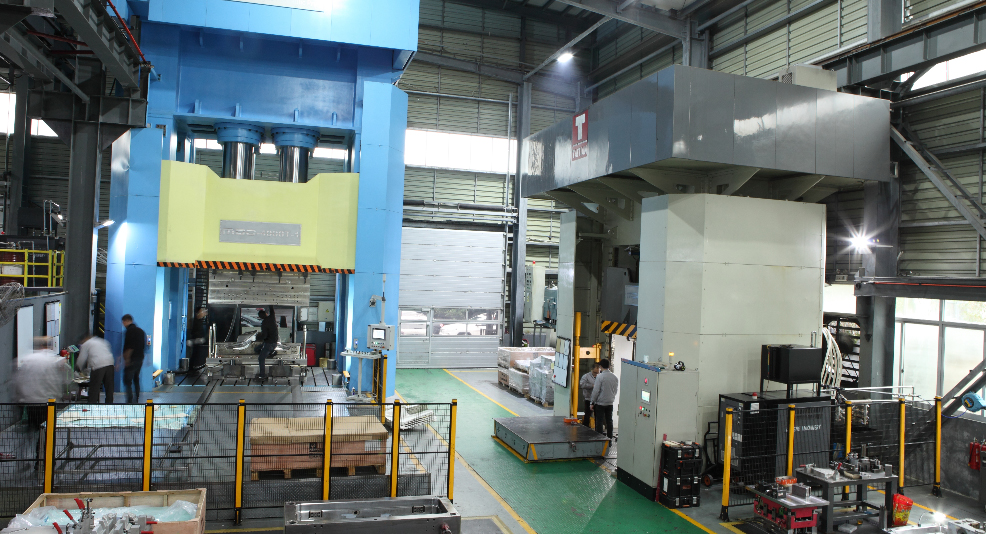
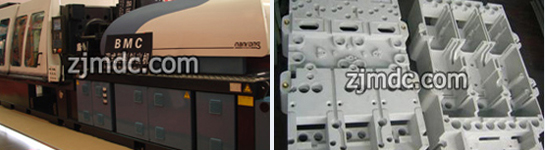
compression-mould-machine

Why Curing Cycle Optimization Matters

For high-precision SMC and BMC molds designed by MDC, controlling the curing cycle is essential for ensuring consistent quality. If the curing cycle is too short, the resin may not fully crosslink, leading to surface or strength defects. If too long, unnecessary energy consumption and lower production efficiency result.

An optimized curing cycle ensures:

  • Stable mechanical performance — full crosslinking enhances strength and durability.
  • Dimensional precision — balanced curing prevents deformation and shrinkage.
  • Superior surface finish — precise curing leads to smooth, paint-ready surfaces.
  • Higher production efficiency — shorter cycles increase output and reduce costs.

Factors Influencing the Curing Cycle

The curing behavior within a compression mold depends on multiple factors:

  • Resin system: Polyester, epoxy, and phenolic resins each have distinct curing characteristics.
  • Reinforcement type: Fiber orientation, filler type, and content affect heat transfer.
  • Part geometry: Thicker sections require longer curing times to achieve uniformity.
  • Mold temperature control: Even heating ensures consistent curing throughout the cavity.
  • Venting and pressure: Proper venting avoids trapped air and ensures smooth resin flow.

MDC’s Engineering Approach to Curing Cycle Management

At MDC Mould, every compression mold is engineered with precise thermal management in mind. The company integrates finite element simulation and thermal flow analysis to predict temperature uniformity and curing behavior across complex cavities. This allows engineers to optimize the mold’s heating system and define ideal processing parameters before production begins.

MDC also utilizes:

  • Embedded thermal sensors for real-time temperature monitoring.
  • High-efficiency heating channels for rapid, uniform heat distribution.
  • Digital data systems linking process control with resin curing kinetics.

This approach ensures that each mold achieves an optimal balance between curing time, temperature, and pressure—guaranteeing reliable and repeatable composite part quality.

Case Study: SMC Roof Panel Mold for Electric Vehicle

In a recent project, MDC developed an SMC roof panel compression mold for a leading new energy vehicle manufacturer. By applying advanced thermal simulations and refining the curing schedule, MDC reduced the total cycle time by 20% while maintaining full crosslinking and high-gloss surface quality. The optimized curing cycle also minimized energy consumption and extended mold lifespan.

This success demonstrates MDC’s unique capability to merge curing cycle control with compression mold design excellence.

The Future of Curing Technology in Compression Molding

The next stage of curing optimization lies in smart manufacturing. MDC is developing intelligent compression molding systems that integrate AI-based thermal management, real-time curing monitoring, and predictive control algorithms. These innovations enable adaptive process adjustments—ensuring consistent curing performance, reduced energy use, and faster production cycles.

Conclusion

The curing cycle represents the heart of the compression molding process. Its precision defines not only the mechanical strength and dimensional accuracy of composite products but also overall manufacturing efficiency and sustainability. Through decades of experience and technological innovation, Zhejiang MDC Mould Co., Ltd. continues to advance the science of curing cycle optimization, delivering superior compression molds that empower global composite production with quality, consistency, and intelligence.

Preheating Compression Moulds: Enhancing Efficiency and Quality in Composite Molding

Learn how MDC Mould applies advanced preheating technology in compression moulds to improve composite molding performance, product quality, and production stability.

In the field of compression molding for composite materials, precise temperature control is the foundation of product stability and mold longevity. Among the most critical yet often underestimated steps is preheating the compression mold. At MDC Mould, this process is considered a key factor in achieving high-performance results for SMC, BMC, and carbon fiber components.

Why Preheating Compression Molds Matters

The compression molding process involves applying heat and pressure to a composite charge within a mold cavity. If the mold is not adequately preheated before production, material flow becomes unstable, leading to defects such as voids, incomplete curing, or warping. MDC’s engineering experience shows that maintaining precise mold temperature from the first cycle is vital to achieving dimensional consistency and optimal resin cross-linking.

  • Ensures even material flow and uniform curing;
  • Prevents air entrapment and surface imperfections;
  • Improves resin-fiber bonding strength;
  • Extends mold life by reducing thermal stress shock.

The Science of Mold Preheating

Different composite systems—such as SMC (Sheet Molding Compound)BMC (Bulk Molding Compound), and carbon fiber-reinforced composites—require specific mold temperatures for optimal molding conditions. Typically, SMC and BMC molds operate between 130°C and 160°C, while aerospace-grade carbon fiber applications may require preheating up to 180°C or beyond.

MDC’s hot press molds integrate precision heating channels and temperature sensors to maintain balanced thermal distribution across large and complex cavity surfaces. This uniformity minimizes localized hot spots and ensures consistent material flow during the entire molding cycle.

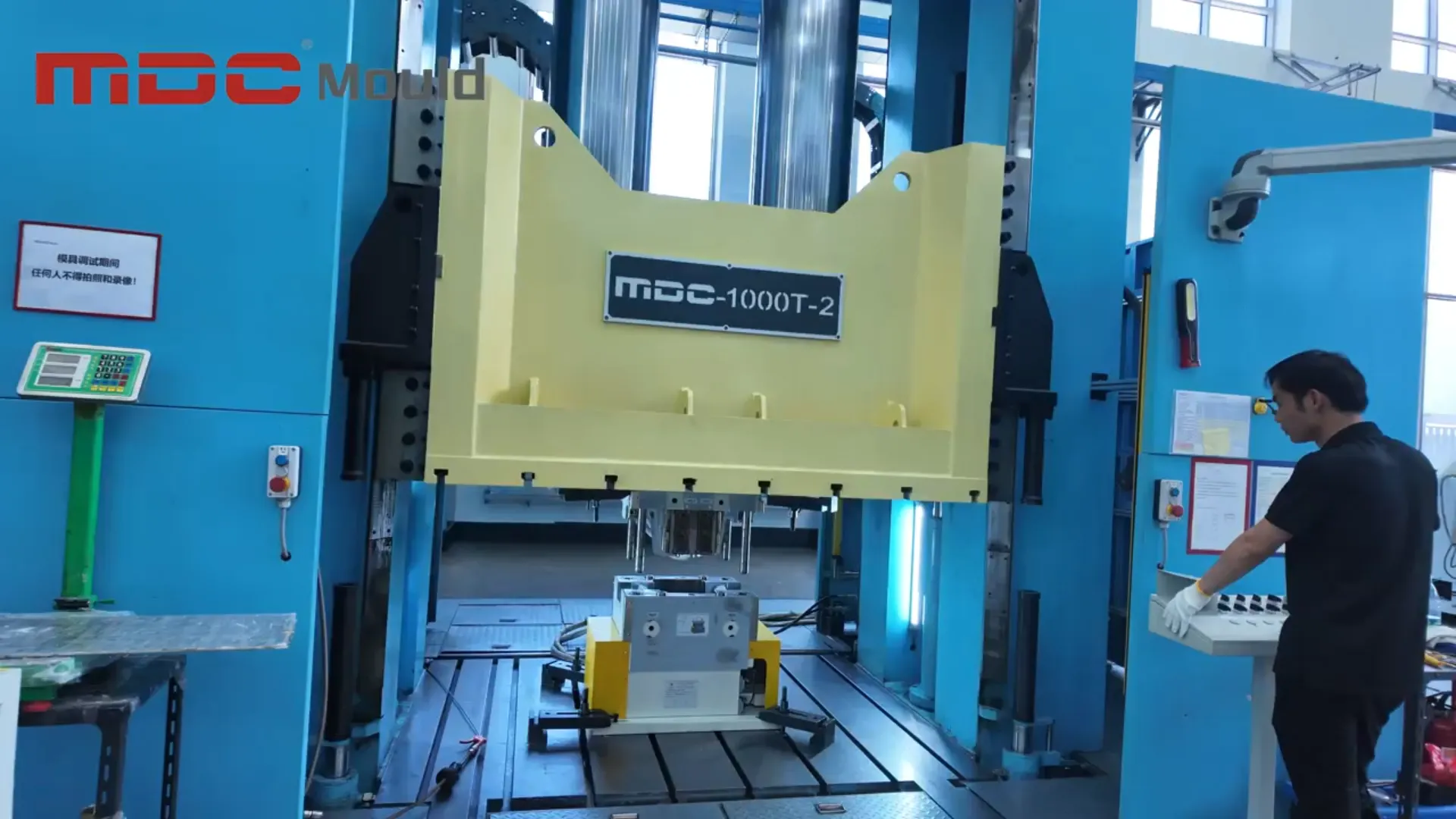
compression molds

Mold Preheating Methods Used at MDC

MDC utilizes a range of preheating systems according to material type and production scale:

  • Electric heating systems – offering precise and independent control for each mold zone;
  • Oil heating systems – providing steady, even temperature for large or multi-cavity molds;
  • Steam and hot-water preheating – suitable for low to mid-temperature composite applications;
  • Integrated PID control – ensuring real-time temperature regulation and safety monitoring.

Through advanced mold design and thermal simulation, MDC engineers ensure that heat transfer efficiency is maximized while minimizing energy loss, resulting in shorter preheating times and stable production.

Benefits of Proper Mold Preheating

Preheating a compression mold properly has direct impact on final product performance and overall production efficiency. Benefits include:

  • Enhanced surface quality – reduced flow marks and resin-rich zones;
  • Stable cycle times – consistent curing rates and dimensional control;
  • Increased mechanical properties – improved tensile and flexural strength;
  • Reduced energy waste – improved heating efficiency and fewer startup defects.

MDC’s Engineering Approach

At MDC, every compression mould is designed with precision and long-term durability in mind. The company integrates thermal analysis and simulation into its design phase, allowing engineers to predict heat flow, temperature gradients, and curing uniformity. This predictive approach ensures that each mold delivers stable performance even under continuous production conditions.

MDC’s preheating solutions are particularly beneficial for:

  • SMC auto parts such as bumpers, battery covers, and trunk boards;
  • BMC electrical components requiring high dimensional precision;
  • Carbon fiber structural parts in aerospace and industrial sectors.

Future Trends in Compression Molding Temperature Control

As composite manufacturing advances, mold temperature systems are becoming increasingly intelligent. MDC is developing new-generation preheating and thermal management solutions featuring real-time data acquisition, energy-efficient heating technologies, and smart temperature regulation to further enhance product quality and sustainability.

Conclusion

Preheating is not just a preparatory step — it is a foundation for precision molding. Through continuous innovation in compression mold design and temperature control technologyMDC Mould empowers manufacturers to achieve higher efficiency, stability, and quality in composite production. MDC remains committed to advancing composite mold engineering for a lighter, stronger, and more sustainable future.

Optimization Techniques in Compression Moulding — Insights for High-Precision SMC Tooling

Learn how advanced optimization methods in compression moulding improve process stability, product quality, and production efficiency.

Recent studies, such as “Optimization Techniques in Compression Moulding: A Comprehensive Review” (Materials Science Forum, 2024), provide valuable insight into how process parameters, materials, and design strategies influence the quality and performance of molded composite parts. At Zhejiang MDC Mould Co., Ltd., these research findings are directly reflected in our development of advanced SMC and BMC molds for automotive, electrical, and construction industries.

Why Optimization Matters in Compression Moulding

Compression moulding remains one of the most efficient methods for manufacturing high-strength, thermoset and thermoplastic composite components. However, parameters such as mould temperature, pressure, preheat time, and curing cycle have a significant impact on mechanical properties and surface quality. Improper control leads to defects like warpage, porosity, or uneven fiber orientation. Optimization therefore becomes essential — not only to enhance part quality, but also to minimize cycle time, material waste, and energy consumption.

compression molding process

Key Process Parameters Identified in Research

The reviewed paper summarizes more than 25 studies on compression moulding optimization. The most influential parameters include:

  • Mould Temperature: Directly affects resin flow, cure rate, and part dimensional accuracy.
  • Compression Pressure: Determines fiber wet-out and void content; typically ranges from 50–150 bar for SMC/BMC systems.
  • Moulding Time: Controls complete curing without over-heating or resin degradation.
  • Preheat and Material Charge Weight: Influence the uniformity of fiber distribution and part density.

Studies applying Taguchi methods and Response Surface Methodology (RSM) confirm that optimized combinations of these factors yield higher tensile and flexural strength while reducing shrinkage and surface defects.

Modern Optimization Techniques

The paper highlights several powerful optimization tools now used by leading manufacturers:

  • Taguchi Design of Experiments (DoE): Efficiently determines the effect of multiple variables with minimal trials.
  • Response Surface Methodology (RSM): Builds predictive models to find optimal temperature-pressure-time relationships.
  • Genetic Algorithms (GA): Search for global optima to avoid local minimum traps in complex parameter interactions.
  • Finite Element Simulation (FEM): Predicts fiber orientation, resin flow, and curing deformation to refine tooling design before production.
  • Artificial Neural Networks (ANN): Emerging data-driven method for predicting quality responses in nonlinear, multi-variable processes.

Connecting Research to MDC Engineering

At MDC Mould, the optimization principles described in the study are applied to every project. Our engineering team integrates CAE simulation, thermal analysis, and digital process validation throughout the mold-making workflow. By simulating resin flow and heat transfer, we minimize trial iterations and ensure Class-A surface finish and dimensional accuracy from the first shot.

Furthermore, MDC applies a data-driven approach to balance heating zone control, cavity venting, and ejection systems. This guarantees stable cure cycles, reduced air entrapment, and improved surface gloss in large-scale SMC parts such as EV battery covers, truck panels, and water tank components.

Sustainable Manufacturing Through Optimization

Optimization is not only about performance — it also contributes to sustainability. Advanced compression tooling shortens cure times and lowers energy use per cycle. Optimized resin distribution reduces waste and extends mold life. These improvements align with MDC’s goal of building eco-efficient composite molding systems for global customers.

The Future: Intelligent Compression Tooling

Looking ahead, MDC is exploring AI-assisted mold temperature control and real-time process monitoring. Combining sensor feedback with predictive models (inspired by RSM and ANN approaches) enables adaptive process correction during production — ensuring consistent quality even under varying material conditions.

Conclusion

Optimization research provides a strong scientific foundation for modern compression moulding. By integrating advanced algorithms and thermal simulation into tool design, MDC Mould continues to set new standards in SMC/BMC mold engineering. Every optimized parameter — from mold temperature to ejection force — translates directly into higher productivity, better surface finish, and longer tool lifespan.

For technical consultation or customized SMC compression mold design, contact our engineering team at www.zjmdc.com.

Low-Altitude Transportation Strategy: Opportunities for Composite Tooling and SMC Molds

China has upgraded low-altitude transportation to a national strategy. Discover how MDC’s SMC mold, BMC mold, compression mold, and composite tooling solutions support eVTOL, drones, and urban air mobility.

Introduction: A Strategic Leap for Low-Altitude Transportation

In September 2024, China took a decisive step by elevating low-altitude transportation from local pilot programs to a core element of its national transportation strategy. For industries engaged in lightweight, high-strength materials, particularly the composite mold and thermoset mold sector, this policy marks a milestone. The growing demand for eVTOLs (electric vertical take-off and landing aircraft), logistics drones, and emergency rescue vehicles has set the stage for a new era of urban air mobility (UAM).

From Pilot Programs to National Strategy

The Guideline for Pilot Applications of the Transport Powerhouse Initiative (2025) released by the Ministry of Transport officially included “Promoting High-Quality Development of Low-Altitude Transportation” in its 16 priority domains. This framework outlined specific routes for industrial application, urban planning, and regulatory mechanisms. It is no longer a fragmented experiment but a comprehensive national push, supported by clear timelines and measurable objectives.

Global Perspective: eVTOL Competition Heats Up

Worldwide, countries are investing heavily in eVTOL and drone technology. The United States has Joby Aviation and Archer Aviation advancing FAA certifications; Europe is promoting Volocopter and Lilium with EASA pathways; Japan and South Korea are piloting air taxi networks in metropolitan areas. China’s inclusion of low-altitude transport in its national plan not only aligns with this global race but accelerates domestic players’ ability to scale production, foster supply chains, and expand international competitiveness.

Low-Altitude Transportation Strategy

Composite Materials: The Core Enabler

Low-altitude aircraft demand materials with a combination of lightweight properties, high strength, durability, and resistance to fatigue. Traditional metals cannot meet these standards, which is why composite solutions dominate the sector:

  • Carbon Fiber Composites: Essential for load-bearing structures, with usage reaching 60%-70% of eVTOL total weight.
  • SMC (Sheet Molding Compound) Molds: Provide fast-cycle molding for body panels, hatches, and structural shells.
  • BMC (Bulk Molding Compound) Molds: Used for precision electrical housings and heat-resistant components in propulsion systems.
  • Thermoset Molds: Enable high-temperature resistance and flame-retardant properties, critical for safety certifications.
  • Compression Molds: Ensure cost-effective mass production of large, complex parts while maintaining structural integrity.

MDC Mould, as a trusted composite mold manufacturer, provides advanced tooling for these processes, ensuring that parts meet aviation-level quality and consistency.

Technical Challenges and Mold Solutions

The rise of low-altitude mobility brings challenges in fatigue resistance, crash safety, fire resistance, and cost efficiency. Composite mold solutions directly address these:

  • Fatigue and Impact Resistance: MDC’s carbon fiber compression molds enable lightweight yet crashworthy structures.
  • Fire Safety: Thermoset molds for phenolic resin composites pass FAR 25.853 flame-retardant standards for aviation interiors.
  • Efficiency: Automated molding systems reduce cycle times by 40%, aligning with the fast growth of drone and eVTOL fleets.
  • Design Flexibility: Multi-cavity SMC molds provide scalable production for logistics drone components and air taxi interiors.

Market Outlook: A Trillion-Yuan Industry by 2030

According to industry forecasts, by 2030, China’s low-altitude transportation market may exceed 1.5 trillion RMB, with composite material applications surpassing 100 billion RMB. The key growth drivers include:

  1. Urban Air Mobility: eVTOL fleets could exceed 5,000 units domestically by 2027, creating massive demand for composite fuselage and wing molds.
  2. Logistics Drones: Large-scale deployment by courier giants will drive demand for cost-effective GFRP (glass fiber reinforced plastic) molds.
  3. Emergency Rescue Systems: Fire-retardant and impact-resistant thermoset composites will be essential in public safety and military-civilian integration projects.

MDC Mould’s Role in the Low-Altitude Economy

As a leading manufacturer of SMC molds, BMC molds, compression molds, and composite tooling, MDC Mould plays a pivotal role in enabling lightweight transportation solutions. Our expertise extends from tooling design to trial molding, ensuring clients can move seamlessly from prototype to mass production. By supporting global partners in automotive, aerospace, and industrial applications, MDC is strategically positioned to fuel the growth of China’s low-altitude economy.

Future Outlook: Building an Integrated Ecosystem

The success of low-altitude transportation will depend on integrated innovation. Composite mold suppliers like MDC must go beyond tooling to collaborate with aircraft manufacturers, simulation providers, and certification bodies. By building alliances and investing in next-generation materials such as thermoplastic composites and nano-enhanced fibers, MDC aims to stay ahead of industry transformation.

Conclusion

The elevation of low-altitude transportation to a national strategic level is more than a policy milestone—it is a call to action for the composite industry. With decades of expertise in compression moldsSMC moldsBMC molds, and thermoset tooling, MDC Mould stands ready to empower the eVTOL and drone revolution. The future of urban air mobility depends not only on visionary aircraft designs but also on the precision and reliability of the molds that make them possible.

Composite Materials: The Future of Zero-Emission Cargo Ships

Discover how composite materials, compression molds, and FRP tooling are transforming zero-emission cargo ships.

As the global shipping industry accelerates toward its zero-carbon transition, the International Maritime Organization (IMO) has set an ambitious goal: reduce greenhouse gas emissions by 50% by 2050 compared to 2008 levels. To achieve this, zero-emission cargo ships powered by batteries, hydrogen, or ammonia will define the future of maritime transportation.

However, traditional steel-based vessels face severe limitations. Heavy self-weight, frequent maintenance, and poor efficiency hinder their compatibility with new energy systems. This is where composite materials—enabled by technologies such as compression molding, SMC mold, BMC mold, and FRP tooling—bring transformative advantages.

Limitations of Steel in Zero-Emission Shipping

  • Weight vs. Endurance: A 2,000-ton steel ship requires battery packs accounting for 30% of its total weight just to cover 200 nautical miles, reducing cargo capacity dramatically.
  • Corrosion & Maintenance: Steel corrodes quickly in marine environments, needing repainting every 2–3 years, which increases lifecycle costs and emissions.
  • Hydrodynamic Inefficiency: Welded steel hulls suffer 15–20% higher drag compared to composite hulls, lowering propulsion efficiency.
composite ship

Advantages of Composite Materials in Shipbuilding

Advanced composites such as GFRP (Glass Fiber Reinforced Plastics) and CFRP (Carbon Fiber Reinforced Plastics) deliver unmatched benefits:

  • Lightweight Efficiency: Hull weight reductions of up to 44% with GFRP and 50%+ with CFRP, directly improving range and cargo capacity.
  • Durability: Composite hulls last 25–30 years, compared to 15–20 years for steel, with far lower maintenance needs.
  • Streamlined Hydrodynamics: Molding methods like compression molding and VARTM enable seamless hulls with reduced drag and enhanced efficiency.

Composite Applications Beyond the Hull

Composite materials also play key roles in propulsion and storage systems:

  • Battery Housings: CFRP enclosures improve safety and reduce weight by up to 60%.
  • Hydrogen Storage Tanks: CFRP-wrapped cylinders are 75% lighter than steel tanks.
  • Ammonia Fuel Systems: Hybrid CFRP + PTFE tanks resist chemical corrosion while reducing mass.
  • Propellers & Deck Equipment: CFRP/GFRP propellers improve propulsion efficiency by 12–15%.

MDC’s Role in Composite Shipbuilding

At Zhejiang MDC Mould Co., Ltd., we specialize in high-precision tooling for marine composites. Our portfolio includes SMC moldsBMC moldscompression molds, hot press molds, and FRP tooling, enabling scalable production of large and complex parts such as:

  • Lightweight hull panels using GFRP and CFRP
  • Battery housing systems for electric cargo ships
  • Hydrogen and ammonia storage tank shells
  • Composite propellers and marine equipment

By combining expertise in compression molding with advanced materials, MDC ensures efficient, durable, and cost-effective production solutions for the next generation of ships.

Future Outlook: Toward IMO 2050

With continuous innovations in composite materials and molding technologies, costs are expected to fall significantly by 2030. This will make composite vessels increasingly competitive with traditional steel or aluminum ships.

By 2030, composite-based cargo vessels are forecast to represent 40% of inland shipping and 25% of coastal fleets. As a leader in composite mold technology, MDC is committed to supporting global shipbuilders in achieving IMO’s 2050 decarbonization goals.

Advancements and Future Trends of Composite Materials in Commercial Aviation

Explore the latest advancements in composite materials for civil aviation, including liquid molding, thermoplastic composites, green technologies, and prepreg innovations.

In recent years, the emergence of new materials and advanced manufacturing processes has accelerated the development of composite materials toward higher performance, greater efficiency, lower cost, and improved sustainability. This trend is driving the application of composites in commercial aircraft to new levels, making them a critical benchmark in evaluating the advancement of next-generation civil aviation programs.

Today, composite usage in major aircraft models continues to climb. The Airbus A350 features composites in 53% of its structural weight, while the Boeing 787 Dreamliner incorporates 50%. China’s domestically developed wide-body aircraft is also expected to achieve a similar level. Aircraft fuselages, wings, and secondary load-bearing components increasingly rely on composites. Over 90% of these parts are produced using autoclave molding processes, with epoxy-based carbon fiber prepregs as the primary material. Airbus plans to raise A350 output to 12 per month by 2028, while Boeing has reached up to 13 B787 units per month in past production cycles.

Growth of Liquid Molding Technologies

Beyond autoclave technology, liquid molding processes are advancing rapidly. Europe, the U.S., and Russia have all invested heavily in alternatives such as Resin Transfer Molding (RTM) and Vacuum Assisted Resin Infusion (VARI). These techniques are now the leading non-autoclave processes for resin-based composites and have expanded from secondary to primary load-bearing structures. Their advantages include lower production costs, scalability, and the potential for batch manufacturing of large aerospace components.

Advances in Thermoplastic Composites

Thermoplastic composites have achieved remarkable progress in recent years. Compared to thermoset composites, thermoplastic systems offer greater toughness, better flame resistance, and compatibility with various non-autoclave manufacturing methods. They deliver shorter cycle timesreduced costs, and higher efficiency. Initiatives such as the EU’s Clean Sky and NASA’s HiCAM (High-Rate Composite Aircraft Manufacturing) program highlight thermoplastics as a strategic research priority, making this one of the fastest-growing areas in aerospace composites.

composite mold

Green and Sustainable Composite Technologies

With rising use of composites, the industry faces challenges in recycling and sustainability. Emerging green composite technologies aim to mitigate these impacts through biodegradable polymers and eco-friendly matrix materials. Though currently in the R&D stage, these solutions will play a vital role in achieving long-term sustainability in aerospace manufacturing.

High-Performance Prepreg Innovations

Another area of advancement is the development of high-performance prepregs. Companies like Hexcel (IM10 carbon fiber) and Toray (T1100/3960 prepreg system) have launched materials with superior strength and stiffness. Toray’s TC1130 thermoplastic prepreg also solves the problem of low bonding strength, expanding the potential of thermoplastic composites in critical aerospace structures.

Future Outlook

The history of commercial aviation demonstrates that composite technology has continually advanced with each new generation of aircraft. In the future, adoption levels will rise further, particularly in areas such as:

  • Liquid molding for cost-efficient, large-scale production
  • Thermoplastic composites with enhanced toughness and flexibility
  • Green, recyclable materials for sustainability
  • Next-generation prepregs with improved performance

For China’s aviation industry, increasing R&D investment and strategic planning are essential. By fostering innovation in these directions, domestic manufacturers will ensure that future commercial aircraft composites remain competitive on a global scale while meeting both performance and sustainability objectives.

At Zhejiang MDC Mould Co., Ltd. (MDC), we are dedicated to advancing mold and tooling technologies for the aerospace sector. Our expertise covers SMC moldsBMC moldscompression moldscarbon fiber molds, and advanced composite tooling. By leveraging precision engineering, innovation, and sustainability, MDC continues to support the aerospace industry’s transition to a high-performance, cost-effective, and greener future.

The Effect of Laser Cleaning on the Surface Quality of Compression Tooling Molds

Discover how laser cleaning improves the surface quality of compression tooling molds. Learn its effects on SMC molds, BMC molds, carbon fiber molds, and composite tooling, ensuring durability, precision, and sustainability.

Laser cleaning has emerged as a revolutionary technology for maintaining the surface quality of compression molds. This article explores its working principles, effects on tooling, and industrial applications across SMC moldsBMC molds, and composite molds.

Introduction

In high-precision industries, the surface quality of compression tooling molds directly impacts product performance and manufacturing efficiency. Over time, molds accumulate resin residues, release agents, carbon deposits, and oxides, leading to poor surface finishes and reduced part quality. Traditional methods such as chemical cleaning or sandblasting are either environmentally harmful or damaging to the mold surface.

By contrast, laser cleaning technology provides an eco-friendly, precise, and highly effective solution to restore mold integrity and prolong tool life.

Understanding Compression Tooling Molds

Compression molds are critical tools for shaping high-performance parts in industries such as automotive, aerospace, electronics, and consumer goods. These molds are commonly used with materials including:

  • SMC (Sheet Molding Compound)
  • BMC (Bulk Molding Compound)
  • GMT (Glass Mat Thermoplastic)
  • LFT (Long Fiber Thermoplastic)
  • Carbon fiber composites

The surface quality of these molds directly influences dimensional accuracy, demolding performance, and product aesthetics.

The Principle of Laser Cleaning

Laser cleaning uses high-intensity, short laser pulses to selectively remove contaminants without damaging the base mold material. The process is precise, non-contact, and environmentally friendly.

Key Benefits of Laser Cleaning

  • Micron-level precision for delicate tooling geometries
  • No abrasives or chemicals required
  • Preserves mold geometry and surface finish
  • Scalable and compatible with automation systems
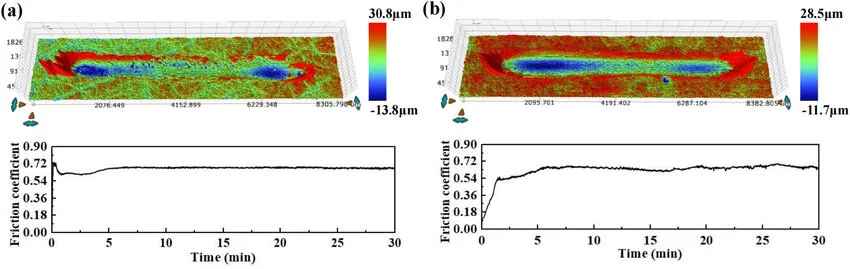
SEM-images-and-3D-surface-profiles-of-a-S8-b-S10-c-S13-d-S14

Effects on Surface Quality of Compression Tooling Molds

1. Improved Surface Cleanliness

Laser cleaning effectively removes contaminants like resin, carbon, and oxides, restoring the mold surface and ensuring defect-free molded parts.

2. Preservation of Mold Geometry

Unlike abrasive cleaning, laser cleaning maintains the integrity of fine details and critical dimensions in SMC and BMC molds.

3. Surface Roughness Control

Laser parameters can be tuned to maintain smooth finishes or introduce micro-textures, improving resin flow and demolding performance.

4. Longer Mold Service Life

Reducing aggressive cleaning minimizes micro-cracks and surface fatigue, extending mold longevity.

5. Consistent Production Quality

Laser cleaning supports high-volume manufacturing by ensuring stable and repeatable mold conditions, especially in automotive compression molding.

Laser Cleaning vs. Traditional Cleaning Methods

Cleaning MethodLimitationsLaser Cleaning Advantages
Chemical cleaningHazardous waste, potential corrosionEco-friendly, no chemicals required
Sandblasting / Abrasive cleaningSurface wear, geometry alterationNon-abrasive, preserves mold accuracy
Manual polishingLabor-intensive, inconsistentAutomated, repeatable, precise
Ultrasonic cleaningSize limitations, liquid handlingDry, scalable, suitable for large molds

Industrial Applications of Laser Cleaning

  • SMC and BMC molds: Automotive body panels, battery covers, and electrical housings
  • Carbon fiber compression molds: Aerospace structural parts and sports equipment
  • Rubber compression molds: High-precision rubber seals and gaskets
  • Composite molds: Lightweight parts in automotive and renewable energy industries

Future Outlook

The future of mold maintenance lies in the integration of laser cleaning with automation and Industry 4.0 technologies. Robotics, AI-driven parameter control, and real-time surface monitoring will further improve efficiency and consistency.

Friction-coefficient-evolution-during-tribological-testing-of-a-S0-and-b-S13-with

Conclusion

The effect of laser cleaning on the surface quality of compression tooling molds is profound. It ensures cleaner surfaces, longer mold life, consistent part quality, and environmental sustainability. For manufacturers using SMC molds, BMC molds, or carbon fiber molds, adopting laser cleaning is not only a technological upgrade but also a strategic move towards efficiency and sustainability.