Advanced Tooling Solutions for High-Precision Medical Imaging Housing

Precision CNC machining for MRI housing molds. Achieve micron-level tolerances and Class A finish for medical-grade composites with expert tooling by MDC Mould.

In the medical industry, precision is not optional—it is critical. From diagnostic imaging systems to advanced medical devices, every component must meet strict standards for accuracy, safety, and reliability.

At MDC Mould, we specialize in CNC machining for high-precision MRI housing mould projects, supporting the production of complex medical equipment components with consistent quality and performance.

This article provides an in-depth look at how medical mould manufacturing is achieved through advanced machining, process control, and engineering expertise.

1. Why MRI Housing Moulds Require High-Precision CNC Machining

MRI systems demand extremely precise housing structures to ensure proper alignment, stability, and operational safety. A high-quality MRI housing mould must deliver:

  • Strict dimensional accuracy
  • Smooth and defect-free surfaces
  • Stable structural performance
  • Consistency across production cycles

Even minor deviations can affect the performance of medical equipment, making precision CNC machining essential.
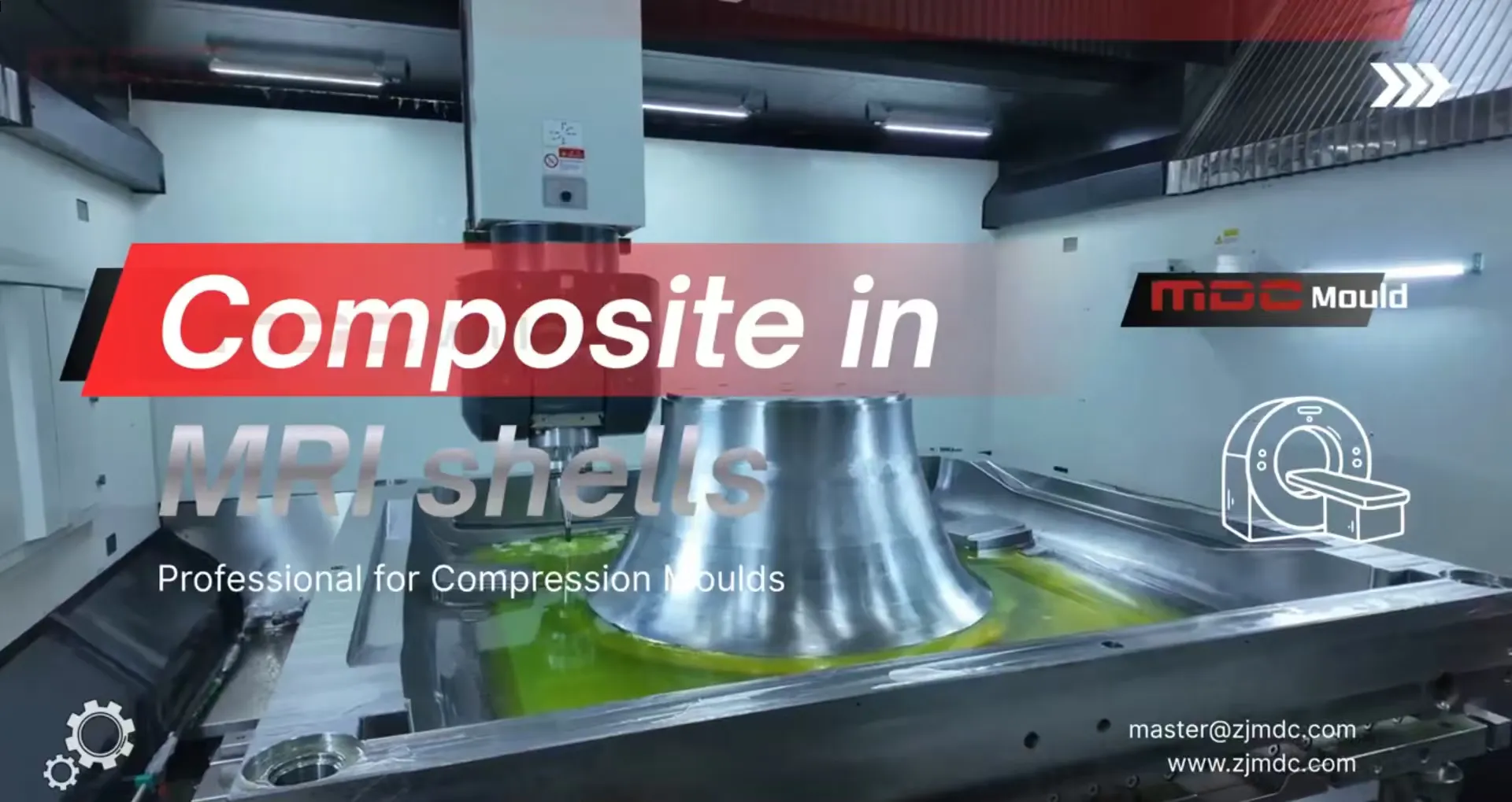
MRI2

2. CNC Machining Process for Medical Mould Manufacturing

The production of a medical mould involves multiple controlled machining stages:

2.1 Rough Machining

  • Fast material removal
  • Initial shaping of the mould structure
  • Preparation for precision machining

2.2 Semi-Finishing

  • Refinement of contours
  • Improved dimensional accuracy
  • Reduction of internal stress

2.3 Finishing

  • Achieving final tolerances
  • High-quality surface finish
  • Preparation for polishing or coating

Each stage is carefully managed to ensure that the final CNC mould meets medical-grade standards.

3. Engineering Challenges in MRI Housing Mould Machining

Complex Geometry

MRI housings often feature large curved surfaces and integrated structures. Advanced multi-axis CNC machining ensures precise shaping of these complex geometries.

Surface Quality Requirements

Medical applications require smooth, defect-free surfaces. High-speed finishing and polishing techniques are used to achieve superior results.

Dimensional Stability

Temperature control and precision inspection systems are essential to maintain tight tolerances during machining.

4. Process Control and Quality Assurance

At MDC Mould, every step of medical mould manufacturing is monitored and controlled:

  • Real-time machining process tracking
  • Tool wear monitoring
  • Dimensional inspection at key stages
  • Strict quality control standards

This ensures:

  • Consistent product quality
  • Reduced defect rates
  • Reliable performance in medical applications
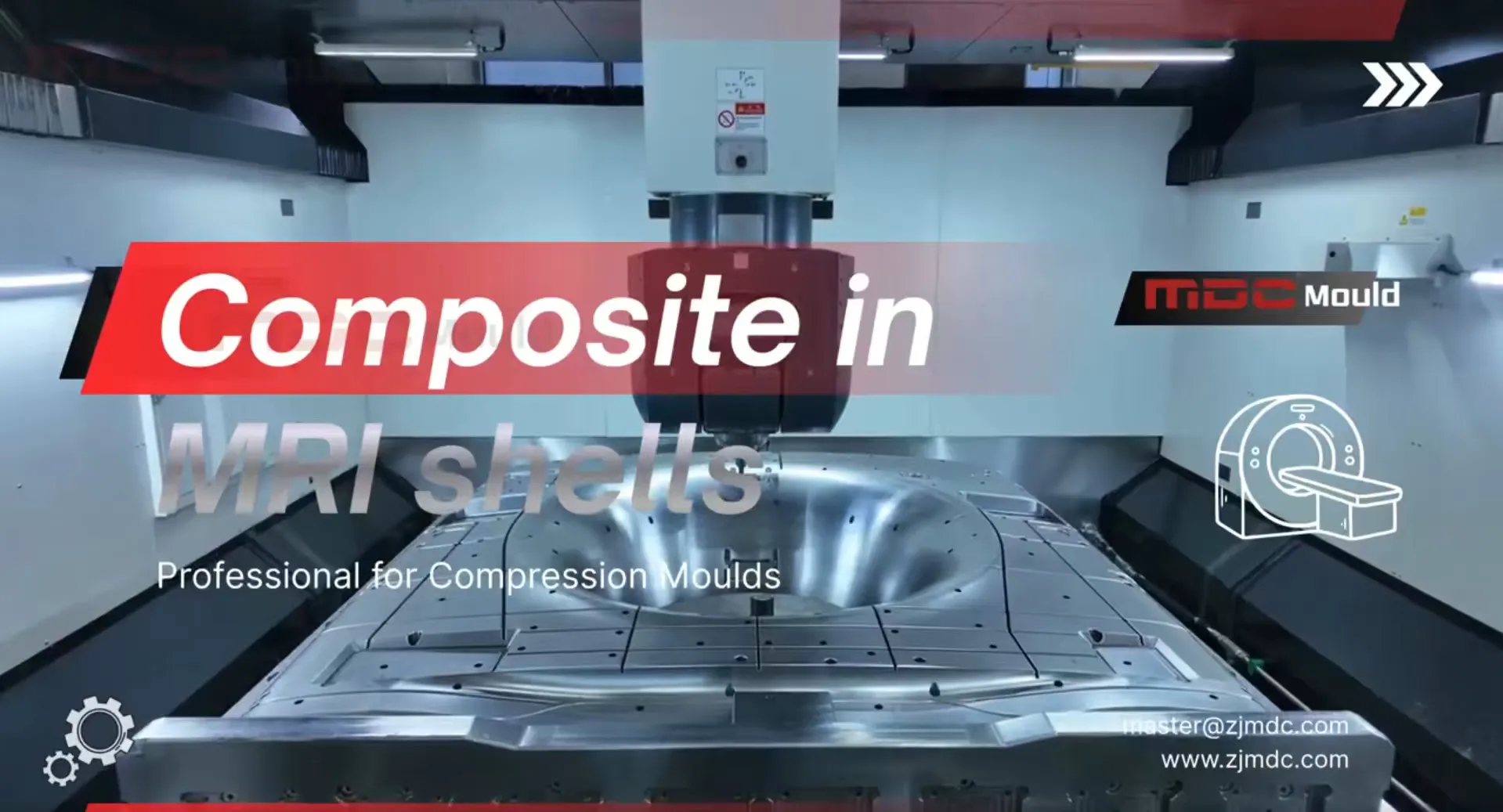
MRI1

5. Material Selection for MRI Mould Tooling

Choosing the right material is essential for successful CNC mould making. Common materials include:

  • Tool steel for durability and strength
  • Aluminum for lightweight and fast machining
  • Composite tooling materials for specialized applications

Material selection impacts machining efficiency, tool life, and final product quality.

6. From CNC Machining to Medical Application

After machining, moulds are used in processes such as:

These processes produce:

  • MRI equipment housings
  • Medical device enclosures
  • Structural composite components

High-quality tooling ensures that final products meet strict medical standards.

7. Why Choose MDC Mould for Medical Tooling

MDC Mould combines advanced technology with engineering expertise to deliver high-performance precision tooling solutions.

  • Extensive experience in CNC machining
  • Advanced equipment and multi-axis machining capability
  • Strict quality control systems
  • Reliable global delivery

We support customers in the medical industry with dependable and high-quality mould solutions.

Conclusion

CNC machining for MRI housing mould represents one of the highest standards in modern manufacturing. It requires precision, expertise, and strict quality control at every stage.

At MDC Mould, we ensure that every machining step is carefully executed to meet demanding medical requirements, helping our customers deliver reliable and high-performance medical equipment worldwide.

High-Performance Composite Materials for Extreme Environments

Explore how advanced composite materials and precision tooling developed by MDC Mould enable reliable performance under extreme temperatures, pressures, corrosion, and radiation conditions.

As aerospace propulsion systems push their thrust-to-weight ratios beyond 15 and deep-sea exploration equipment advances toward operational depths of 11,000 meters, extreme environments have become the ultimate testing grounds for material technology. Temperatures exceeding 1500°C, pressures above 100 MPa, long-term corrosion, and high-radiation conditions demand materials that combine ultra-high stability with exceptional reliability.

In recent years, continuous innovation in SMC moldcompression mold design, fiber architecture, matrix systems, and precision tooling has driven high-performance composites from laboratory prototypes to large-scale engineering applications. These advancements are particularly aligned with MDC Mould’s long-term expertise in composite mold manufacturing and high-precision thermoforming processes.

1. Aerospace & Propulsion Systems: High-Temperature and High-Load Applications

In aerospace engines, where combustion chamber temperatures can exceed 1500°C and structural components undergo millions of thermal cycles, advanced composites now demonstrate mechanical properties once exclusive to superalloys.

1.1 Ceramic Matrix Composites (CMCs)

CMC materials with SiC/SiC architecture retain strength above 1300°C, reduce weight by 35–50%, and improve fatigue resistance. These are now utilized in combustion liners, blade shrouds, and thermal shielding components.

1.2 Carbon–Carbon Composites

In hypersonic vehicle structures, C/C composites offer ultra-high ablation resistance and dimensional stability under repeated thermal shocks, supporting Mach 6+ trajectories and extreme flight profiles.

1.3 Precision Mold & Tooling for Aerospace Composites

The demand for defect-free molding surfaces and fiber consistency drives the use of large-format compression molds, high-pressure SMC tools, and autoclave-compatible composite molds — areas where MDC Mould is continuously innovating in thermal management and demolding performance.

composite

2. Deep-Sea Engineering: Surviving 110 MPa Pressure

Deep-sea environments impose unique challenges requiring materials that balance strength, corrosion resistance, and long-term durability.

2.1 Pressure-Resistant Composite Structures

Basalt fiber reinforced composites have been implemented in full-ocean-depth equipment. At water depths of 11,000 m, composite housings maintain 92% compressive strength retention with no microcrack propagation.

2.2 Marine Corrosion-Resistant Composites

Glass fiber reinforced vinyl ester composites show minimal mass loss (<0.3%) after 10,000 hours of salt-spray exposure. These materials are increasingly used in walkways, cable channels, and offshore structural systems.

2.3 High-Pressure Composite Piping

Carbon-fiber composite high-pressure RO pipes elevate allowable pressure from 8 MPa (steel) to 12 MPa while reducing system weight by 70%—improving efficiency in large-scale desalination facilities.

3. Energy & Nuclear Engineering: Materials Built for 60-Year Lifecycles

In nuclear power, hydrogen energy, geothermal systems, and next-generation reactors, materials must withstand heat, radiation, and chemical degradation for decades without structural compromise.

3.1 Radiation-Resistant Composite Systems

Multi-phase resin matrices incorporating ceramic fillers have demonstrated significant improvements in neutron-radiation resistance and dimensional stability.

3.2 Composite Tooling for Energy Applications

Large composite tooling — particularly high-temperature composite molds and compression systems — enable defect-free forming of thick laminate structures for shielding and containment applications.

4. Industrial Equipment: Lightweight, High-Strength, High-Precision

From semiconductor manufacturing to power transmission and intelligent equipment, the industrial sector is increasingly adopting high-performance composites for precision components that require stiffness, minimal deformation, and long service life.

4.1 Precision Structural Frames

Carbon-fiber reinforced epoxy structures provide 3–5× stiffness-to-weight advantages over metal frames, supporting micron-level positional accuracy in high-speed production equipment.

4.2 Corrosion-Resistant Chemical Equipment

Composite tanks, valves, and covers benefit from tailored resin systems and C-glass reinforcement, offering outstanding acid and alkali resistance under long-term continuous operation.

composite2

5. From Lab Innovation to Large-Scale Engineering: Key Enablers

The transformation of composite materials into extreme-environment applications depends on breakthroughs in five core areas:

  • Microscale fiber architecture optimization for better load transfer
  • High-purity, high-temperature matrix systems (CMC, BMI, PEEK, cyanate ester)
  • Advanced compression molding technologies delivering repeatable accuracy
  • Precision composite tooling with improved thermal control and demolding performance
  • Automated fiber placement & intelligent RTM improving consistency and throughput

MDC Mould’s continuous improvement in SMC MoldComposite Mold, and Compression Tooling provides an essential foundation for these engineering breakthroughs.

Conclusion

Extreme environments — high temperature, high pressure, corrosion, and radiation — represent the highest evaluation criteria for advanced materials. High-performance composites, driven by innovations in matrix chemistry, fiber design, and precision tooling, are rapidly becoming the core solution for next-generation aerospace, marine, energy, and industrial systems.

With proven expertise in hot-press composite tooling, SMC molds, BMC molds, high-temperature compression molds, and advanced composite manufacturingMDC Mould will continue supporting global industries with engineering-grade solutions that push the boundaries of material performance.