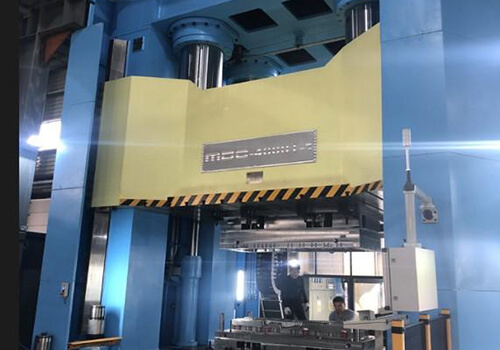
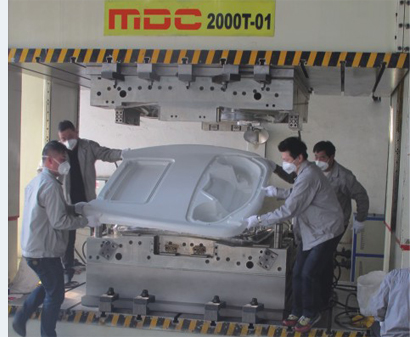
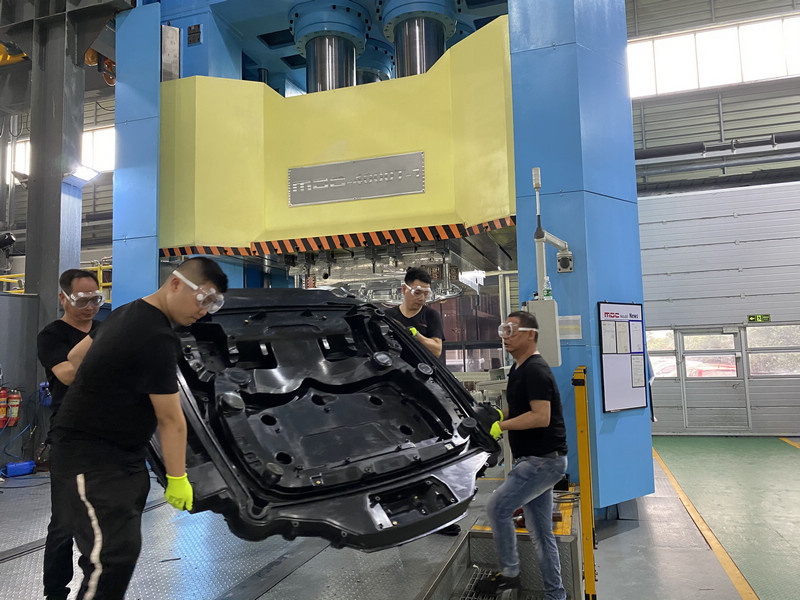
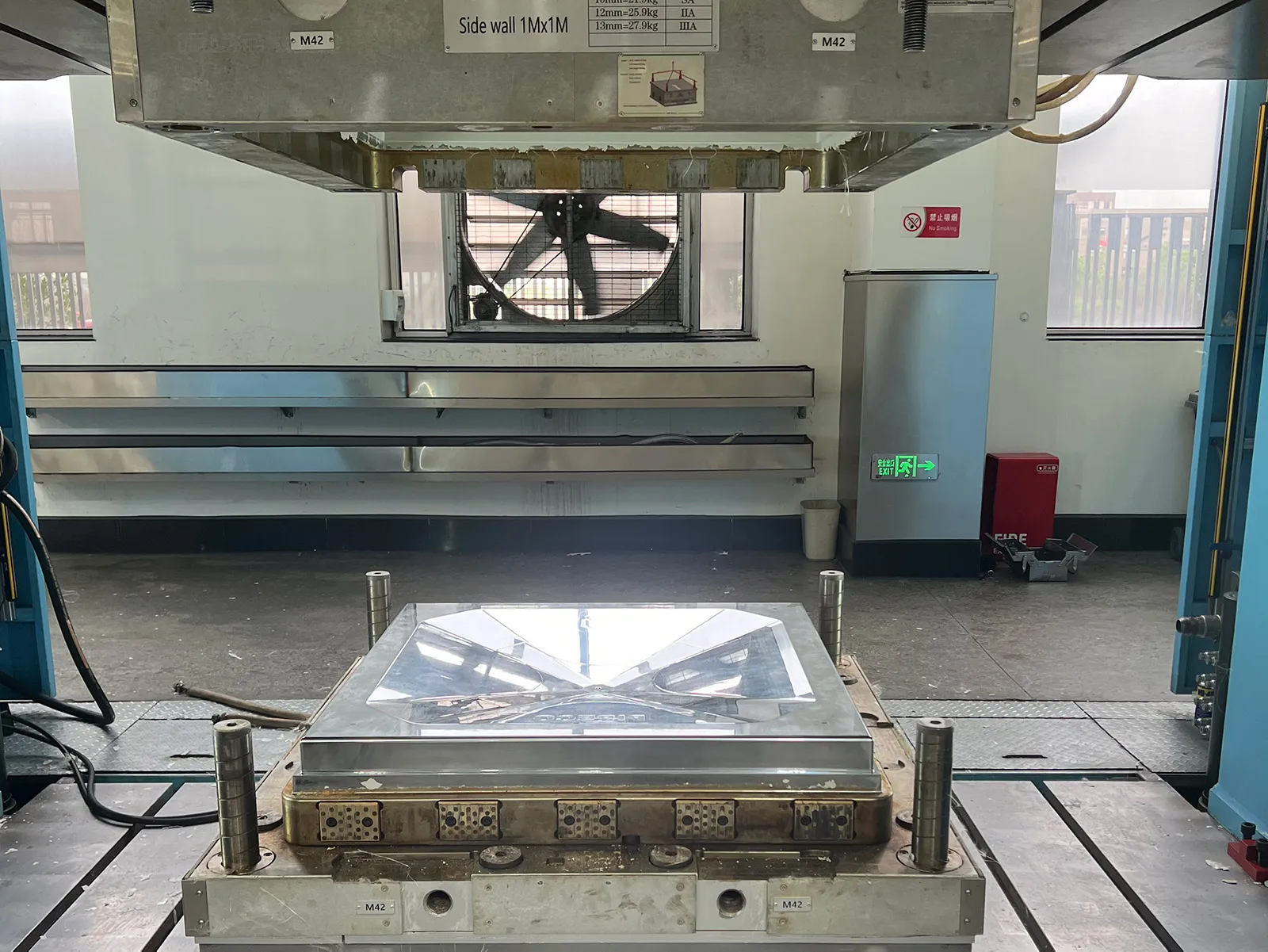
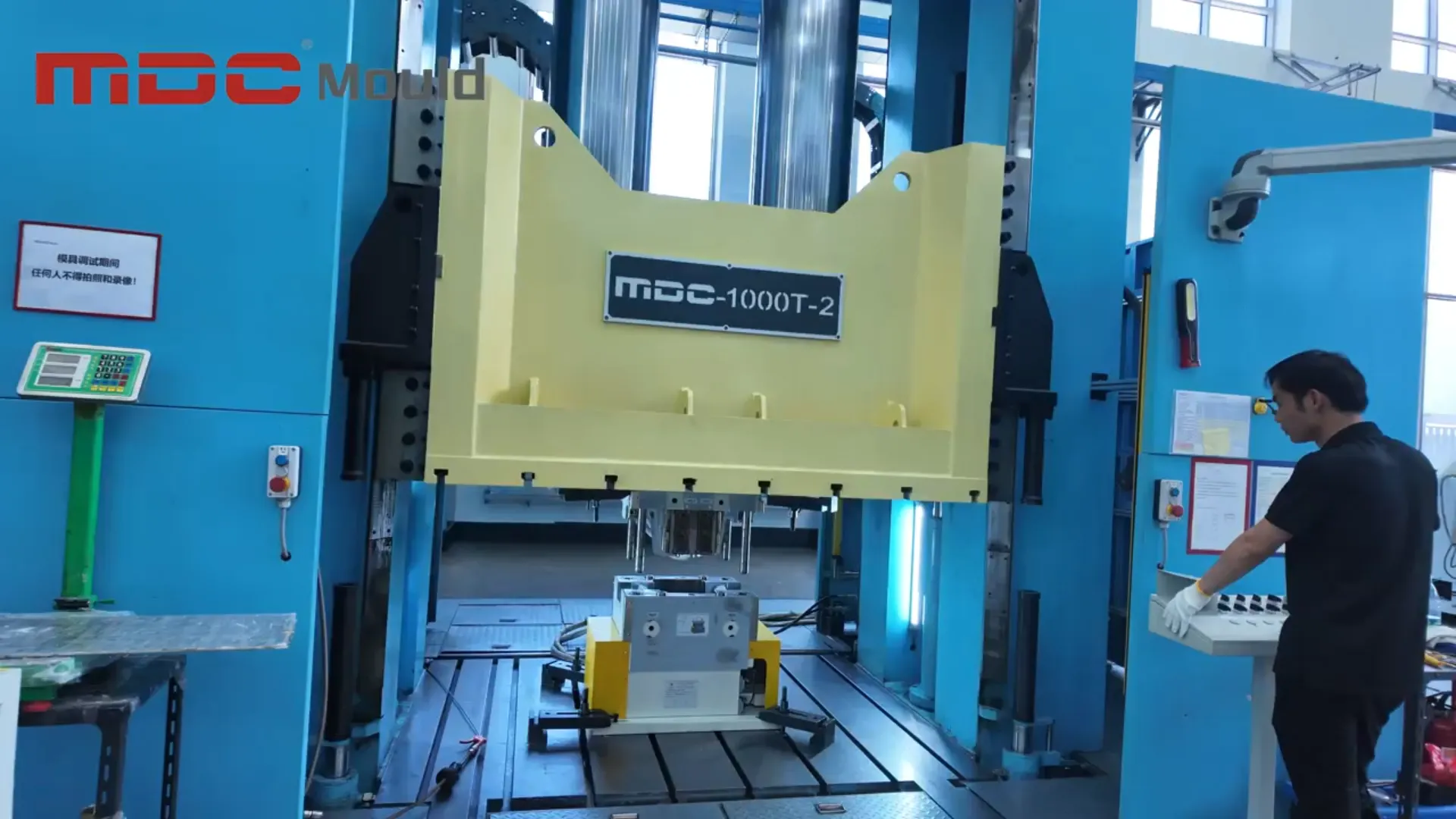
As global manufacturing industries continue moving toward lightweight engineering, advanced thermoset composites, and high-performance structural materials, both transfer molding and compression molding have become essential technologies in modern industrial production.
From SMC automotive panels and carbon fiber structural components to electrical insulation systems and precision thermoset parts, manufacturers must choose the correct molding process to optimize:
- Product quality
- Production efficiency
- Tooling investment
- Material performance
- Surface finish
- Dimensional stability
At MDC Mould, we specialize in advanced SMC mold, BMC mold, compression tooling, carbon fiber mold, and composite mold manufacturing solutions for global industries.
Quick Answer:
The main difference between a transfer mold and a compression mold is how the material enters the mold cavity.
In compression molding, the material is placed directly into the mold cavity before closing.
In transfer molding, the material is first heated inside a transfer chamber and then forced into a closed cavity through runners and gates.
What Is Compression Molding?
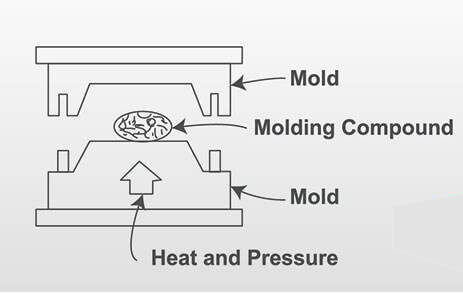
Compression molding is a manufacturing process where a pre-measured charge of thermoset or composite material is placed directly into an open heated mold cavity.
The mold closes under high pressure, forcing the material to flow and fill the cavity while heat cures the material into its final shape.
Compression molding is widely used for:
- SMC molding
- BMC molding
- Carbon fiber molding
- GMT molding
- LFT molding
- Thermoset composite production
- Rubber compression molding
Compression Molding Process
- Material preparation
- Charge placement into mold cavity
- Mold closing
- Compression and material flow
- Heat curing
- Mold opening
- Demolding
- Trimming and finishing
Advantages of Compression Mold Technology
- Suitable for large structural parts
- Excellent fiber length retention
- Lower tooling cost
- Lower material waste
- Strong mechanical performance
- Ideal for SMC and BMC materials
- Suitable for automotive lightweight structures
Disadvantages of Compression Molding
- Longer cycle time
- Flash trimming may be required
- Less suitable for highly intricate geometries
- Manual loading may reduce automation level
What Is Transfer Molding?
Transfer molding is a thermoset molding process that combines characteristics of both compression molding and injection molding.
Instead of placing the material directly into the cavity, the material is loaded into a separate transfer chamber. A plunger forces the heated material through runners and gates into the closed mold cavity.
Transfer Molding Process
- Material loading into transfer chamber
- Mold cavity closing
- Plunger pressure application
- Material transfer through runners
- Curing inside cavity
- Mold opening
- Part ejection
- Runner trimming

Advantages of Transfer Mold Technology
- Excellent dimensional precision
- Superior surface finish
- Reduced flash
- Ideal for insert molding
- Suitable for complex geometries
- Better consistency for small precision components
Disadvantages of Transfer Molding
- Higher tooling cost
- More complex mold structure
- Higher material waste
- Not ideal for large structural composite parts
- Fiber damage may occur during transfer flow
Core Difference Between Transfer Mold and Compression Mold
| Factor | Compression Mold | Transfer Mold |
|---|---|---|
| Material Loading | Directly into cavity | Into transfer chamber |
| Mold Status During Filling | Open | Closed |
| Material Flow | Compression flow | Forced transfer flow |
| Tooling Complexity | Simpler | More complex |
| Tooling Cost | Lower | Higher |
| Material Waste | Lower | Higher |
| Surface Finish | Good | Excellent |
| Precision | Moderate | High |
| Suitable Part Size | Large parts | Small-medium parts |
| Fiber Preservation | Excellent | Moderate |
| Automation | Moderate | Higher |
| Best Applications | Structural composite parts | Precision thermoset parts |
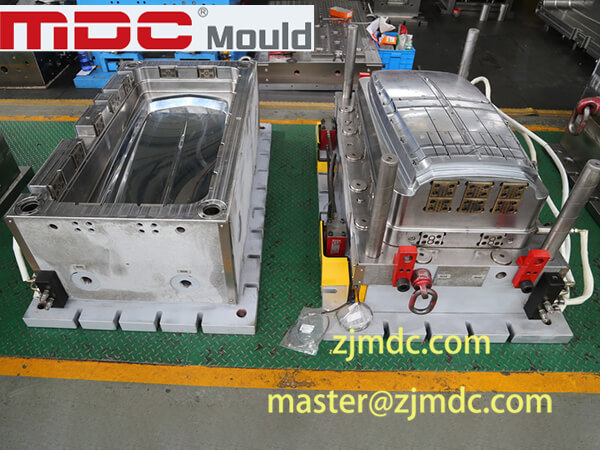
Compression Mold Structure
A typical compression mold usually consists of:
- Upper mold
- Lower mold
- Heating system
- Guide pillars
- Cooling channels
- Venting system
- Ejection system
For advanced SMC tooling and BMC tooling, engineers must optimize:
- Material flow
- Fiber orientation
- Thermal balance
- Shrinkage compensation
- Demolding angles
- Surface quality
Transfer Mold Structure
A typical transfer mold includes:
- Transfer chamber
- Plunger system
- Runner channels
- Gate system
- Closed mold cavity
- Heating system
- Venting channels
- Ejection system
Because of the complex runner and gate system, transfer molds generally require:
- Higher machining precision
- More advanced sealing technology
- More complex thermal management
- Higher maintenance standards
Material Compatibility Comparison
Compression Molding Materials
- SMC (Sheet Molding Compound)
- BMC (Bulk Molding Compound)
- Carbon fiber prepreg
- GMT composites
- LFT composites
- Phenolic compounds
- Rubber materials
Compression molding is particularly suitable for long-fiber reinforced composite materials because it preserves fiber integrity and mechanical strength.
Transfer Molding Materials
- Epoxy compounds
- Phenolic resins
- Silicone materials
- Electronic encapsulation compounds
- Precision thermoset compounds
Transfer molding is generally better for lower-viscosity materials capable of flowing efficiently through runners and gates.
Applications of Compression Mold Technology
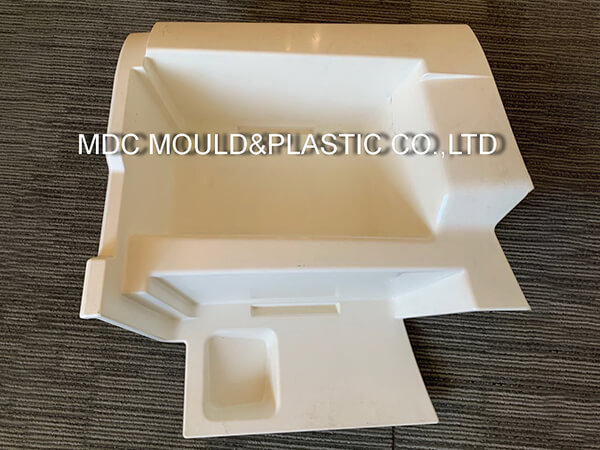
- Automotive exterior panels
- EV battery enclosures
- Truck roof panels
- SMC water tanks
- Carbon fiber structural components
- Aerospace interior panels
- Railway composite structures
- Industrial equipment housings
Applications of Transfer Mold Technology
- Electronic encapsulation
- Electrical switches
- Precision industrial parts
- Medical device components
- Semiconductor packaging
- Sensor housings
- Electrical insulation systems
Why Compression Molding Dominates Composite Manufacturing
Modern lightweight industries increasingly rely on compression molding because it offers:
- Excellent structural performance
- Better fiber distribution
- Lower production cost for large parts
- Superior lightweight performance
- Reduced material waste
- Scalability for automotive production
This is why many global manufacturers use SMC mold, BMC mold, and carbon fiber mold systems for advanced lightweight applications.
Future Trends in Transfer and Compression Molding
Compression Molding Trends
- Automated SMC production lines
- AI-assisted process optimization
- Large integrated automotive structures
- Fast-curing thermoset materials
- Recyclable composite systems
- EV lightweight component manufacturing
Transfer Molding Trends
- Miniaturized electronic packaging
- Multi-cavity precision production
- High-speed encapsulation systems
- Smart manufacturing integration
- Advanced semiconductor applications
How to Choose Between Transfer Mold and Compression Mold
| Requirement | Recommended Process |
|---|---|
| Large composite structure | Compression molding |
| Precision small component | Transfer molding |
| Long-fiber reinforcement | Compression molding |
| Insert molding | Transfer molding |
| Lower tooling cost | Compression molding |
| Complex geometry | Transfer molding |
| Automotive exterior panel | Compression molding |
| Electronic encapsulation | Transfer molding |
MDC Mould’s Compression Mold Expertise
As a professional manufacturer of advanced composite mold systems, MDC Mould specializes in:
- SMC mold manufacturing
- BMC mold systems
- Compression tooling engineering
- Carbon fiber mold solutions
- Automotive composite molds
- EV battery enclosure molds
- Thermoset composite tooling
- FRP tooling systems
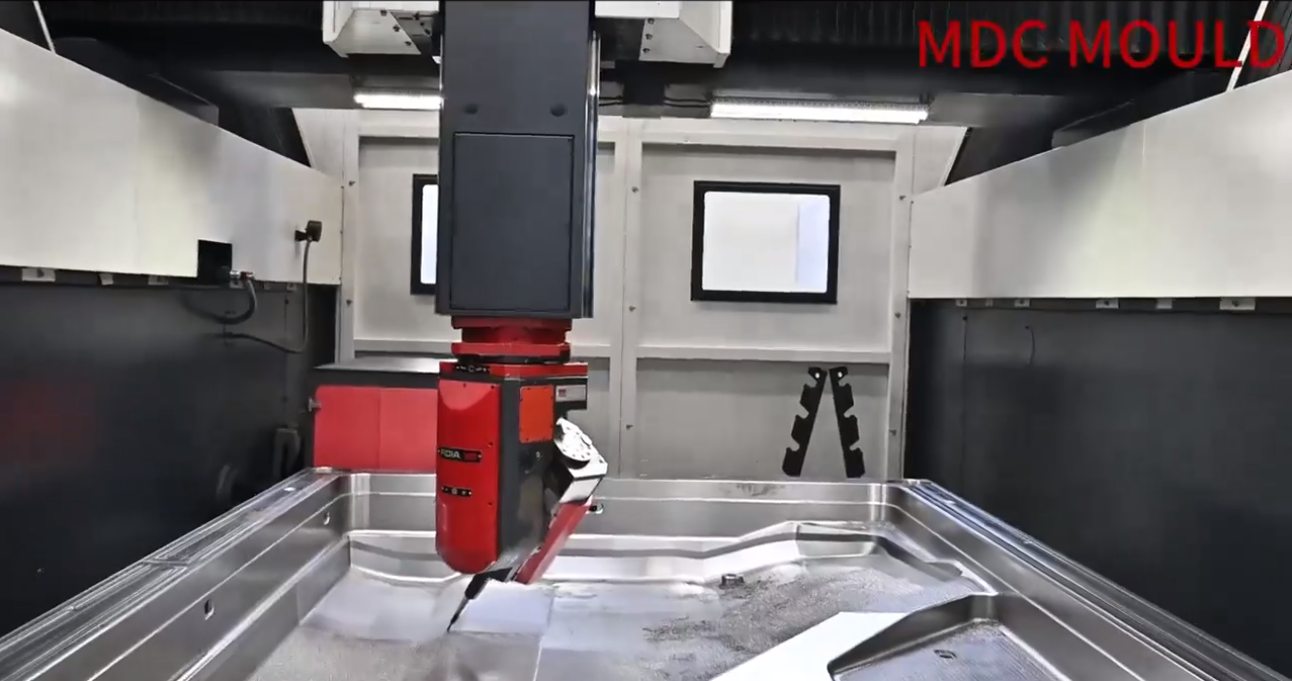
Using advanced CNC machining, CAE simulation, and precision manufacturing technologies, MDC provides reliable composite mold solutions for global industries.
Conclusion
Both transfer molding and compression molding are critical thermoset manufacturing technologies, but they serve different industrial purposes.
Compression molding is ideal for:
- Large structural composite parts
- Automotive lightweight components
- SMC and BMC applications
- Fiber-reinforced thermoset products
Meanwhile, transfer molding excels in:
- Precision thermoset components
- Electronic encapsulation
- Insert molding
- Complex small geometries
As global industries continue advancing toward lightweight manufacturing, electrification, and smart industrial production, both technologies will remain essential in the future of advanced composite manufacturing.