Why Carbon Fiber Is the Future of Sports Equipment

Learn the benefits, applications, and how MDC Mould supports high-performance manufacturing through advanced compression tooling and composite mold solutions.

Introduction: Why the Sports Industry Loves Carbon Fiber

From Olympic cycling to high-speed archery, carbon fiber has become the material of choice for performance-driven sports equipment. Known for its light weight, high strength, and fatigue resistance, carbon fiber is transforming how athletes train, compete, and win.

At MDC Mould, we support this revolution by supplying high-precision carbon fiber moldscompression molds, and composite tooling to leading manufacturers of sports equipment in China and abroad.

What Makes Carbon Fiber Special?

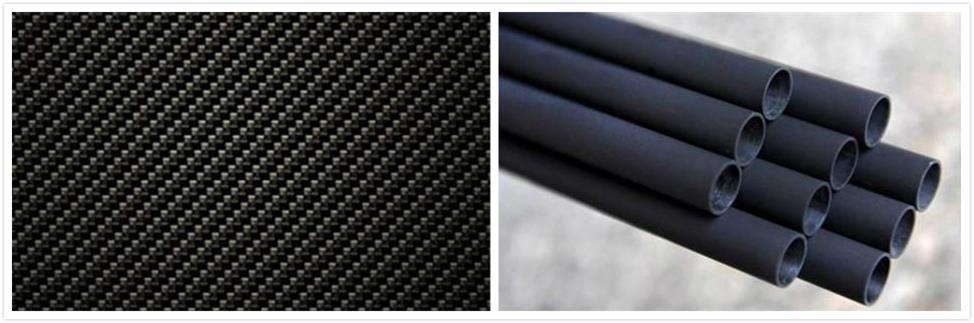
Carbon fiber is a composite material made by reinforcing carbon filaments into fabric and infusing it with resin. This structure results in a product that is:

  • 75% lighter than steel but up to 12 times stronger
  • Highly resistant to fatigue, corrosion, and impact
  • Customizable in stiffness, thickness, and layering direction

These properties make carbon fiber ideal for crafting sports equipment where every gram and every vibration matters.

Top Applications in Sports

  • Carbon Fiber Bicycles: Frames as light as 1.15 kg reduce rider fatigue and increase aerodynamic efficiency. Used in Olympic-level competitions.
  • Carbon Fiber Archery Bows: Recurve limbs deliver faster arrow speeds and reduced hand shock, enhancing accuracy and comfort.
  • Tennis Rackets: Improve swing control and reduce joint strain thanks to excellent vibration dampening.
  • Rowing Shells & Poles: Carbon builds offer lower water drag and higher stroke efficiency in competitive rowing.
碳纤维自行车架

Why Manufacturers Trust MDC for Carbon Fiber Tooling

Zhejiang MDC Mould Co., Ltd. specializes in designing and manufacturing SMC/BMC/GMT/Carbon Fiber compression molds tailored for sports equipment production.

We integrate simulation, CNC machining, and vacuum systems into every mold to ensure flawless surface quality, tight tolerances, and reliable demolding—key factors for high-performance carbon fiber parts.

The Market is Growing

According to industry forecasts, the global market for carbon fiber sports equipment is expected to grow at a CAGR of 12% over the next five years. As lightweight performance becomes a standard expectation, the demand for composite molds and compression tooling is also rising.

Whether it’s for professional athletes or consumer-grade equipment, precision-molded carbon fiber parts are becoming the benchmark of quality in modern sports manufacturing.

Challenges and MDC’s Solutions

While carbon fiber offers many benefits, it also comes with production challenges:

  • High processing temperatures and precise pressure control are required during molding
  • Complex shapes demand accurate mold design with proper draft and fiber orientation
  • Demolding can be difficult if molds are not polished and vented correctly

With decades of experience, MDC provides engineered mold solutions that address these issues, offering:

  • Mirror-polished cavities for easier demolding
  • Vacuum-assist systems for improved fiber compaction
  • Temperature-uniform channels to ensure even curing

Conclusion: Lightweight Innovation Starts with the Right Mold

As carbon fiber continues to redefine the limits of sports equipment, manufacturers need trusted partners who can deliver molds with precision, durability, and performance in mind. MDC Mould is proud to be part of this transformation—helping brands bring cutting-edge gear to athletes around the world.

If you’re developing carbon fiber sports products, contact us today to learn how our composite mold and carbon fiber tooling expertise can elevate your next product line.

What is Compression Mold?

Learn what a compression mold is, how the compression molding process works, and why it is widely used for SMC, BMC, and composite parts manufacturing.

Introduction

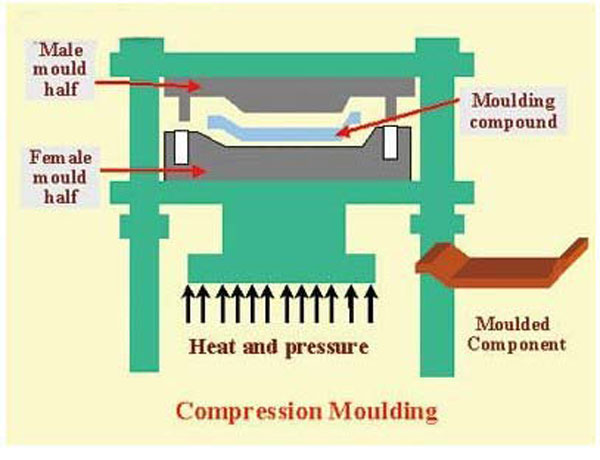
compression mold is a specialized tool used in the compression molding process, a widely adopted manufacturing method for forming composite parts. It involves placing a preheated material, such as SMC (Sheet Molding Compound)BMC (Bulk Molding Compound), or other thermoset materials, into a heated mold cavity, then applying pressure to shape and cure the material.

Compression molds are essential in industries such as automotive, electrical, construction, and aerospace, where lightweight, high-strength, and heat-resistant components are needed.

Structure of a Compression Mold

A typical compression mold includes two main halves: the cavity and the core. It may also include:

  • Heating systems – to maintain the required temperature for curing
  • Guide pins and bushings – for accurate mold alignment
  • Ejection mechanisms – to release the molded part after curing
  • Vacuum systems – for gas removal and surface quality improvement

Depending on the application, compression molds can be made from hardened steel, aluminum, or other high-strength alloys. Surface treatments like chrome plating may be applied to improve mold longevity and part release.

compression mold SMC Engine hood Mold

Compression Molding Process

The compression molding process typically follows these steps:

  1. Material Loading: The composite material is loaded into the open mold cavity.
  2. Preheating: The material may be preheated to reduce cycle time and improve flow.
  3. Compression: The mold is closed and pressure is applied using a hydraulic press.
  4. Curing: Heat and pressure are maintained until the material is fully cured.
  5. Demolding: The press opens and the finished part is ejected.

This process is suitable for high-volume production of components with intricate geometries and excellent mechanical properties.

Applications of Compression Mold

Compression molds are used to manufacture various thermoset and composite parts, including:

  • Automotive parts: EV battery enclosures, trunk lids, bumpers, and engine splash shields
  • Electrical housings: Insulators, switchgear, and fuse boxes
  • Construction materials: SMC ceilings, wall panels, water tanks
  • Sanitary products: SMC bathroom panels and bathtubs

Thanks to their strength-to-weight ratio, compression-molded parts are replacing metal and thermoplastic components in many structural and semi-structural applications.

Advantages of Compression Molding

Using a compression mold offers several benefits:

  • High strength and durability – especially with fiber-reinforced composites
  • Lower tooling cost compared to injection molding
  • Reduced material waste and scrap
  • Excellent surface finish for Class-A automotive parts
  • Compatibility with large, complex shapes

For manufacturers seeking reliable and repeatable performance, compression molding with precision molds remains a top choice.

SMC Mold vs. BMC Mold

Both SMC molds and BMC molds are used in compression molding, but they differ slightly:

  • SMC Mold: Designed for sheet-like materials; suitable for larger structural parts
  • BMC Mold: Suited for dough-like bulk materials; ideal for smaller or more detailed parts

Choosing the right mold depends on the geometry, performance, and surface requirements of the final part.

smc vs bmc

Conclusion

compression mold is an integral part of the composite molding industry. From automotive components to building materials, its role in shaping and curing high-performance parts makes it indispensable. With advancements in material science and precision tooling, compression molding continues to evolve and serve as a key process in modern manufacturing.

For companies looking to invest in SMC moldsBMC molds, or custom compression tooling, working with an experienced mold manufacturer is essential to ensure durability, precision, and production efficiency.

Everything About 3D Printed Forged Carbon Fiber Mold

Explore process steps, material benefits, design considerations, cost advantages, and when to choose 3D printing for composite tooling.

Table of Contents

Introduction to 3D Printed Forged Carbon Fiber Molds

Forged carbon fiber combines short carbon fibers with resin in a random orientation, resulting in high strength, lightweight properties, and superior impact resistance. Traditionally, molds for forged carbon fiber components required CNC machining from aluminum or steel, which is expensive and time-consuming.

Today, 3D printing technology (additive manufacturing) is transforming composite tooling by enabling rapid prototyping, cost-efficient short runs, and complex geometries that were previously challenging to produce.

Why Choose 3D Printing for Forged Carbon Fiber Molds?

  • Faster Tooling: Reduce lead time from weeks to days.
  • Cost Efficiency: Lower upfront investment compared to CNC-machined metal molds.
  • Complex Designs: Create internal cooling channels, lattice structures, or integrated features.
  • Customization: Perfect for low-volume or custom composite parts.

Manufacturing Process Overview

  1. CAD Design: Design mold geometry with allowances for shrinkage and draft angles.
  2. 3D Printing: Print the mold using high-temperature resin or metal powder.
  3. Post-Processing: Surface finishing, heat treatment, or coating for durability.
  4. Forged Carbon Fiber Layup: Place pre-mixed carbon fiber and resin inside the mold cavity.
  5. Compression Molding: Apply heat and pressure for curing.

Design & Technical Considerations

  • Heat Resistance: Ensure mold material withstands curing temperature (150–180°C typical for thermoset composites).
  • Surface Finish: Apply a smooth coating to avoid fiber imprint and improve release.
  • Structural Strength: Analyze pressure tolerance for compression molding (30–100 bar).
  • Integration: Add channels for heating/cooling where necessary.

Materials & Printing Technologies

Common solutions for 3D printed composite molds include:

  • High-Temp Resin (SLA/DLP): For short-run molds and prototyping.
  • Metal Additive Manufacturing: Steel or Inconel for long-term durability.
  • PEEK/PEKK: High-performance thermoplastics for moderate production runs.
carbon fiber

Cost & Time Comparison

MethodLead TimeApprox. CostBest For
3D Printed Mold3–7 days$1,000–$5,000Prototypes, low-volume
CNC Aluminum Mold3–4 weeks$5,000–$15,000Medium-volume
Steel Mold6–8 weeks$20,000+High-volume production

Applications & Use Cases

  • Automotive interior and structural components
  • Lightweight aerospace parts
  • Sporting goods and high-end consumer products
  • Custom tooling for composite prototyping

Looking for 3D printed forged carbon fiber mold solutions? Contact us today for a free consultation.

FAQ

What is forged carbon fiber?

Forged carbon fiber uses short chopped fibers mixed with resin, offering high strength and lightweight properties without the complex layup of continuous fiber composites.

Can 3D printed molds handle high temperatures?

Yes, when using high-temperature resins or metal additive manufacturing, molds can withstand up to 180°C or more for thermoset composites.

When should I choose 3D printing over CNC machining?

Choose 3D printing for rapid prototypes, complex geometries, and low-volume production where time and cost savings matter.

Compression Tooling for High-Performance Composite Molding

Explore MDC Mould’s full-service compression tooling solutions for SMC, BMC, GMT, and carbon fiber composites. From design to sampling, we deliver precision molds for high-performance applications.

At Zhejiang MDC Mould Co., Ltd., we specialize in the design and manufacturing of advanced compression tooling for a wide range of composite materials, including SMCBMCGMT, and carbon fiber. With decades of experience in composite mold development, MDC provides turnkey tooling solutions that meet the most stringent demands of the automotive, electrical, sanitaryware, and construction industries.

What Is Compression Tooling?

Compression tooling refers to precision-engineered molds used in the compression molding process to form thermoset composite materials under high temperature and pressure. These molds are typically made of hardened tool steel and comprise an upper and lower cavity. During production, the composite material—such as Sheet Molding Compound (SMC) or Bulk Molding Compound (BMC)—is placed into the mold cavity and pressed into shape.

The efficiency, accuracy, and durability of the tooling directly impact the final product’s quality, mechanical performance, and production cost. That’s why selecting the right compression tooling partner is critical.

Our Expertise in Compression Tooling

MDC Mould is a trusted name in the global composite molding industry, delivering high-precision compression tools for:

  • Automotive parts (EV battery enclosures, trunk boards, splash shields)
  • Electrical enclosures and battery covers
  • SMC water tanks and bathroom components
  • High-strength GMT structural panels
  • Carbon fiber performance parts

With in-house capabilities covering tool design, 3D modeling, mold flow analysis, CNC machining, mold assembly, and mold tryout, we control every stage of the tooling lifecycle.

Compression Tooling Process at MDC

Our standard compression tooling process includes:

  1. Product Analysis: We begin by analyzing customer part geometry, material flow, and expected tolerances.
  2. Tool Design: Using advanced CAD/CAM software, our engineers design the mold to meet performance and durability goals.
  3. Tool Steel Selection: We use high-grade P20, H13, 718H, or other steels based on required hardness, thermal conductivity, and wear resistance.
  4. CNC Machining: Precision machining is performed in-house using 3-axis, 4-axis, and 5-axis CNC systems for maximum accuracy.
  5. Polishing & Surface Treatment: Polished or textured surfaces are applied according to the product design—chrome plating, Teflon coating, or mirror finishes available.
  6. Tryout & Sampling: We conduct complete mold tryouts with hydraulic press machines and provide test samples before delivery.
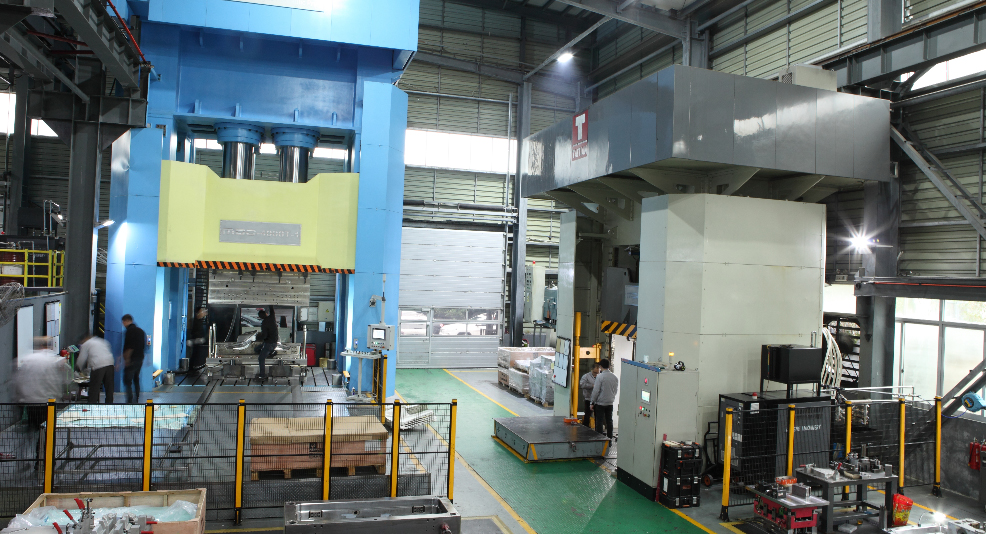
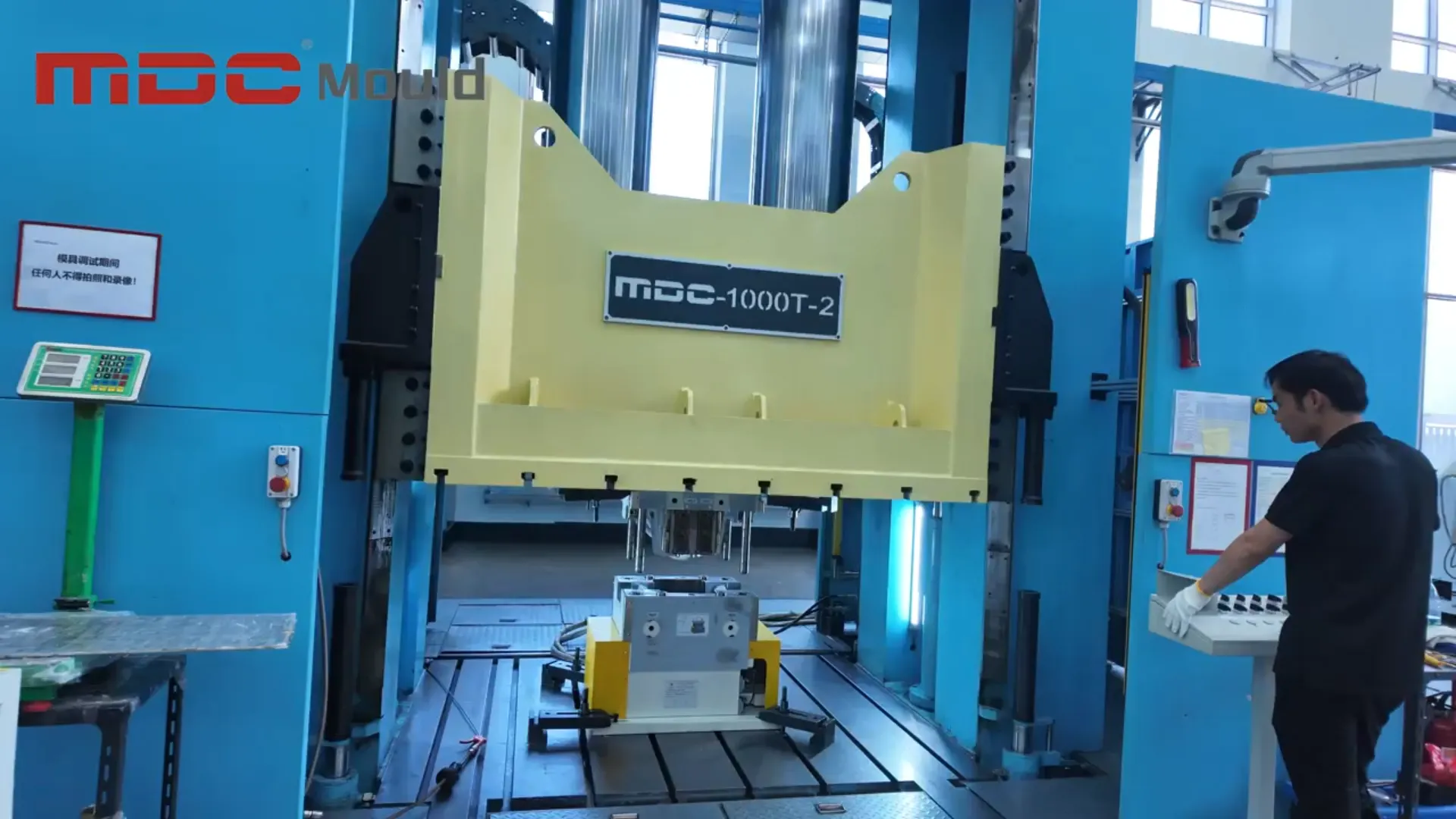
compression mould machine

Advantages of MDC Compression Tooling

  • High Precision: Tolerances controlled within ±0.05 mm ensure consistent product dimensions and fit.
  • Durability: Hardened tooling with optimized cooling systems increases mold life and production efficiency.
  • Versatility: Compatible with thermoset materials such as SMC, BMC, GMT, and carbon fiber preforms.
  • Customization: Fully customized mold cavities, lifters, ejector systems, and surface textures to suit each client’s product requirements.
  • Complete In-House Manufacturing: All stages—from design to polishing—are performed under one roof.

Applications of MDC Compression Molds

Our compression molds are used in a wide range of industries:

  • Automotive: SMC trunk lids, EV battery trays, fenders, hoods
  • Construction: GRP panels, water tanks, utility covers
  • Electrical: Circuit breaker enclosures, junction boxes
  • Sanitaryware: SMC bathroom walls, bathtubs, ceilings
  • Rail & Aerospace: Lightweight GMT/carbon fiber interior panels

Why Choose MDC for Compression Tooling?

As a full-service composite mold manufacturer, MDC Mould stands out with:

  • Over 20 years of experience in composite tooling and thermoset compression molds
  • A complete production line for mold making, sampling, and small-batch trial runs
  • Expertise in demolding solutions and complex part geometry
  • Strict quality inspection (CMM, hardness, roughness, mold function test)
  • Timely global delivery and responsive after-sales support

Whether you’re launching a new composite part or optimizing an existing mold, MDC Mould offers reliable compression tooling to support your success.

Contact Us

Looking for high-quality compression tooling for your composite product line? Contact Zhejiang MDC Mould Co., Ltd. today to discuss your project. Our experienced team is ready to deliver precision tools that meet your performance, timeline, and budget requirements.

Visit www.zjmdc.com or email us to get a free consultation and quotation.

Composite Compression Molds with Pre-Shipment Chroming Plated Finish

In the modern landscape of composite material manufacturing, Composite Compression Molds play a vital role in producing lightweight, durable, and high-performance components. These molds are widely used in industries such as automotive, electrical, aerospace, and sanitaryware, particularly for processing thermoset materials like SMC (Sheet Molding Compound), BMC (Bulk Molding Compound), and carbon fiber prepregs.

One of the most critical enhancements to these molds is the application of a pre-shipment chroming plated surface treatment. This chrome plating not only protects the mold surface but also improves part quality and extends the mold’s operational lifespan. This article explores the structure, advantages, and surface treatment of composite compression molds, with a focus on chrome plating prior to delivery.

Understanding Composite Compression Molds

Composite compression molds are precision-engineered tools designed to shape composite materials under heat and pressure. They are typically used in hydraulic or mechanical press machines. These molds are commonly designed as two halves — a male and a female mold — that enclose the composite charge during molding.

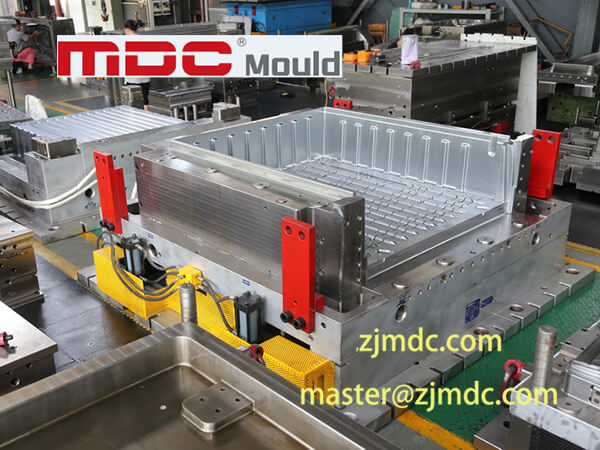
Composite Compression Mold

Common Materials Processed

  • SMC (Sheet Molding Compound)
  • BMC (Bulk Molding Compound)
  • Carbon Fiber Reinforced Plastics (CFRP)
  • Glass Mat Thermoplastics (GMT)
  • Thermoset Laminates

Key Applications

  • Automotive panels and doors
  • Truck and EV battery enclosures
  • Electrical housings and switchboards
  • Shower trays, bathtubs, and wash basins
  • Carbon fiber structural parts

Design and Engineering Considerations

Composite compression molds require robust structural integrity and dimensional precision to withstand repetitive press cycles. Critical considerations include:

  • Thermal control: Integrated heating and cooling systems for optimal resin curing
  • Fiber orientation: Mold geometry should accommodate proper fiber flow and pressure distribution
  • Demolding structure: Draft angles, ejector systems, and surface coating must support easy release of parts
  • Durability: Use of premium mold steels like P20, H13, or hardened tool steel to resist wear and deformation

What is Pre-Shipment Chroming Plated Finish?

Chroming plated finish, or hard chrome plating, is a process in which a thin layer of chromium is electroplated onto the mold surface. For composite molds, this treatment is typically applied after final polishing and before shipment. It provides a high-hardness, corrosion-resistant surface that enhances the mold’s performance in a high-pressure, high-temperature molding environment.

Key Benefits of Chrome Plating for Composite Molds

  • Wear resistance: Extends mold life in abrasive composite molding processes
  • Corrosion protection: Prevents rust and chemical degradation from aggressive resin systems
  • Surface finish quality: Achieves smooth, high-gloss part surfaces with minimal post-processing
  • Release performance: Reduces sticking, improves demolding efficiency, and lowers the need for mold release agents
  • Dimensional stability: Maintains mold tolerances across thousands of cycles
truck step

Why Pre-Shipment Chrome Plating Matters

At MDC Mould, every mold undergoes a detailed surface treatment process before shipment. The pre-shipment chroming plated finish is one of our quality assurance commitments to ensure customers receive ready-to-use molds that deliver long-term value.

Our Chrome Plating Process Includes:

  1. Surface preparation: Polishing and degreasing
  2. Nickel undercoat (optional): For enhanced adhesion and durability
  3. Hard chrome electroplating: Thickness ranging from 0.02mm to 0.1mm depending on mold type
  4. Final inspection and measurement: To confirm surface hardness, gloss, and uniformity

Quality Control and Export Standards

Our chrome-plated molds are tested under simulated working conditions to ensure their resistance to thermal fatigue and chemical attack. MDC complies with international standards including ISO 9001, and all molds are shipped with:

  • 3D and 2D drawings
  • Material certificates
  • Chroming thickness reports
  • Trial mold video and photos
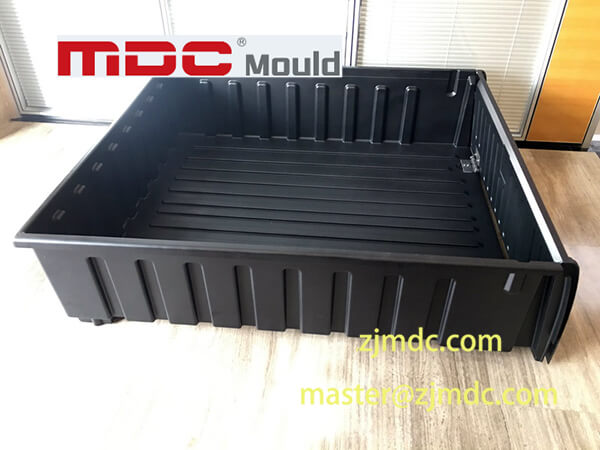
smc truck step

Industries That Benefit from Chrome-Plated Composite Molds

  • Automotive: EV battery covers, interior trims, trunk boards
  • Sanitaryware: Bathroom base panels, SMC bathtubs
  • Energy sector: Composite electrical boxes and wind blade components
  • Aerospace: Carbon fiber panel forming tools

Conclusion

Composite compression molds with pre-shipment chroming plated finish represent the optimal solution for manufacturers demanding high surface quality, longer tool life, and minimal maintenance. At MDC Mould, we integrate advanced tooling design with precision surface treatment to deliver turnkey molds that exceed global industry expectations.

If you’re seeking a long-term partner in compression molding technology, MDC Mould is ready to support your project from design to delivery.

Contact MDC Mould for Customized Composite Tooling Solutions

Learn more at www.zjmdc.com or contact us directly for consultation and quotation.

What is a Press Tool? Understanding Types, Applications, and Benefits

press tool is a mechanical device used in various manufacturing processes to shape or cut material using a die, typically through mechanical or hydraulic means. Press tools are primarily utilized for operations such as stamping, bending, punching, blanking, forming, and deep drawing. These tools are crucial for producing high-precision, repeatable parts in industries ranging from automotive and aerospace to electronics and consumer goods manufacturing.

In this article, we will explore what press tools are, their types, applications, and the key factors that make them essential in modern industrial production. Additionally, we will dive into the design and maintenance considerations that contribute to the tool’s effectiveness and longevity.

Understanding Press Tools: The Basics

press tool operates by applying force to a workpiece through a die. The die is designed to shape or cut the material in a specific manner based on the operation being performed. The force applied can be mechanical, hydraulic, or pneumatic, depending on the type of press used. This force is typically applied by a press machine, which can be powered either manually or via automated controls for higher volumes of production.

The press tool consists of several components:

  • Die (or Mold): The heart of the press tool, it contains the cavity or shape into which the material is formed. Dies are usually made of high-strength steel for durability.
  • Punch: The punch is used to exert pressure on the material to force it into the die.
  • Ejector: The ejector pushes the formed part out of the die cavity.
  • Guide Bushings: These help align the punch and die to ensure accurate forming of the material.
Hydraulic press structure

Types of Press Tools

Press tools can be classified based on their operation and the specific material processing required. Below are some of the most common types of press tools:

1. Cutting Press Tools

Cutting press tools are designed to cut or shear materials into shapes or parts. This is one of the most common applications of press tools. It includes operations like:

  • Punching: Creating holes in a workpiece.
  • Blanking: Cutting out a flat, desired shape from a sheet of material.
  • Slitting: Cutting long strips from a sheet or coil.
  • Notching: Removing small portions of material from a workpiece’s edge.

2. Forming Press Tools

Forming press tools shape materials without removing material, but rather by deforming the material to a desired shape. These tools include:

  • Bending: Forming a part by bending the material along a straight line.
  • Deep Drawing: Shaping a flat sheet into a three-dimensional shape like a cup or box.
  • Embossing: Creating raised or recessed designs on the surface of a material.

3. Blanking Press Tools

Blanking involves cutting out a piece from a larger sheet of material to form the initial part. These are essential in producing parts that need to be further processed in other stages of manufacturing.

4. Progressive Press Tools

Progressive press tools are used in continuous stamping processes, where the material is fed through a series of dies in a single pass. Each die performs a different operation, such as punching, bending, or blanking, and the part is progressively shaped until the final form is reached.

5. Transfer Press Tools

Transfer press tools involve the movement of material from one die to another, often used in more complex manufacturing processes where multiple shaping and cutting steps are required.

Applications of Press Tools

Press tools play a vital role in numerous industries and sectors, as they enable high-precision, high-volume manufacturing. Below are some of the most common applications:

1. Automotive Industry

In the automotive industry, press tools are used to produce body panels, brackets, engine components, and other high-strength parts. These parts often require high precision and durability, making the design and operation of press tools crucial to the success of the manufacturing process.

2. Aerospace

The aerospace industry also relies heavily on press tools for producing parts that need to meet strict strength, weight, and reliability requirements. Press tools are used to manufacture lightweight but high-strength components, such as airframe panels, wing skins, and brackets.

3. Electronics

In the electronics industry, press tools are used to manufacture housings, covers, and brackets for consumer electronics, computers, and communication devices. Precision press tooling ensures that these components meet the intricate requirements for electronic devices.

4. Consumer Goods Manufacturing

From appliances to toys, consumer goods manufacturing frequently utilizes press tools to produce parts that require high-volume production and precision, including metal or plastic parts.

compression-mould-machine

Factors Affecting Press Tool Design and Performance

The effectiveness of a press tool relies heavily on its design and the material being processed. Several factors must be taken into account when designing a press tool:

  • Material Selection: The type of material being worked on significantly influences the design and performance of the press tool.
  • Tooling Material: The material used for the press tool, especially the die, must be strong enough to withstand repeated pressure and wear.
  • Precision: Accuracy in tool design is paramount, especially for parts that need to meet tight tolerances.
  • Production Volume: The required volume of parts will influence the choice of press tool.
  • Tool Maintenance: Routine maintenance is critical to extend the life of a press tool.

Conclusion

In summary, press tools are essential in various manufacturing processes due to their ability to create high-precision, repeatable parts. Whether for cutting, forming, or shaping, the correct press tool can significantly improve productivity, reduce material waste, and ensure the high-quality performance of the parts produced.

For manufacturers looking to invest in press tools, understanding the various types and applications, as well as the factors that affect tool design and performance, is essential to optimizing production and achieving long-term success.

Ultra Mirror Polishing on Sanitary Moulds – Precision You Can See

Discover the precision of ultra mirror polishing on sanitary moulds. Learn how MDC Mould enhances tooling performance, surface finish, and demolding efficiency for SMC bathroom moulds.

In the sanitary ware manufacturing industry, surface finish is not just about appearance — it’s an integral part of performance and precision engineering. At MDC Mould, our ultra mirror polishing technique on sanitary moulds sets a new benchmark in quality and durability.

Why Mirror Polishing is Critical for Sanitary Moulds

Mirror polishing offers more than just a shiny appearance. It plays a vital role in the entire production cycle of SMC bathroom components, ensuring a smooth demolding process, minimizing surface flaws, and improving the aesthetic and structural quality of the final product.

When you demand precision tooling and unmatched finish in your sanitary applications, the mirror polishing process is essential. Here are the core benefits:

  • Smooth Demolding: Highly polished surfaces reduce friction and sticking, resulting in cleaner and faster part ejection.
  • Fewer Surface Defects: A flawless cavity surface means a flawless finished part — free from sink marks, drag lines, or surface distortion.
  • Extended Tool Life: Mirror polishing strengthens surface integrity, making your compression moulds more resistant to corrosion, micro-cracks, and wear.
  • Premium Finish: Consumers expect sanitary ware with high gloss and smooth touch — mirror-polished moulds deliver exactly that.
Washing basin mould

Our Ultra Mirror Polishing Process

Delivering an ultra-clear, mirror-like finish on every sanitary mould requires a tightly controlled process and experienced hands. Here’s how MDC ensures industry-leading polishing results:

1. Base Surface Preparation

Our polishing process begins with a rigorous inspection and treatment of the cavity base. Whether finished via precision CNC or EDM, our technicians ensure the surface is flat, defect-free, and ready for refinement. This foundational step is critical for avoiding imperfections later in the polishing sequence.

2. Multi-Stage Manual Polishing

The polishing sequence is conducted by skilled craftsmen using a step-by-step progression of abrasives — from coarse grit to ultra-fine diamond pastes. This multi-stage method includes:

  • Coarse grinding (typically 400–600 grit)
  • Medium-fine smoothing (800–1200 grit)
  • Pre-polish (1500–2000 grit)
  • Mirror finish with diamond paste (down to 1µm or finer)

Each stage eliminates the scratches from the previous step. The end result is a glass-smooth tool surface with reflectivity approaching 100% under optical inspection. We often say — you can literally see your reflection in our moulds.

3. Controlled Heat and Pressure

Overheating can compromise the steel’s molecular structure. At MDC, we strictly control polishing pressure, tool speed, and ambient temperature to avoid microcracks, temper loss, or distortion. This ensures the tooling integrity of each SMC mould remains intact during polishing.

bathtub mold

Where Mirror Polishing is Applied

We implement ultra mirror polishing on various mould types used in the sanitary and composite industries, including:

  • SMC bathroom moulds (bathtubs, shower trays, wall panels)
  • Toilet and basin composite moulds
  • High-gloss decorative panels
  • SMC/BMC sanitary enclosures

Whether for compression moulding or other thermoset composite processes, mirror polishing helps maximize product yield and finish quality.

Precision Testing and Quality Standards

At MDC Mould, our quality assurance team uses advanced instruments such as surface roughness testersoptical microscopes, and gloss meters to verify every mould. We consistently achieve roughness values of Ra ≤ 0.01 μm — a true reflection of our polishing mastery.

Conclusion: Where Performance Meets Perfection

Ultra mirror polishing is more than a finishing touch — it’s a critical step in ensuring the **performance, reliability, and durability** of every **sanitary mould** we produce. When combined with our precision engineering and expert process control, the result is tooling that delivers maximum value, longevity, and visual brilliance.

If you’re looking for a reliable partner in compression mouldsSMC moulds, or high-performance mirror polished tooling, MDC Mould is ready to deliver.

Precision Cooling Fixtures and 3D Scanning Inspection

Explore how MDC Mould combines custom-designed cooling fixtures and high-precision 3D scanning inspection to ensure dimensional stability in molded SMC parts.

In modern composite molding—particularly in SMC (Sheet Molding Compound) and BMC (Bulk Molding Compound) processes—dimensional accuracy, repeatability, and post-molding stability are fundamental. As a leading mold manufacturer, MDC Mould is continuously optimizing not just the tooling, but the entire downstream validation process. This article introduces our latest innovation: a custom cooling fixture engineered in-house and integrated with advanced 3D scanning inspection to guarantee consistent and reliable dimensional control.

Why Dimensional Stability Matters in Composite Molding

Composite materials like SMC and BMC are known for their excellent strength-to-weight ratio, corrosion resistance, and design flexibility. However, they are also prone to thermal shrinkage and post-molding deformation due to temperature differentials, uneven pressure, or uncontrolled cooling. Without a strategy to simulate real-use cooling conditions, even a precisely molded part may fall outside tolerance during the cooling phase.

To mitigate this, MDC Mould has developed a process that combines custom part-specific cooling fixtures with non-contact 3D metrology, bridging the gap between mold fabrication and functional performance verification.

Our Custom Cooling Fixture: Designed for Functionality and Accuracy

The cooling fixture is more than just a supporting frame—it is a precision-engineered device tailored to the exact geometry of the molded part. Here’s how it works:

  • Shape Conformance: The fixture mirrors the molded part’s final geometry, ensuring uniform cooling without stress points or sagging.
  • Post-Molding Simulation: By simulating how the part would cool in real use, we prevent unrealistic deformation during measurement.
  • Stabilization During Scanning: The fixture holds the part in position to enable reliable and repeatable 3D inspection.
  • Material-Specific Tuning: Each fixture is designed with the thermal behavior of the composite material in mind.

Fixtures are custom-built in our tool shop using CAD/CAM systems, ensuring high fitting accuracy and repeatability. This integration of engineering design with quality inspection reflects our deep understanding of mold-formed component behavior.

Precision Fixtures

Advanced 3D Scanning Inspection for High-Resolution Feedback

Once the part is fully cooled and stabilized, it is scanned using state-of-the-art 3D scanning equipment that generates detailed point cloud data. We then:

  • Align the scan data with the original CAD model
  • Run full 3D dimensional analysis with deviation mapping
  • Generate a complete 3D inspection report with color-coded tolerances
  • Deliver this report to the customer for transparent feedback and sign-off

This non-contact inspection process is faster, more accurate, and more comprehensive than traditional CMM-based techniques, especially for freeform or large-area parts.

Integrated Quality Assurance: Closing the Loop

Our combined use of cooling fixtures and 3D scanning inspection offers an end-to-end solution for dimensional control. This method ensures that the molded part conforms not only to its designed geometry, but also to its functional form after cooling—the true test of manufacturing success.

Benefits at a Glance:

  • Reduced rejection rates through early detection of dimensional drift
  • Repeatable QA procedures that can be benchmarked and scaled
  • Enhanced customer trust through full transparency of inspection data
  • Faster iterations for pilot runs and new product development
3D Scanning Inspection

Applications Across Industries

This solution is particularly suited to industries where geometric precision and thermal stability are critical, including:

  • Automotive: Battery covers, inner roof panels, trunk boards, engine splash shields
  • Electrical: Enclosures and insulators made from BMC/SMC
  • Infrastructure: GRP water tank components with large surface areas
  • Aerospace: Lightweight structural panels requiring strict tolerance control

Why Choose MDC Mould?

We’re more than a mold supplier—we are a comprehensive partner in precision manufacturing. From mold design and tool fabrication to post-molding inspection and process optimization, MDC Mould provides a complete solution rooted in engineering excellence.

With a focus on composite mold development—including SMC moldsBMC moldscarbon fiber tooling, and compression molds—we understand the challenges and requirements of your applications.

Let’s Engineer Success Together

If your project demands tight tolerances, high repeatability, and confidence in quality assurance, MDC Mould is your trusted partner. Contact us today to learn how our cooling fixtures and 3D inspection workflows can add value to your production line.

SMC Tool: Precision Molds for High-Performance Composite Manufacturing

Explore the design, materials, applications, and advantages of SMC tools in composite molding. Learn how precision SMC molds drive efficiency and quality in thermoset part production.

The SMC tool plays a critical role in the manufacturing of advanced thermoset composite components. Specifically designed for use in the Sheet Molding Compound (SMC) process, these high-precision tools—also known as SMC molds or SMC tooling—enable mass production of lightweight, durable, and complex-shaped parts used across automotive, electrical, and industrial sectors.

What Is an SMC Tool?

An SMC tool is a custom-designed mold used in the compression molding process of fiber-reinforced thermoset materials, primarily SMC. These tools are engineered to form and cure a pre-cut charge of SMC material into a finished component under high pressure and temperature. The precision of the tooling directly affects the surface finish, dimensional accuracy, and mechanical performance of the final part.

Materials and Construction of SMC Molds

SMC tools are typically constructed from high-grade tool steel or aluminum, depending on the application and production volume. Common features of an SMC mold include:

  • Core and Cavity: Precisely machined surfaces that define the shape of the part.
  • Heated Platens: Used to maintain molding temperatures typically between 130°C and 160°C.
  • Ejection System: Ejector pins or air ejectors facilitate smooth part removal after curing.
  • Vacuum System: Removes trapped air to prevent voids and improve surface finish.
  • Cooling Channels: Allow for cycle time optimization and dimensional stability.

Advanced SMC tooling may also integrate surface textures, inserts, or multi-cavity configurations for high-volume production.

SMC moulding

Applications of SMC Tooling

SMC tools are widely used across several industries that demand high-performance composite parts:

  • Automotive: Battery enclosures, inner roofs, trunk boards, spoilers, and structural reinforcements.
  • Electrical: Cable trays, switchgear panels, insulation covers, junction boxes.
  • Sanitary: Bathtubs, shower trays, SMC bathrooms, and ceiling panels.
  • Water Storage: SMC water tanks and sectional panel molds.
  • Infrastructure: Manhole covers, gratings, and architectural components.

Advantages of Using SMC Tools

High-quality SMC tooling offers a variety of benefits for manufacturers:

  • High Repeatability: Allows for consistent part production with tight tolerances.
  • Fast Cycle Times: Optimized mold design ensures shorter curing durations and increased output.
  • Surface Finish Control: Tools can be polished or textured to meet Class A surface requirements.
  • Complex Geometry: Supports undercuts, ribs, and inserts for functional part integration.
  • Durability: Steel tooling can sustain hundreds of thousands of molding cycles with minimal wear.

SMC Molding Process Using SMC Tool

The compression molding process using an SMC tool generally follows these steps:

  1. Material Loading: A pre-weighed SMC charge is placed in the open mold cavity.
  2. Mold Closing: The mold closes under high pressure (500–2000 tons depending on part size).
  3. Compression & Curing: Heat and pressure cause the material to flow and cure in the mold (typically 2–5 minutes).
  4. Part Ejection: The mold opens and the cured part is removed by ejector pins or vacuum assistance.

This method ensures minimal material waste and excellent mechanical properties, particularly in load-bearing applications.

SMC Tool Design Considerations

Precision mold design is essential to achieving optimal part quality. Important considerations include:

  • Flow Simulation: Helps predict how the SMC material will fill the mold to avoid short shots or weld lines.
  • Parting Line Optimization: Reduces flash and simplifies mold maintenance.
  • Draft Angles: Ensures easy demolding of parts without surface damage.
  • Ventilation: Proper venting prevents trapped air that can cause burn marks or voids.
  • Thermal Control: Uniform temperature distribution minimizes warpage and shrinkage.

Choosing a Reliable SMC Tool Manufacturer

Investing in a high-quality SMC mold begins with selecting the right tooling partner. Look for:

  • Experience: Proven track record in SMC mold design and manufacturing.
  • In-House Engineering: CAD/CAM expertise, flow analysis, and rapid prototyping capabilities.
  • Material Knowledge: Ability to match resins, fillers, and fibers with the appropriate tooling materials.
  • Global Support: Technical service and after-sales support in your region.
  • Certifications: Compliance with ISO, automotive (IATF 16949), or other relevant standards.

Companies like MDC Mould in China are recognized for delivering advanced compression molds and SMC tooling for global composite manufacturers.

Conclusion: The Role of SMC Tools in Modern Composites

As the demand for lightweight, durable, and cost-effective composite components increases, the importance of precision SMC tools continues to grow. Whether you’re producing automotive body panels, structural parts, or electrical enclosures, a well-designed and expertly built SMC mold is essential for efficient production and superior part quality. Investing in reliable SMC tooling means investing in long-term performance, product consistency, and innovation in thermoset composite manufacturing.

Precision Starts from Within: The Role of Deep Hole Drilling in Mold Manufacturing

Explore how MDC Mould utilizes advanced CNC deep hole drilling technology to enhance composite mold performance, cooling systems, and tool reliability for SMC, BMC, and thermoset applications.

In the world of high-performance mold manufacturingdeep hole drilling is more than just a machining step—it’s a precision process that defines the long-term success of a mold. At MDC Mould, we apply high-accuracy CNC deep hole drilling machines to prepare the internal structure of each mold before it enters fine machining. This ensures not only precision, but long-term mold performance and product reliability.

What is Deep Hole Drilling?

Deep hole drilling refers to the process of machining holes with a high depth-to-diameter ratio, typically for mold components that require internal fluid flow paths. Our CNC drilling equipment delivers tight tolerances, excellent straightness, and smooth internal surfaces critical for high-performance mold operations.

Deep Hole Drilling

Applications of Deep Hole Drilling in Composite Molds

Our drilling processes play a vital role in optimizing mold function and performance across multiple areas:

1. Cooling Water Channels

Precision-drilled cooling channels allow for efficient heat transfer and shorter cycle times in compression molding and injection molding operations.

2. Ejector Pin Guide Paths

Accurate ejector pin paths ensure smooth demolding, reducing wear and avoiding misalignment during part ejection.

3. Vacuum and Venting Lines

In SMC/BMC composite molds, vacuum lines and vents are essential to eliminate trapped air and improve part quality by minimizing surface defects.

4. Oil Heating Channels

Thermoset molds often require oil-based heating. Our high-precision drilling ensures leak-free, thermally optimized channels to maintain stable mold temperatures during production.

Why Accuracy in Drilling Matters

The quality of a mold’s internal channels has a direct effect on its long-term functionality and energy efficiency. Key benefits of precision deep hole drilling include:

  • Uniform mold temperature distribution
  • Shorter cycle times due to optimized thermal control
  • Increased mold lifespan with reduced stress
  • Fewer defects and improved part surface quality
  • Improved energy efficiency and productivity

Every channel drilled is more than a hole—it’s a foundation for consistent mold performance and production stability.

Mold Manufacturing

Advanced Equipment for High-Performance Tooling

Our facility is equipped with multi-axis CNC deep hole drilling machines capable of producing high-precision holes even in complex mold geometries. We support drilling in:

CNC Deep Hole Drilling Capabilities

At MDC Mould, our deep hole drilling process incorporates:

  • Precision tolerances down to ±0.05mm
  • Drilling depths up to 1500mm with excellent straightness
  • Surface finishes meeting Ra ≤ 1.6μm
  • Compatibility with hardened steels, aluminum, copper, and thermoset tooling plates

Our integrated CAD/CAM system ensures each drilled hole aligns perfectly with 3D mold designs, reducing downstream machining errors and improving manufacturing efficiency.

MDC Mould: Your Trusted Partner in Composite Tooling

At MDC Mould, we offer end-to-end mold making services—from concept and CAD design to tooling and delivery. Our expertise in deep hole drilling supports the long-term success of your composite tooling projects.

We are dedicated to solving technical challenges in thermoset compression molding and continuously invest in precision engineering and tooling innovation to meet the evolving needs of global industries.